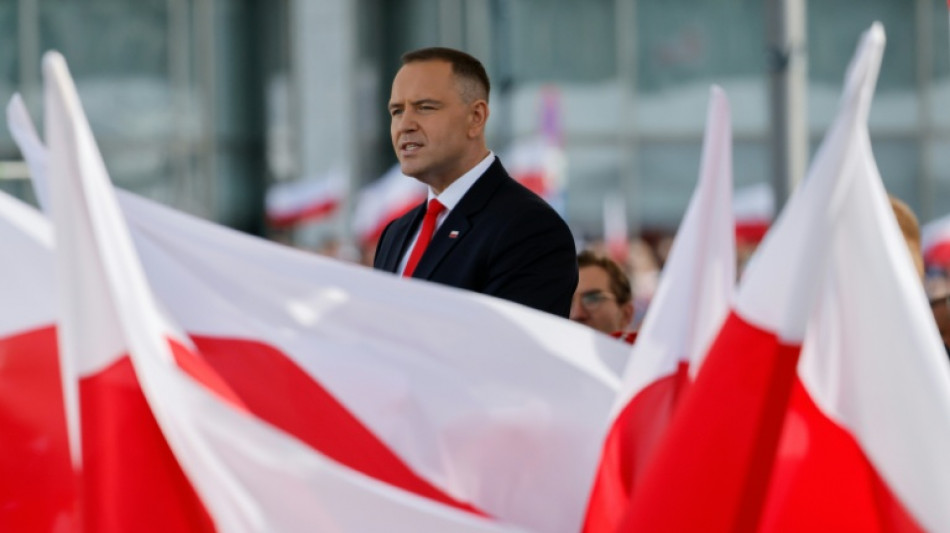
Poland vows to ensure EU defence funding after presidential veto / Photo: © AFP

 Flydubai co-pilot planned suicide attack on Tel Aviv airport: UAE prosecutor

 Mike Ditka: Chicago Bears icon as player and coach

 Outrage over plan to livestream US military firing squad execution
 US sanctions: a 'test of resilience' for ICC
 NFL legend Mike Ditka dead at 86
 Hurricane Isaias set to strike Gulf Coast late Friday
 Trump forms panel to probe US Fed governor Lisa Cook
 Clashes in Durban as fresh anti-migrant riots erupt in South Africa

 France students plan more protests, UN 'concerned' over violence
 De Zerbi calls on struggling Spurs to react in Man Utd clash
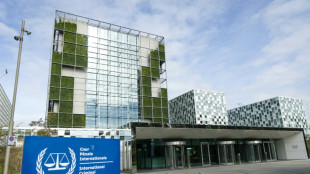 US sanctions on ICC: a 'test of resilience'
 Outrage over US military plan to livestream firing squad execution

 Argentina snap up defence guru Edwards ahead of World Cup

 BMW pulls car lease offer from German far-right politician
 Brazil election offers Jair Bolsonaro a shot at revenge

 Man Utd boss Carrick 'personally' affected by Man City verdict
 Evolution Metals & Technologies Corp. Raises Fiscal 2026 Revenue Guidance 62% at Midpoint to $10–$11 Million and Reaffirms $400–$460 Million Fiscal 2027 Outlook

 Red Bull's Verstappen takes pole position for Singapore GP sprint race
 Chelsea star Palmer 'committed' to England insists Alonso
 OpenAI denies firing researchers over AI safety warnings

 Turkey warns opposition, press over investment fund crisis

 Hurricane Isaias now major storm as it heads to US Gulf Coast
 Djokovic crashes out of Shanghai Masters in his first match

 EU says Turkey's crackdown on rights hampers membership bid

 Two Renoir paintings stolen in France recovered: mayor
Poland's centrist government on Friday unveiled a "Plan B" for financing the modernisation of its military and arms industry, after nationalist President Karol Nawrocki's veto of nearly 44 billion euros in European loans.
Lawmakers in Poland, the largest country on NATO's eastern flank, last month backed the Security Action For Europe (SAFE) scheme, as war rages in neighbouring Ukraine.
SAFE earmarks funds for air and missile defences, anti-drone technology and other equipment, but the president's veto dealt a major blow to these plans.
The government said Friday it would ensure SAFE funding makes its way to Poland, albeit under more complex arrangements.
Conservative-nationalist Nawrocki, in a televised address explaining his decision Thursday, said the European funding "undermines our sovereignty, our independence, as well as our economic and military security".
- SAFE's main beneficiary -
The SAFE loan scheme was developed by European countries seeking to reinvigorate their defence industry to face the Russian threat and respond to the risk of US disengagement from Europe.
The fund makes some 150 billion euros available in the form of preferential loans to finance joint projects in defence, the purchase of weapons or ammunition, and the development of critical infrastructure.
Since Poland borders Russia, Belarus and Ukraine, it has been tasked with building part of the EU's and NATO's "eastern shield".
The programme's main recipient, it had been set to receive 43.73 billion euros from the total envelope before Nawrocki's veto.
- 'Turbocharge' or Trojan horse -
Polish Prime Minister Donald Tusk, a former president of the European Council who has worked to restore Poland's relationship with Brussels, claims authorship over SAFE.
He says he persuaded European partners to provide funding to help Poland fortify his borders.
With the coalition government, he argues that the loan scheme will also "turbocharge" the Polish economy, and benefit about 12,000 Polish companies.
But Nawrocki and the rest of the conservative-nationalist opposition are hostile to Brussels.
They argued SAFE would allow EU bureaucrats and Germany -- an eternal bogeyman on the Polish right -- to steer Warsaw's strategic choices.
The right also fears that SAFE would alienate a key Polish ally in Washington by prioritising European arms purchases at the expense of American suppliers.
- Political points -
With just over a year to go before Poland's next parliamentary elections, the nationalist Law and Justice (PiS) party is polling poorly. Analysts have argued Nawrocki vetoed the bill to score political points.
The President's critics say characterise him as a "veto machine" unwilling to compromise, even in the face of criticism from the public.
A poll by Poland's Centre for Public Opinion Research suggested that the government's SAFE plan was backed by 52 percent of Poles, with only 35 percent opposed.
Many of the Polish companies who stood to benefit from the scheme are located in the countryside and smaller cities, where the right's electoral base is strongest.
Some analysts argue that Nawrocki and his party do not want the ruling coalition to gain ground there.
- President's alternative -
Rather than back the SAFE proposal, Nawrocki insisted on his own alternative, "SAFE 0%", drawn up with another PiS ally, Central Bank Governor Adam Glapinski.
Described as a "sovereign" alternative to the European loans, the programme would instead use central bank funds.
The president argued this would remove the burden of interest payments and debt.
Critics however say the plan could carry unforeseen costs, as it is based on speculating with the proceeds of gold sales from the central bank's reserves.
The government denounced the presidential veto as a "betrayal" of Poland and its security interests.
"Every soldier, when he gets a new tank, a new rifle, a new drone, an anti-drone system to counter Russian drones, will have to remember who didn't want to give it to him," Foreign Minister Radoslaw Sikorski said Friday.
Warsaw's use of SAFE funds will now have to pass by another route, the Armed Forces Support Fund, but the process will be longer, more restrictive, and more expensive.
But Prime Minister Donald Tusk insisted Friday: "The president’s veto will not stop us."
And Thomas Regnier, a European Commission spokesman, said Friday: "We're fully committed to the Polish national plan. We look forward to implementing it without delays."
D.Schneider--BTB