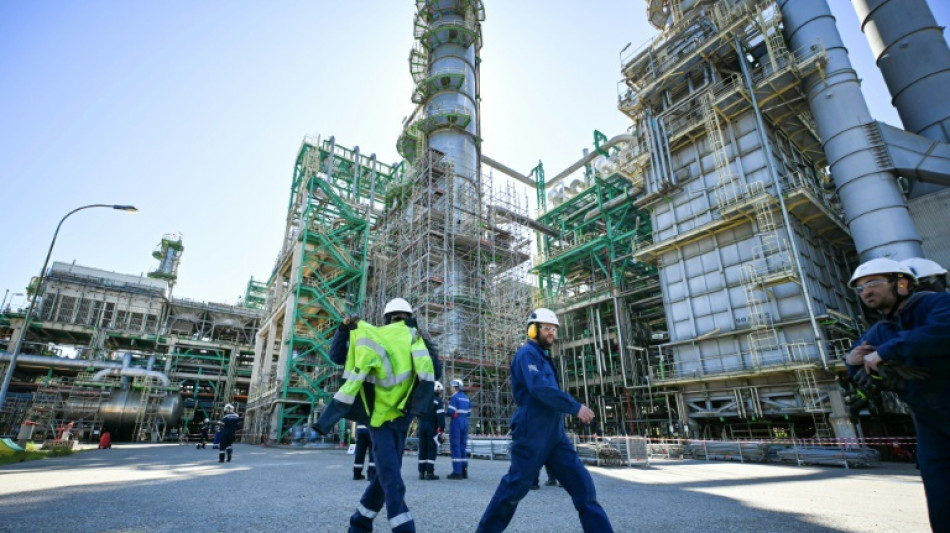
TotalEnergies refinery working full tilt to keep France fuelled / Photo: © AFP

 Bid by Italy's Intesa bank to take over MPS gets boost

 Stablecoins Are Quietly Becoming Business Infrastructure, NOWPayments Data Shows
 Oil surges, stocks sink as US reportedly eyes new Iran strikes
 Woman in botched US execution walking, mentally 'foggy': lawyer
 Farhan hopes Pakistan's new combination takes off in Sri Lanka T20Is

 Teenager Andreeva seals China Open semi-final with Bartunkova
 Britain's Burnham says open to Germany joining warplane project

 Kovac's tough love has Dortmund dreaming of title charge

 China announces candidate for WHO chief

 South Korea test-fires its first homegrown hypersonic weapon: presidency

 ONAR Advances Nasdaq Listing Preparation Following Advertise Purple Acquisition and Financing

 Thailand opens extradition process for reporter sought by China

 France struggles to wean social housing off gas

 Germany lifts GDP forecast as economy withstands Iran war

 Sri Lanka appoints Kusal Mendis as Test captain
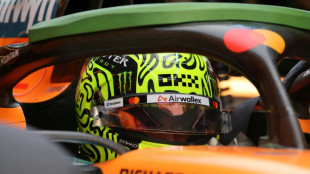 Norris confident McLaren can shine in Singapore
 Alex Bodi pushes ahead with expansion: ALIX LASERS showroom planned for Bucharest
 Fossil fuels off COP31 agenda as global output keeps rising

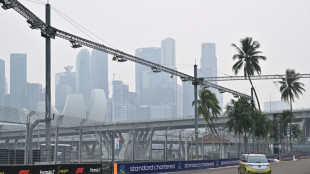 Haze not 'a threat' to Singapore F1 race: organisers
 COP31 organisers say to seek 'ambitious' action with their text
 Bartunkova thrashes Muchova to reach China Open semi-finals
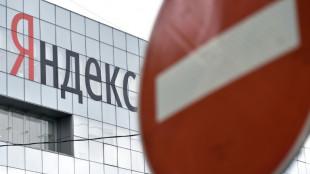 Drone hits Yandex data centre, in first such attack on Russia

 Oil prices surge and stocks sink on fresh inflation worries

 AI startup Manus raises $500m after Meta acquisition blocked by China
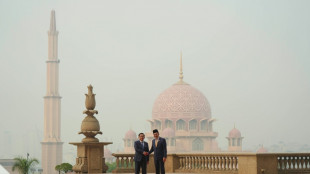 From refuge to repatriations: Malaysia's Myanmar U-turn

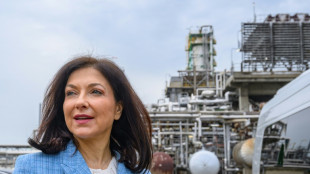
A maze of over 40,000 kilometres (25,000 miles) of pipes located at the mouth of the Seine where it spills into the Channel, the TotalEnergies refinery is working full throttle to keep planes flying and trucks running.
Halfway up a 40-metre-high metal tower, the head of the refinery's technical division, Elise Thomazo, stops to explain the workings of the facility over the continuous hum of the machinery.
"We're on the hydrocracking unit, a conversion unit that will allow us to maximize the production of diesel and kerosene for road and aviation fuels," she told AFP.
After crude oil is distilled, this set of towers replete with pumps and compressors is where they separate out different elements that allow the production of petrol, diesel and jet fuel, explained Adlene Terkmani, operations manager for this part of the facility.
Gigantic circular reservoirs surround the towers.
Black ones hold crude oil as well as the "heaviest" or densest products like bitumen.
The lightest colour reservoirs hold the "lightest" products such as petrol.
The refinery has long been geared towards producing a large proportion of jet fuel and diesel, which until recently was popular for cars in France as well as trucks.
But now it is trying to maximise that production as much as possible as the Middle East war has not only cut off a huge chunk of the world's supply of crude oil, but refined products like diesel and jet fuel as well.
France produces only half of the diesel it consumes.
- A bit more fuel -
Refineries are designed and built around refining crude into certain proportions of products. There is a bit of flexibility, but beyond a certain point it requires building additional infrastructure, a costly and lengthy undertaking.
Thus the increased production of diesel and jet fuel will be limited.
"It won't exceed five percent, at best," said Thomazo.
The TotalEnergies facility, located on the outskirts of the port city of Le Havre, is France's largest, and is key to supplying the capital some 200 kilometres to the east.
The jet fuel is dispatched by pipeline to Charles de Gaulle airport on the outskirts of Paris, while motor fuels are dispatched to fuel depots for the capital region.
Each year the refinery processes some 12 million tonnes of crude oil, producing 12 percent of fuel sold in French filling stations.
It also produces around 11 percent of the plastics made in France.
The refinery is supplied by oil tankers that dock nearby in the port of Le Havre, France's biggest.
Before the war, the refinery received around a fifth of its crude from the Gulf, which it has replaced with shipments from the United States, Europe and Africa, according to the site's new director, Francois Bourrasse.
"We don't have any particular fears about supplies," he said.
The refinery's needs are covered for the coming weeks, and it is now working on securing deliveries for June.
"This is our normal working rhythm for obtaining supplies," said Bourrasse.
The tension on oil markets has helped refineries boost their earnings, but Bourrasse called for taking a longer perspective -- until the conflict, European refineries had seen their margins squeezed by low crude prices.
K.Brown--BTB