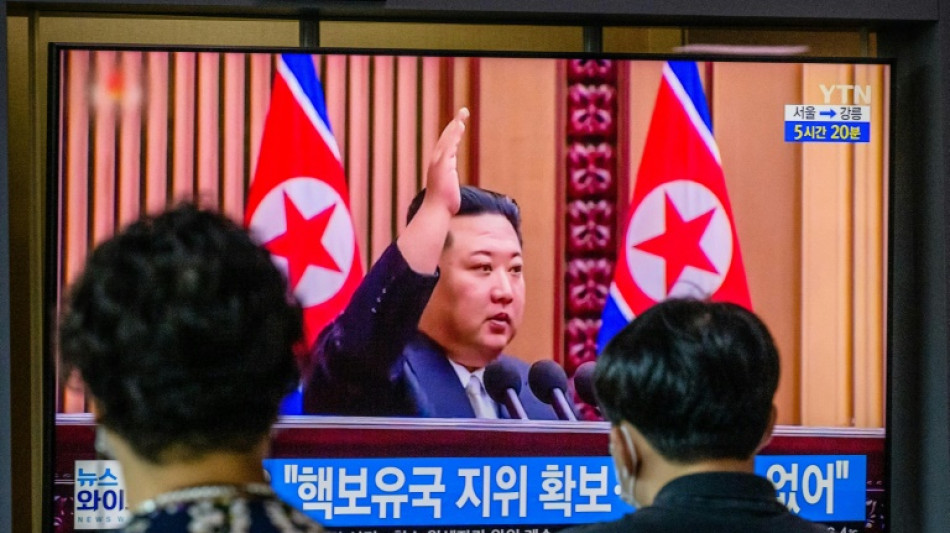
North Korea fires ballistic missiles, fourth time this week / Photo: © AFP

 UEFA set to withdraw FIFA boycott threat ahead of Champions League draw

 Sumo moves to beat Japan summer heat as temperatures rise
 'Be more honest': Markets crave clarity from cryptic Fed chair

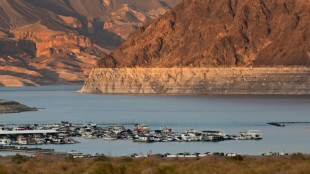 Climate change leaves its mark on America's largest reservoir
 CIA director warned Russia not to attack NATO members: US media

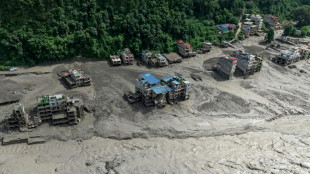
 Search for missing after Nepal-Tibet floods kills at least 160

 Meta, US states agree $18 bn settlement in landmark teen safety case

 What scientists know so far about Nepal's deadly floods

 US general visits Colombia to discuss war on drugs

 Meta settlement puts social media industry on notice: 'There will be more'
 NFL owners approve record Seahawks sale

 Nigerian armed groups net nearly $6 mn in ransoms: study

 Savio scores on debut as Spurs advance in League Cup

 Mbappe hits treble as Real Madrid thrash Real Sociedad

 At Dollywood, superfans honor the late singer and local hero

 Stocks mixed as oil drops, US inflation stays high

 Bolivia's Paz appoints new economy minister amid bailout talks

 US designates UK-based Palestine Action as foreign 'terrorist group'
 'Rocky Horror Picture Show' star Tim Curry dead at 80
 American Moll wins women's pole vault at Zurich city event

 As Canada takes on US tariffs, what's behind the David and Goliath fight?

 UEFA 'likely' to drop threat to boycott FIFA tournaments: source

 US disrupts platforms allegedly used by Chinese hackers

 The foreign tourists missing in Nepal's flash floods

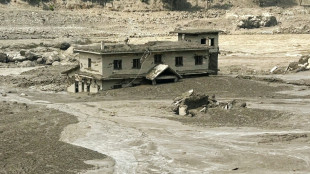 Hundreds missing after Nepal-Tibet flood kills 98

North Korea fired two ballistic missiles early Saturday, South Korea's military said, the nuclear-armed country's fourth such launch this week as Seoul, Tokyo and Washington ramp up joint military drills to counter Pyongyang.
South Korea, Japan and the US staged anti-submarine drills Friday -- the first in five years -- just days after Washington and Seoul's navies conducted large-scale exercises in waters off the peninsula.
US Vice President Kamala Harris was in Seoul Thursday and toured the heavily fortified Demilitarized Zone that divides the peninsula, on a trip that aimed to underscore her country's "ironclad" commitment to South Korea's defence against the North.
With talks long stalled, Pyongyang has doubled down on its banned weapons programmes, conducting a record-breaking blitz of tests this year and revising its laws to declare itself an "irreversible" nuclear power.
South Korea's military said it had "detected two short-range missiles between 0645 and 0703 fired from the Sunan area in Pyongyang into the East Sea", referring to the body of water also known as the Sea of Japan.
The missiles "flew approximately 350 km (217 miles) at an altitude of 30 km at speed of Mach 6", Seoul's Joint Chiefs of Staff said in a statement, calling the launches "a serious provocation".
Tokyo also confirmed the launch, saying the missiles had landed outside Japan's exclusive economic zones.
Toshiro Ino, Japan's vice defence minister, said the missiles "appear to have flown in irregular trajectories".
Experts say the irregular trajectories indicate the missiles are capable of manoeuvring in flight, making them harder to track and intercept.
The US Indo-Pacific Command said in a statement that the latest launch "highlights the destabilising impact of the DPRK's unlawful WMD and ballistic missile programs", using the official abbreviation for North Korea.
- Harris trip -
North Korea marked Harris's trip to Seoul with a flurry of missile launches -- firing off short-range ballistic missiles on Sunday, Wednesday and Thursday, including just hours after the vice president flew out of South Korea.
Washington has about 28,500 troops stationed in South Korea to help protect it from the North.
Under Seoul's President Yoon Suk-yeol, who took office in May, the two countries have boosted joint exercises, which they insist are purely defensive.
Just before Harris arrived in Seoul, Washington sent the nuclear-powered USS Ronald Reagan aircraft carrier to South Korea to conduct a large-scale joint naval exercise in a show of force against Pyongyang.
Such drills infuriate North Korea, which sees them as rehearsals for an invasion.
"North Korea's short-range ballistic tests are less important than a nuclear test but still violate UN Security Council resolutions," said Leif-Eric Easley, a professor at Ewha University in Seoul, adding that the timing was "provocative".
North Korea is "rapidly modernizing weapons and taking advantage of a world divided by US-China rivalry and Russia's annexation of more Ukrainian territory", he said.
"Pyongyang's actions again make clear the need for Washington and Seoul to reinforce military deterrence, tighten economic sanctions, and increase policy coordination with Tokyo," he added.
- Nuclear test next? -
South Korean and US officials have been warning for months that North Korean leader Kim Jong Un is preparing to conduct another nuclear test.
On Wednesday, the South's spy agency said North Korea's next nuclear test could happen in the window between China's upcoming party congress on October 16 and the US midterm elections on November 7.
North Korea, which is under multiple UN sanctions for its weapons programmes, typically seeks to maximise the geopolitical impact of its tests with careful timing.
The isolated regime has tested nuclear weapons six times since 2006, most recently in 2017.
P.Anderson--BTB