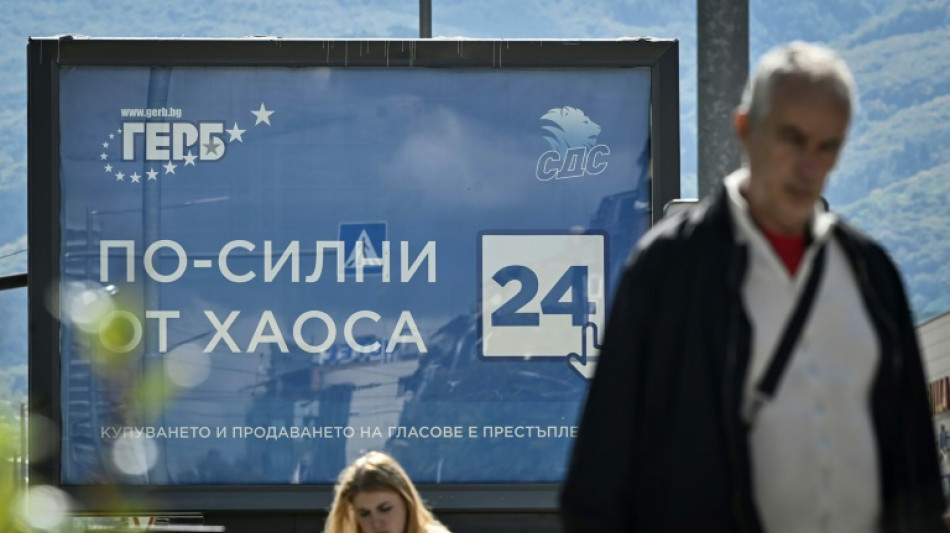
Bulgarians vote again, anxious about soaring prices / Photo: © AFP

 UEFA set to withdraw FIFA boycott threat ahead of Champions League draw
 Sumo moves to beat Japan summer heat as temperatures rise
 'Be more honest': Markets crave clarity from cryptic Fed chair

 Climate change leaves its mark on America's largest reservoir
 CIA director warned Russia not to attack NATO members: US media
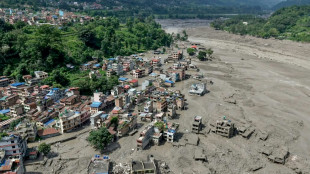 Search for missing after Nepal-Tibet floods kills at least 160
 Meta, US states agree $18 bn settlement in landmark teen safety case
 What scientists know so far about Nepal's deadly floods
 US general visits Colombia to discuss war on drugs

 Meta settlement puts social media industry on notice: 'There will be more'
 NFL owners approve record Seahawks sale
 Nigerian armed groups net nearly $6 mn in ransoms: study

 Savio scores on debut as Spurs advance in League Cup
 Mbappe hits treble as Real Madrid thrash Real Sociedad

 At Dollywood, superfans honor the late singer and local hero
 Stocks mixed as oil drops, US inflation stays high

 Bolivia's Paz appoints new economy minister amid bailout talks

 US designates UK-based Palestine Action as foreign 'terrorist group'
 'Rocky Horror Picture Show' star Tim Curry dead at 80
 American Moll wins women's pole vault at Zurich city event
 As Canada takes on US tariffs, what's behind the David and Goliath fight?
 UEFA 'likely' to drop threat to boycott FIFA tournaments: source
 US disrupts platforms allegedly used by Chinese hackers
 The foreign tourists missing in Nepal's flash floods

 Hundreds missing after Nepal-Tibet flood kills 98
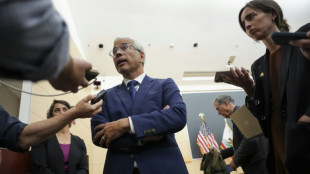
Bulgarians vote Sunday in their fourth general election in 18 months, anxious about soaring consumer prices and energy costs ahead of a winter overshadowed by the Ukraine war.
While endemic corruption was the focus of the previous vote last November, economic woes are now top of voters' concerns.
The European Union's poorest member state is battling annual inflation of close to 20 percent.
"Voters are preoccupied with the prices a lot more than with the geostrategical topics that political parties bicker about," political analyst Antony Todorov told AFP.
Recent studies revealed "a fear of winter" among many Bulgarians worried about the looming impact of rising costs for heating and food.
Attempting to address those fears, former three-time premier Boyko Borisov -- who is eyeing another comeback -- pledged to supporters Friday to combat "the chaos".
The 63-year-old who dominated politics for a decade until last year told a final campaign event in the central city of Plovdiv that he would "work for the stability of the country".
Polls on the eve of the ballot put his conservative GERB party in front, with about 25 percent of the votes.
- 'More work to do' -
The Balkan country has been dogged by political instability since early last year when the GERB party lost power following massive anti-corruption demonstrations.
Borisov's rival, outgoing reformist premier Kiril Petkov, 42, has urged voters to let him "continue the change" he started but is lagging in the polls on around 16 percent.
The Harvard-educated former entrepreneur stormed onto the political scene in 2021 and managed to piece together a precarious four-party coalition after winning last November's vote.
However, after only a seven-month stint in power, he was toppled in a no-confidence motion.
In an interview with AFP this week, Petkov trumpeted his success in the fight against "corruption practices" that allowed his cabinet to redistribute public funds, offering pension rises and free kindergartens.
"So it's a great first step, but we have a lot more work to do," he said.
"The challenge is to really show that the Bulgarians have made the choice, the choice for a new European, progressive, transparent Bulgaria versus going back to the years of transition, to the politicians of corruption," he urged.
Petkov categorically ruled out holding talks on forming a coalition with Borisov, heightening fears that the vote may fail to end the country's worst period of political instability since the end of communism in 1989.
- Pro-Russian kingmakers? -
Borisov, on the other hand, has said he would be "open to anyone" for talks on a cabinet for the sake of stability.
Todorov, the analyst, said he was sceptical about the chances of Borisov's GERB party being in that position.
"I don't believe that GERB, which is very isolated, could return to power," Todorov said.
"The situation is critical, Bulgaria needs a government but not at any cost," he added.
Another analyst, Georgy Kiryakov, said Borisov could find potential coalition partners in the Turkish minority MRF party and the ultra-nationalist Vazrazhdane party.
The openly pro-Russian formation has gained popularity since the start of the Russian invasion of Ukraine in February.
In a country with close historical, economic and cultural ties with Moscow, latest polls credit it with 11 to 14 percent of the vote.
Vazrazhdane's "behaviour could prove decisive", Kiryakov said.
The protracted political instability has left Bulgaria struggling to pass reforms and has hampered economic growth.
It has also accelerated an exodus of young people from the country, which has already lost a 10th of its population in the past decade.
And the cost of holding one snap election after another is also an issue that Borisov jumped on at Friday's campaign event.
Linking the outlay to big infrastructure projects that he championed while in office, he said: "We have spent a billion for elections, as much as (for building) four stadiums in Plovdiv."
vs/anb/ds/kjm/it
W.Lapointe--BTB