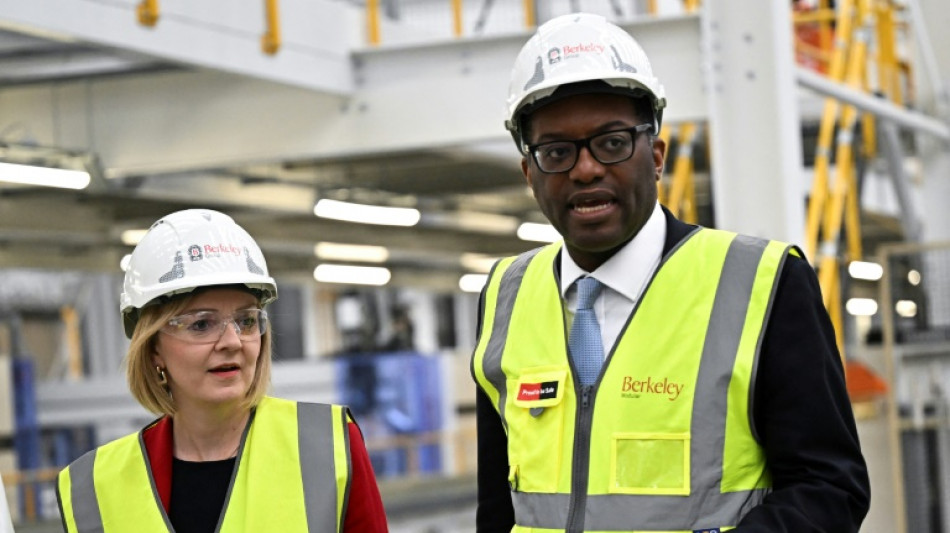
UK's Truss admits tax cuts misstep at start of tense Tory conference / Photo: © POOL/AFP

 UEFA set to withdraw FIFA boycott threat ahead of Champions League draw

 Sumo moves to beat Japan summer heat as temperatures rise
 'Be more honest': Markets crave clarity from cryptic Fed chair
 Climate change leaves its mark on America's largest reservoir
 CIA director warned Russia not to attack NATO members: US media
 Search for missing after Nepal-Tibet floods kills at least 160
 Meta, US states agree $18 bn settlement in landmark teen safety case
 What scientists know so far about Nepal's deadly floods
 US general visits Colombia to discuss war on drugs

 Meta settlement puts social media industry on notice: 'There will be more'
 NFL owners approve record Seahawks sale
 Nigerian armed groups net nearly $6 mn in ransoms: study

 Savio scores on debut as Spurs advance in League Cup
 Mbappe hits treble as Real Madrid thrash Real Sociedad

 At Dollywood, superfans honor the late singer and local hero
 Stocks mixed as oil drops, US inflation stays high

 Bolivia's Paz appoints new economy minister amid bailout talks

 US designates UK-based Palestine Action as foreign 'terrorist group'

 'Rocky Horror Picture Show' star Tim Curry dead at 80

 American Moll wins women's pole vault at Zurich city event
 As Canada takes on US tariffs, what's behind the David and Goliath fight?
 UEFA 'likely' to drop threat to boycott FIFA tournaments: source
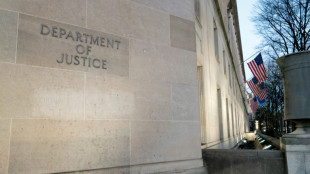 US disrupts platforms allegedly used by Chinese hackers
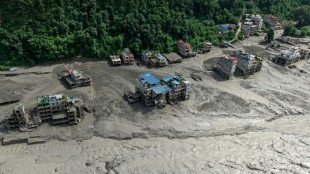 The foreign tourists missing in Nepal's flash floods

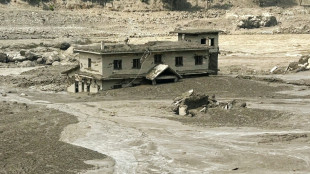 Hundreds missing after Nepal-Tibet flood kills 98
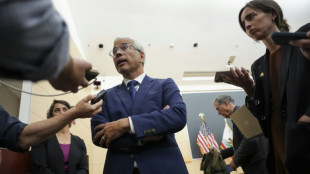
UK Prime Minister Liz Truss on Sunday conceded she should have better prepared Britain for her recent debt-fuelled mini-budget, which sparked a week of market turmoil, dismal headlines and disastrous polls.
Less than a month into the job but already mired in a deep crisis, the new Tory leader insisted her controversial plans would return Britain to economic growth, as it grapples with decades-high inflation and imminent recession.
"I do stand by the package we announced... but I do accept we should have laid the ground better there," Truss told the BBC as her restive ruling Conservatives' annual conference gets underway in Birmingham.
"We have a clear plan moving forward both to deal with the energy crisis and to deal with inflation, but also to get the economy growing and to put us on a good long-term footing," she added.
Opposition parties, much of the public and even Conservative MPs -- notably backers of her defeated leadership rival Rishi Sunak -- are aghast at the proposals to cut taxes unveiled 10 days ago by finance minister Kwasi Kwarteng.
Markets tanked in response to the package, and the Bank of England staged an emergency intervention to bail out embattled pension funds, setting the stage for a difficult four-day gathering in Birmingham.
Appearing on the BBC immediately after Truss, senior Tory MP Michael Gove branded the plans "profoundly" wrong and said there would need to be "a course correction".
Ahead of Sunday, Truss broke nearly a week of silence Thursday with a round of broadcast interviews with regional BBC stations -- when her awkward pauses generated almost as many headlines as her defence of the plan.
She then followed up with further interviews and a newspaper article Friday in which she vowed to press on with the policies but get "an iron grip" on public finances.
"Of course, we need to bring down borrowing as a proportion of GDP over the medium term, and I have a plan to do that," the under-fire leader reiterated Sunday.
The live TV appearance was her first before a national UK audience since Kwarteng unveiled the contentious proposals on September 23, and comes after a raft of polls showed a dramatic slump for her party.
One poll Friday by YouGov found that 51 percent of Britons think that Truss should resign -- and 54 percent want Kwarteng to go.
- Existential threat? -
Several other polls in recent days showed the opposition Labour party with mammoth leads of up to 33 points over the Conservatives -- its biggest since the heyday of former Labour prime minister Tony Blair in the late 1990s.
Echoing Blair, Labour leader Keir Starmer says that his party now represents mainstream UK voters, and has demanded Truss recall parliament rather than press ahead with her conference.
As it is, both Sunak and former prime minister Boris Johnson are reportedly staying away from Birmingham.
But Truss will have plenty of critics lying in wait at what the Tories bill as Europe's largest annual political event.
Protesters angry at rising energy bills and the government's handling of the worsening cost-of-living crisis massed in London and Birmingham Saturday, with more demonstrations planned for the start of the Tory conference Sunday.
Kwarteng is due to address the party's four-day grassroots gathering on Monday, before Truss closes it with the leader's keynote speech on Wednesday.
Although both have ruled out a U-turn on their economic package, they conceded ground Friday by allowing the Office for Budget Responsibility to send Kwarteng an initial independent costing score-card of it later next week.
The conference programme has already been pared back to eliminate some of its fringe partying following the September 8 death of Queen Elizabeth II -– who appointed Truss only two days before she died.
Not that there is much to celebrate for the Tories, given their poll ratings, which have fuelled speculation that Truss could face her own leadership challenge, or that she may sacrifice Kwarteng.
Many commentators are urging contrition from the duo in Birmingham, to avoid the kind of doomsday scenario laid out by senior Tory MP Charles Walker.
A general election is not due until January 2025 at the latest. But if one were held tomorrow, Walker said, "we would cease to exist as a functioning political party".
C.Meier--BTB