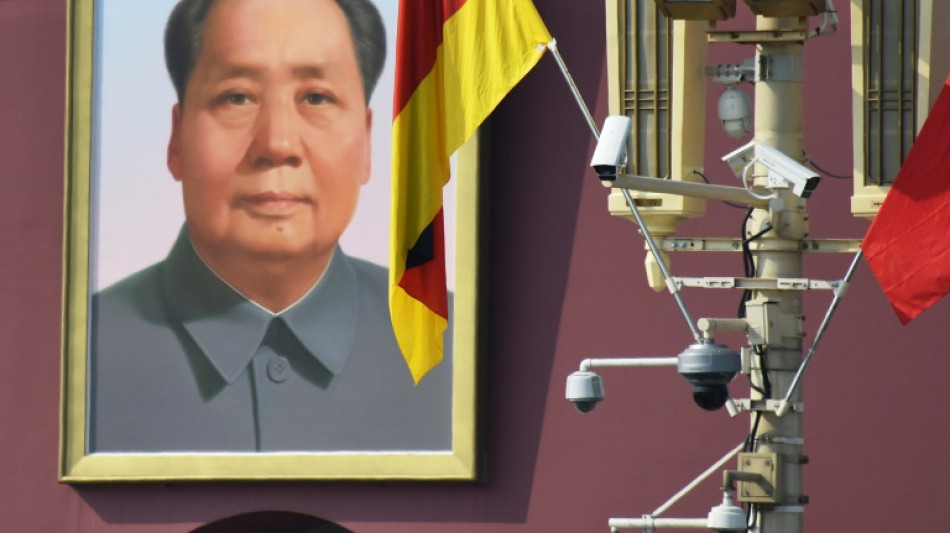
'Watched the whole time': China's surveillance state grows under Xi / Photo: © AFP/File

 Palace intrigue in Uganda as succession battle heats up

 'Housing First' approach gets Swedish city's homeless off streets

 Czech duo Muchova and Mensik win US Open mixed doubles title
 Japan's 'polka dot queen' artist Yayoi Kusama dies aged 97

 Nepal-Tibet disaster: what we know

 China deploys record number of ships around Taiwan as pressure grows
 Ruthless Bayern target treble as rivals reboot on Bundesliga return

 What experts know so far about Nepal's deadly floods

 UEFA set to withdraw FIFA boycott threat ahead of Champions League draw

 Sumo moves to beat Japan summer heat as temperatures rise

 'Be more honest': Markets crave clarity from cryptic Fed chair

 Climate change leaves its mark on America's largest reservoir

 CIA director warned Russia not to attack NATO members: US media

 Search for missing after Nepal-Tibet floods kills at least 160
 Meta, US states agree $18 bn settlement in landmark teen safety case

 What scientists know so far about Nepal's deadly floods

 US general visits Colombia to discuss war on drugs
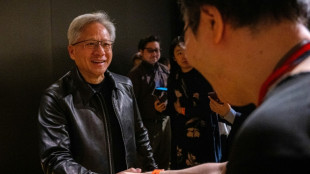
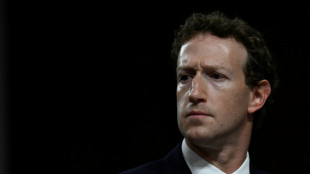 Meta settlement puts social media industry on notice: 'There will be more'
 NFL owners approve record Seahawks sale

 Nigerian armed groups net nearly $6 mn in ransoms: study

 Savio scores on debut as Spurs advance in League Cup

 Mbappe hits treble as Real Madrid thrash Real Sociedad

 At Dollywood, superfans honor the late singer and local hero
 Stocks mixed as oil drops, US inflation stays high

 Bolivia's Paz appoints new economy minister amid bailout talks
When Chen picked up his phone to vent his anger at getting a parking ticket, his message on WeChat was a drop in the ocean of daily posts on China's biggest social network.
But soon after his tirade against "simple-minded" traffic cops in June, he found himself in the tentacles of the communist country's omniscient surveillance apparatus.
Chen quickly deleted the post, but officers tracked him down and detained him within hours, accusing him of "insulting the police".
He was locked up for five days for "inappropriate speech".
His case -- one of the thousands logged by a dissident and reported by local media -- laid bare the pervasive monitoring that characterises life in China today.
Its leaders have long taken an authoritarian approach to social control.
But since President Xi Jinping took power in 2012, he has reined in the relatively freewheeling social currents of the turn of the century, using a combination of technology, law and ideology to squeeze dissent and preempt threats to his rule.
Ostensibly targeting criminals and aimed at protecting order, social controls have been turned against dissidents, activists and religious minorities, as well as ordinary people -- such as Chen -- judged to have crossed the line.
- Eyes in the sky -
The average Chinese citizen today spends nearly every waking moment under the watchful eye of the state.
Research firm Comparitech estimates the average Chinese city has more than 370 security cameras per 1,000 people -- making them the most surveilled places in the world -- compared with London's 13 or Singapore's 18 per 1,000.
The nationwide "Skynet" urban surveillance project has ballooned, with cameras capable of recognising faces, clothing and age.
"We are being watched the whole time," an environmental activist who declined to be named told AFP.
The Communist Party's grip is most stark in the far-western region of Xinjiang, where facial recognition and DNA collection have been deployed on mainly Muslim minorities in the name of counter-terrorism.
The Covid-19 pandemic has turbo-charged China's monitoring framework, with citizens now tracked on their smartphones via an app that determines where they can go based on green, yellow or red codes.
Regulations rolled out since 2012 closed loopholes that allowed people to purchase SIM cards without giving their names, and mandated government identification for tickets on virtually all forms of transport.
- Online offences -
There is no respite online, where even shopping apps require registration with a phone number tied to an identification document.
Wang, a Chinese dissident speaking to AFP under a pseudonym due to safety concerns, recalled a time before Xi when censors were not all-knowing and "telling jokes about (former Chinese president) Jiang Zemin on the internet was actually very popular".
But the Chinese internet -- behind the "Great Firewall" since the early 2000s -- has become an increasingly policed space.
Wang runs a Twitter account tracking thousands of cases of people detained, fined or punished for speech acts since 2013.
Thanks to the real-name verification system as well as cooperation between police and social media platforms, people have been punished for a vast array of online offences.
Platforms such as Weibo employ thousands of content moderators and automatically block politically sensitive keywords, such as tennis star Peng Shuai's name after she accused a senior politician of sexual assault last year.
Cyberspace authorities are proposing new rules that would force platforms to monitor comments sections on posts -- one of the last avenues for people to voice their grievances online.
- Ideological policing -
Many of the surveillance technologies in use have been embraced in other countries.
"The real difference in China is the lack of independent media and civil society able to provide meaningful criticism of innovations or to point out their many flaws," Jeremy Daum, from the Paul Tsai China Center at Yale Law School, told AFP.
Xi has reshaped Chinese society, with the Communist Party stipulating what citizens "ought to know, to feel, to think, and say, and do", Vivienne Shue, professor emeritus of contemporary China studies at Oxford University, told AFP.
Youngsters are kept away from foreign influences, with authorities banning international books and forbidding tutoring companies from hiring overseas teachers.
Ideological policing has even extended to fashion, with television stations censoring tattoos and earrings on men.
"What disturbs me more is not the censorship itself, but how it shaped the ideology of people," said Wang, the Twitter account owner.
"With dissenting information being eliminated, every website becomes a cult, where the government and leaders have to be worshipped."
M.Ouellet--BTB