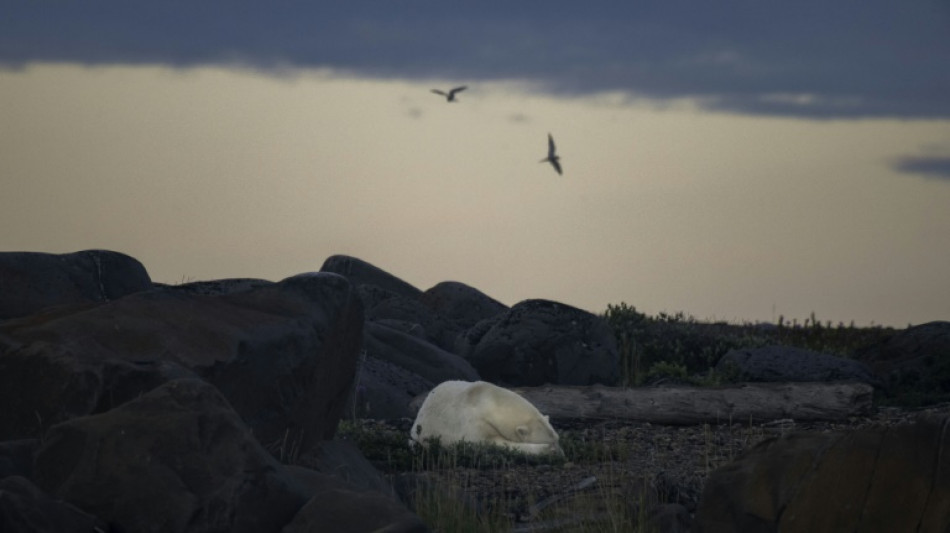
Study quantifies link between greenhouse gases, polar bear survival / Photo: © AFP/File

 Hurricane Polo strengthens to top category 5 off Mexico

 11 hurt as teen opens fire outside school in western Turkey

 UN chief says 'Big Oil' treats atmosphere as open sewer

 Tunisia says 2026 summer hottest on record

 England's Rashid out of Sri Lanka ODIs with hand injury

 Houthis accuse Saudi Arabia of deadly strikes as thousands flee

 Stocks climb as oil slides, AI buzz returns

 India cricketers win in style as Afghan savours 'special' Games silver

 La Liga president hits out at Real Madrid refereeing 'conspiracy' claims

 MEXC Launches “Real Stocks, Real Friends” with Rewards for Bringing Friends to Wall Street

 Mbappe continues media push for Ballon d'Or recognition

 Stocks rise on AI buzz, oil prices cool

 India narrowly survive huge scare against minnows Japan

 Missing F-35 fighter parts 'not sensitive', says Australia minister

 Cambodia showcases scams crackdown with global conference

 Afghan cyclist who disguised herself as man wins Asian Games silver

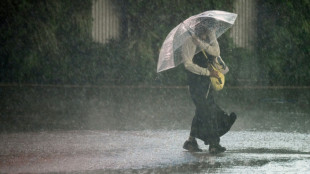 Typhoon Dujuan leaves four dead in Japan, 45,000 houses without power

 G7 leaders condemn Houthi strikes on Saudi Arabia

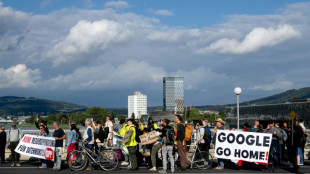 Google data centre sparks protests in Austria

 Shin Ohashi: Junk food-loving teen and Japan's next big swimming hope

 Stocks rise on AI buzz, drop in oil prices

 China's robot dancers limber up for America's Got Talent final

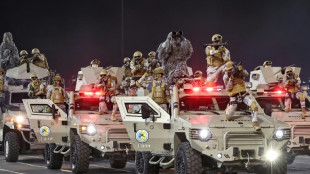 Despite military might, Saudi struggles to crush the Houthis

 Trump to tout deals, defend Iran war in UN speech

 Sri Lanka to issue verdict in landmark Easter attack trial

Polar bears have long symbolized the dangers posed by climate change, as rising temperatures melt away the Arctic sea ice which they depend upon for survival.
But quantifying the impact of a single oil well or coal power plant on the tundra predators had eluded scientists, until now.
A new report published in the journal Science on Thursday shows it is possible to calculate how much new greenhouse gas emissions will increase the number of ice-free days in the bears' habitats, and how that in turn will affect the percentage of cubs that reach adulthood.
By achieving this level of granularity, the two authors hope to close a loophole in US law.
Although the apex carnivores have had endangered species protections since 2008, a long-standing legal opinion prevents climate considerations from affecting decisions on whether to grant permits to new fossil fuel projects.
"We have presented the information necessary to rescind the Bernhardt Memo," first co-author Steven Amstrup, a zoologist with Polar Bears International and the University of Wyoming, told AFP, referring to the legal caveat which was named after an attorney in former president George W. Bush's administration.
The memo stated it was beyond the scope of existing science to distinguish the impacts of a specific source of carbon emissions from the impacts of all greenhouse gasses since the beginning of the industrial age.
- Cub survival imperiled -
Polar bears rely heavily on the sea ice environment for hunting seals, traveling, mating and more.
When sea ice melts in summer, the apex carnivores retreat onto land or unproductive ice far from the shore, where they endure long stretches of fasting. These periods are growing longer as global temperatures rise.
A landmark paper published in Nature in 2020 was the first to calculate links between changes in the sea ice caused by climate and polar bear demographics.
Building on this work, Amstrup and Bitz established the mathematical relationships between greenhouse emissions and fasting days as well as cub survival, in 15 out of 19 of the polar bears' subpopulations, between 1979 and 2020.
For example, the world currently emits 50 billion metric tons of carbon dioxide or equivalent gasses into the atmosphere annually, and that is reducing the rate of cub survival by over three percentage points per year in the South Beaufort Sea subpopulation.
In healthy populations, cub survival during the first year of life is around 65 percent.
"You don't have to knock that down very far before you don't have enough cubs entering the next generation," said Amstrup.
In addition, the paper provides US policy makers the tools they need to quantify the impact of new fossil fuel projects slated to occur on public lands in the coming decades.
- Implications for other species -
Joel Berger, university chair of wildlife conservation at Colorado State University, praised the paper.
"Amstrup and Bitz render an incontrovertible quantitative link among (greenhouse gas) emissions, sea ice decline, fasting duration -- a physiological response to lost hunting opportunities for seals -- and subsequent polar bear demographics -- declining recruitment of young," said Berger, who was not involved in the research.
Beyond providing a potential policy solution to the legal loophole, the new research could have implications that reach far beyond polar bears, second co-author Cecilia Bitz, a climatologist at the University of Washington, told AFP.
Methods laid out in the paper can be adapted for other species and habitats, such as coral reefs, or Florida's Key deer.
"I really hope this stimulates a lot of research," Bitz said, adding she was already reaching out to new collaborators.
K.Brown--BTB