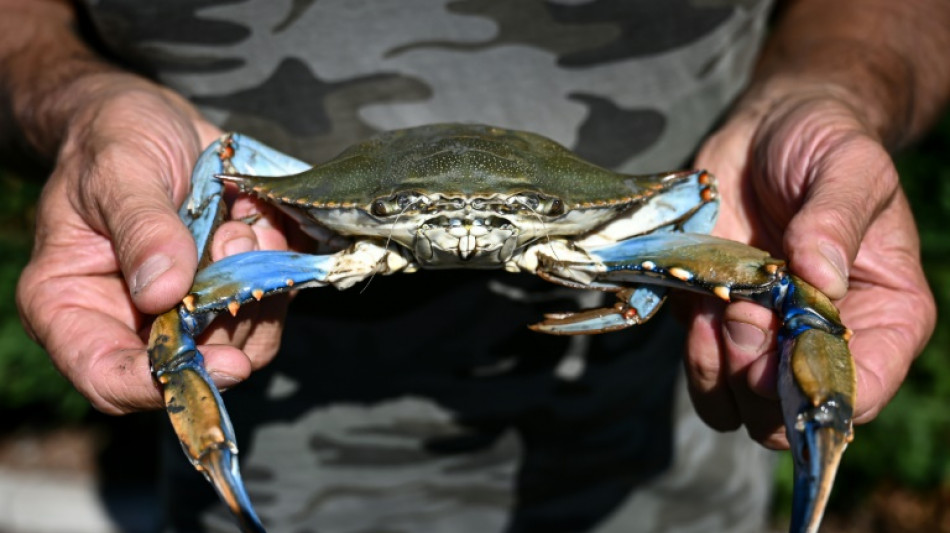
Invasive species a growing and costly threat, key report to find / Photo: © AFP/File

 Hurricane Polo strengthens to top category 5 off Mexico

 11 hurt as teen opens fire outside school in western Turkey

 UN chief says 'Big Oil' treats atmosphere as open sewer

 Tunisia says 2026 summer hottest on record

 England's Rashid out of Sri Lanka ODIs with hand injury

 Houthis accuse Saudi Arabia of deadly strikes as thousands flee

 Stocks climb as oil slides, AI buzz returns

 India cricketers win in style as Afghan savours 'special' Games silver

 La Liga president hits out at Real Madrid refereeing 'conspiracy' claims

 MEXC Launches “Real Stocks, Real Friends” with Rewards for Bringing Friends to Wall Street

 Mbappe continues media push for Ballon d'Or recognition

 Stocks rise on AI buzz, oil prices cool

 India narrowly survive huge scare against minnows Japan

 Missing F-35 fighter parts 'not sensitive', says Australia minister

 Cambodia showcases scams crackdown with global conference

 Afghan cyclist who disguised herself as man wins Asian Games silver

 Typhoon Dujuan leaves four dead in Japan, 45,000 houses without power

 G7 leaders condemn Houthi strikes on Saudi Arabia

 Google data centre sparks protests in Austria

 Shin Ohashi: Junk food-loving teen and Japan's next big swimming hope

 Stocks rise on AI buzz, drop in oil prices

 China's robot dancers limber up for America's Got Talent final

 Despite military might, Saudi struggles to crush the Houthis

 Trump to tout deals, defend Iran war in UN speech

 Sri Lanka to issue verdict in landmark Easter attack trial

Invasive species that destroy forests, ravage crops and cause extinctions are a major and growing threat worldwide, a landmark UN-backed assessment is poised to report.
From water hyacinth choking Lake Victoria in East Africa, to rats and brown snakes wiping out bird species in the Pacific, to mosquitoes exposing new regions to Zika, yellow fever, dengue and other diseases, tens of thousand of aliens species have taken root -- often literally -- far from their place of origin.
The science advisory panel for the UN Convention on Biodiversity, known by its acronym IPBES, will release on Monday the most comprehensive assessment of so-called "alien species" ever assembled.
Humans are to blame when non-native species wind up on the other side of the world, whether by accident or on purpose.
Scientists point to the pervasive spread of these species as hard evidence that rapid expansion of human activity has so radically altered natural systems as to tip Earth into a new geological epoch called the Anthropocene, or the "era of humans".
Some invasive species are accidental arrivals, hitching rides in the ballast water of cargo ships, the containers in their holds, or in a tourist's suitcase.
Others were introduced deliberately.
The hyacinth which at one point covered 90 percent of Lake Victoria -- crippling transport and fishing, smothering aquatic life, blocking hydroelectric dam intake, and breeding mosquitoes -- is thought to have been introduced by Belgian colonial officials in Rwanda as an ornamental garden flower before making its way down the Kagera River in the 1980s.
The Everglades wetlands preserve in Florida is teeming with the destructive offspring of erstwhile pets and house plants, from five-metre (16-foot) Burmese pythons and walking catfish to Old World climbing fern and Brazilian pepper.
Invasive species are a significant cause of extinctions, along with habitat loss, global warming, pollution and direct exploitation for food or body parts.
Small islands with endemic species not found anywhere else on Earth are especially vulnerable.
Rats, snakes and mosquitoes transported by Western explorers or, later, tourists have wiped out dozens of bird species in the last two centuries.
The deadly fire that reduced the Hawaiian town of Lahaina to ashes last month was fuelled in part by bone-dry guinea, molasses and buffel grasses -- imported as livestock feed -- that have spread across abandoned sugar plantations.
A global treaty to protect biodiversity hammered out in the Canadian city of Montreal last December sets a target of reducing the rate at which invasive alien species spread by 50 percent compared to current levels.
A.Gasser--BTB