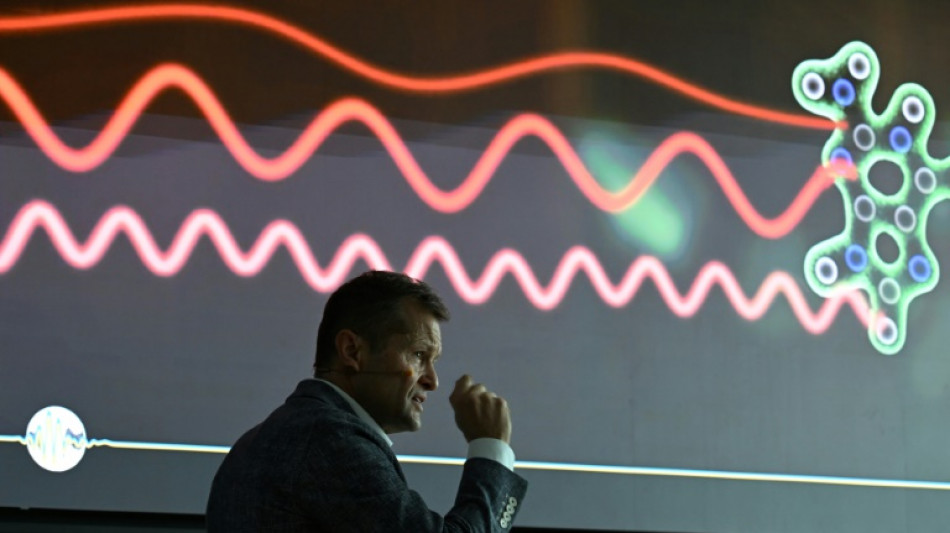
Trio wins physics Nobel for illuminating electrons / Photo: © AFP

 Trump renames AI "super intelligence," rejects international oversight
 Trump rejects international regulation of AI
 How is the EU approaching record fuel prices?

 Sri Lanka's Colombage strikes on debut as England dismissed for 265 in first ODI
 Hurricane Polo strengthens to top category 5 off Mexico
 11 hurt as teen opens fire outside school in western Turkey

 UN chief says 'Big Oil' treats atmosphere as open sewer
 Tunisia says 2026 summer hottest on record
 England's Rashid out of Sri Lanka ODIs with hand injury

 Houthis accuse Saudi Arabia of deadly strikes as thousands flee
 Stocks climb as oil slides, AI buzz returns
 India cricketers win in style as Afghan savours 'special' Games silver

 La Liga president hits out at Real Madrid refereeing 'conspiracy' claims

 MEXC Launches “Real Stocks, Real Friends” with Rewards for Bringing Friends to Wall Street

 Mbappe continues media push for Ballon d'Or recognition

 Stocks rise on AI buzz, oil prices cool

 India narrowly survive huge scare against minnows Japan

 Missing F-35 fighter parts 'not sensitive', says Australia minister

 Cambodia showcases scams crackdown with global conference
 Afghan cyclist who disguised herself as man wins Asian Games silver
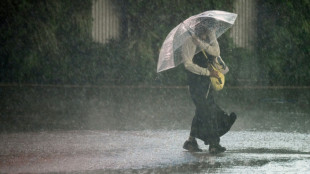 Typhoon Dujuan leaves four dead in Japan, 45,000 houses without power
 G7 leaders condemn Houthi strikes on Saudi Arabia

 Google data centre sparks protests in Austria
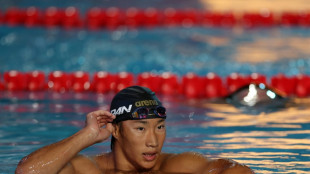 Shin Ohashi: Junk food-loving teen and Japan's next big swimming hope

 Stocks rise on AI buzz, drop in oil prices

France's Pierre Agostini, Hungarian-Austrian Ferenc Krausz and French-Swedish Anne L'Huillier won the Nobel prize in physics on Tuesday for research using ultra quick light flashes that enable the study of electrons inside atoms and molecules.
Their technique employs pulses measured in attoseconds, a unit so short that there are as many in one second as there have been seconds since the universe's birth over 13 billion years ago, the jury said.
The laureates' research has made it possible to examine moves or changes so rapid that they were previously impossible to follow, with potential applications in both electronics and medical diagnostics.
The Royal Swedish Academy of Sciences likened the process to how the flapping wings of a humming bird turn into a blur for the human eye, but can be slowed and examined using high-speed photography.
"We can now open the door to the world of electrons. Attosecond physics gives us the opportunity to understand mechanisms that are governed by electrons," Eva Olsson, chair of the Nobel Committee for Physics, said in a statement.
- 'Not so many women' -
In 1987, L'Huillier "discovered that many different overtones of light arose when she transmitted infrared laser light through a noble gas," the Nobel Committee noted, adding that she has continued to explore this phenomenon, "laying the ground for subsequent breakthroughs".
In the early 2000s, Agostini and Krausz worked on experiments that made it possible to isolate light pulses that lasted only a few hundred attoseconds.
L'Huillier, only the fifth woman to be awarded the Physics Prize since 1901, is a professor at Lund University in Sweden.
L'Huillier told reporters she was in the middle of teaching a class when she received the call from the Academy, making it "difficult" to finish the class, to whom she told nothing.
"I am very touched ... There are not so many women that get this prize so it's very, very special," she said.
Before L'Huillier, Marie Curie (1903), Maria Goeppert Mayer (1963), Donna Strickland (2018) and Andrea Ghez (2020) are the only women to have won the award.
Speaking later at a press conference, she encouraged young women interested in a career in science to "go for it".
The laureate, who is married and has two sons, stressed it was possible to combine a research career with an "ordinary life, with a family and children."
L'Huillier and Krausz had been seen as contenders for the honour, having been awarded the prestigious Wolf Prize last year together with Canadian physicist Paul Corkum.
- Fellow Hungarian -
However, Krausz said he had not been expecting a call.
"I was not sure whether I was dreaming or whether it was reality," he told the Nobel Foundation in an interview.
The physicist said he had been preparing for an open day at the institute where he worked, where he was meant to hold a few lectures for interested visitors.
"It remains to be seen whether this is going to work out, but this is at least the plan," Krausz said.
The physics award is the second Nobel of the season after the Medicine Prize on Monday, awarded to messenger RNA researchers Katalin Kariko, a Hungarian like Krausz, and Drew Weissman for their groundbreaking technology that paved the way for mRNA Covid-19 vaccines.
Krausz said he had been pleased to hear of the award for his compatriot.
"I'm a great admirer of her, not just for her achievements, but also for the way she actually achieved what she achieved," he said, referring to the years Kariko toiled away at her research despite struggling to achieve recognition and even secure funding for it.
The Physics Prize will be followed by the Chemistry Prize on Wednesday, with the highly watched Literature and Peace Prizes to be announced on Thursday and Friday.
The Economics Prize -- created in 1968 and the only Nobel not included in the 1895 will of Swedish inventor and philanthropist Alfred Nobel, which founded the awards -- closes out the 2023 Nobel season on Monday.
M.Odermatt--BTB