Germans turn to health apps as insurers foot the bill / Photo: © GETTY IMAGES NORTH AMERICA/AFP

 Typhoon Dujuan leaves four dead in Japan, 45,000 houses without power

 G7 leaders condemn Houthi strikes on Saudi Arabia

 Google data centre sparks protests in Austria

 Shin Ohashi: Junk food-loving teen and Japan's next big swimming hope

 Stocks rise on AI buzz, drop in oil prices

 China's robot dancers limber up for America's Got Talent final

 Despite military might, Saudi struggles to crush the Houthis

 Trump to tout deals, defend Iran war in UN speech

 Sri Lanka to issue verdict in landmark Easter attack trial

 No green light to lift EU sanctions on Russian oligarchs, talks to resume

 UK agrees support for Saudi in struggle with Houthis: reports
 EU foreign policy chief calls for continued sanctions on Russia

 Flights scrapped, evacuations urged as Typhoon Dujuan wallops Japan

 Fonseca to take break from tennis

 A Cuban zoo, and its animals, in epic battle for survival

 Infantino proposes consulting federations to reform FIFA

 El Nino weather pattern enters record territory: scientist

 OpenAI calls for US to lead global effort on AI standards

 South African ostriches plucked alive for luxury fashion: report

 US networks halt Trump coverage in revolt over White House ban

 Paramount settles with US states to clear Warner Bros. mega-merger
 Climate crisis a job for world leaders, not just activists: UK FM

 US networks halt Trump coverage over White House ban
 French singer accuses Miley Cyrus of plagiarism
 EU fines Google 403 mn euros for location data breach

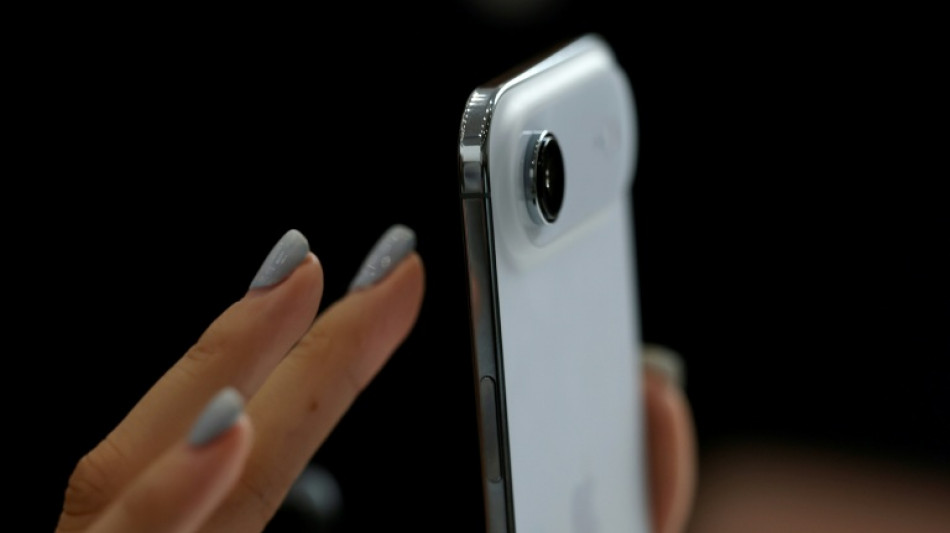
German doctors are increasingly prescribing smartphone health apps alongside pills and therapy to patients, marking a growing trend towards digital healthcare.
Civil servant Mona Noe, 30, has long kept close watch over her diet in order to reduce cramps and bloating caused by irritable bowel syndrome.
Noe managed to persuade her doctor to prescribe her the app Cara Care, where she receives wellness tips and keeps a food diary to identify her pain triggers.
"It is difficult to do it by yourself," she said, preparing a vegetable stir fry without peppers or tomatoes at her home in Schleiden in western Germany, as per the app's instructions.
"The app has transformed my cooking by helping me avoid certain foods."
Applications that help patients quit smoking, fight obesity or improve their mental health often cost hundreds of euros a month, but insurance companies are helping by footing the bill.
The programme Noe uses is one of 56 now covered by German health insurers, signalling the country's turn towards digital health over traditional pen and paper options.
- 'Around the clock' -
The digital health tools, known as "DiGA" in Germany, have been available on prescription since 2020, typically on three-month renewable subscriptions.
In the five years since the programme began, more than one million prescriptions have been written, according to a study by digital healthcare sector association SVDGV.
Nearly 60 percent of doctors in Germany have prescribed at least one DiGA, and the number of prescriptions written for them in 2024 was up by 85 percent from the previous year.
Johannes Patze, a doctor in Frankfurt, said he prescribes them "almost daily" -- particularly for mental health support while patients are on a waiting list for a therapy appointment.
The apps provide patients with personalised mood tracking, online consultations with professionals, meditation sessions and motivational notifications.
The benefit, Patze said, is that "they're available around the clock, 24/7".
But they come with a cost. A three-month health app subscription costs 600 euros ($705) on average.
Health insurers have paid out 234 million euros for subscription services since 2020.
- 'Easing the burden' -
Germany's Association of Statutory Health Insurance Funds has criticised "excessive" application pricing and warns that there is little hard evidence to back up how effective they are.
But Patze told AFP that the apps could prove a reliable way of lowering healthcare costs in years to come.
Germany spent 326.9 billion euros on healthcare in 2024 -- higher than in previous years and partly due to an ageing population.
"The costs are probably lower in the long run since patients are better taken care of," said Patze.
Digital health consultant Henrik Matthies agreed.
"It's an upfront cost," he said, "but it helps patients get back to work sooner, easing the burden on the healthcare system."
The success of health apps in Germany is partly down to a fast-track approval process that is unusual in a country often mocked for its tedious bureaucracy.
App developers can obtain provisional approval for a programme within three months of applying. They then have a year to demonstrate its clinical effectiveness.
This speedy process "was a catalyst" for the system, Matthies said. Of 228 applications made in the past five years, 43 have received full approval and 13 are still under review.
L.Dubois--BTB