AI tool helps researchers treat child epilepsy / Photo: © AFP

 Typhoon Dujuan leaves four dead in Japan, 45,000 houses without power
 G7 leaders condemn Houthi strikes on Saudi Arabia
 Google data centre sparks protests in Austria

 Shin Ohashi: Junk food-loving teen and Japan's next big swimming hope

 Stocks rise on AI buzz, drop in oil prices

 China's robot dancers limber up for America's Got Talent final

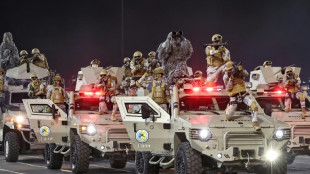 Despite military might, Saudi struggles to crush the Houthis

 Trump to tout deals, defend Iran war in UN speech

 Sri Lanka to issue verdict in landmark Easter attack trial

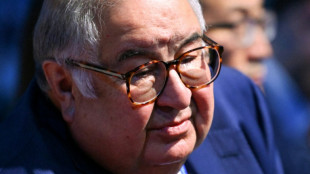 No green light to lift EU sanctions on Russian oligarchs, talks to resume

 UK agrees support for Saudi in struggle with Houthis: reports

 EU foreign policy chief calls for continued sanctions on Russia

 Flights scrapped, evacuations urged as Typhoon Dujuan wallops Japan

 Fonseca to take break from tennis

 A Cuban zoo, and its animals, in epic battle for survival

 Infantino proposes consulting federations to reform FIFA
 El Nino weather pattern enters record territory: scientist

 OpenAI calls for US to lead global effort on AI standards

 South African ostriches plucked alive for luxury fashion: report

 US networks halt Trump coverage in revolt over White House ban

 Paramount settles with US states to clear Warner Bros. mega-merger

 Climate crisis a job for world leaders, not just activists: UK FM
 US networks halt Trump coverage over White House ban
 French singer accuses Miley Cyrus of plagiarism
 EU fines Google 403 mn euros for location data breach

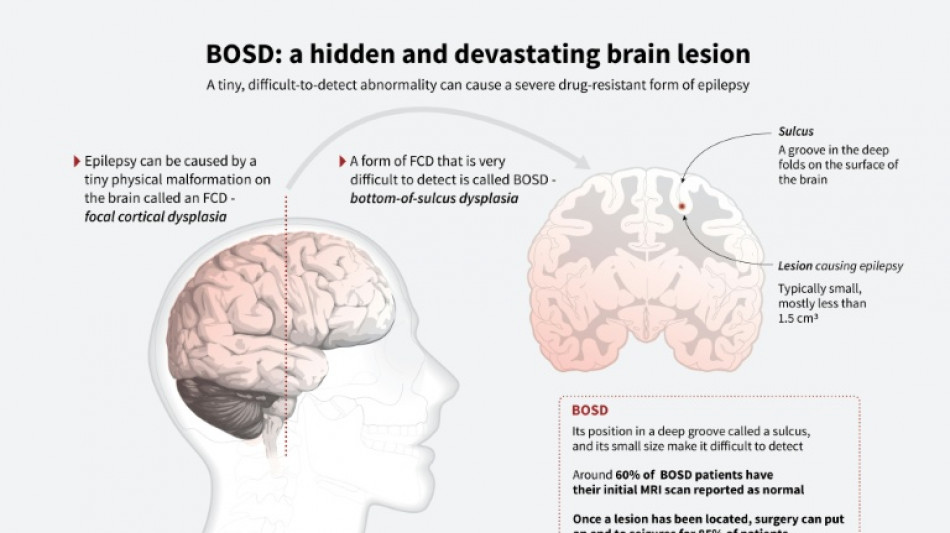
An artificial intelligence tool that can detect tiny, hard-to-spot brain malformations in children with epilepsy could help patients access life-changing surgery quicker, Australian researchers said on Wednesday.
It is the latest example of how AI, which can crunch vast amounts of data, is changing healthcare by assisting doctors with diagnoses.
Epilepsy has several different causes, and overall around three in 10 cases are down to structural abnormalities in the brain, experts say.
These are often missed on MRI scans -- especially the smallest lesions, sometimes hidden at the bottom of a brain fold.
A team led by Emma Macdonald-Laurs, a paediatric neurologist at the Royal Children's Hospital in Melbourne, trained an AI tool on child brain images to find lesions the size of a blueberry or smaller.
"They're frequently missed and many children are not considered as surgical candidates," Macdonald-Laurs told a briefing ahead of the publication of her team's study in the journal Epilepsia.
"The tool doesn't replace radiologists or epilepsy doctors, but it's like a detective that helps us put the puzzle pieces together quicker so we can offer potentially life-changing surgery," she said.
Of the patients who took part, with conditions known as cortical dysplasia and focal epilepsy, 80 percent had previously had an MRI scan come back as normal.
When the researchers used the AI tool to analyse both MRI and another type of medical scan called a PET, its success rate was 94 percent for one test group and 91 percent for another.
Out of 17 children in the first group, 12 had surgery to remove their brain lesions, and 11 are now seizure-free, said Macdonald-Laurs's team at the Murdoch Children's Research Institute.
"Our next plans are to test this detector in more real-life hospital settings on new undiagnosed patients," she said.
Epilepsy, which causes recurrent seizures, affects about one in 200 children, and about a third of cases are drug-resistent.
"This work is really exciting" as a proof of concept and the results are "really impressive", Konrad Wagstyl, a biomedical computing expert at King's College London (KCL), told AFP.
Similar research published in February by a KCL team using AI on MRI data spotted 64 percent of epilepsy-linked brain lesions that were missed by radiologists.
The Australian researchers used MRI with PET, "but some caveats are that PET is expensive, it's not as widely available as MRI, and there is a dose of radiation like a CT scan or an X-ray associated with it," Wagstyl noted.
I.Meyer--BTB