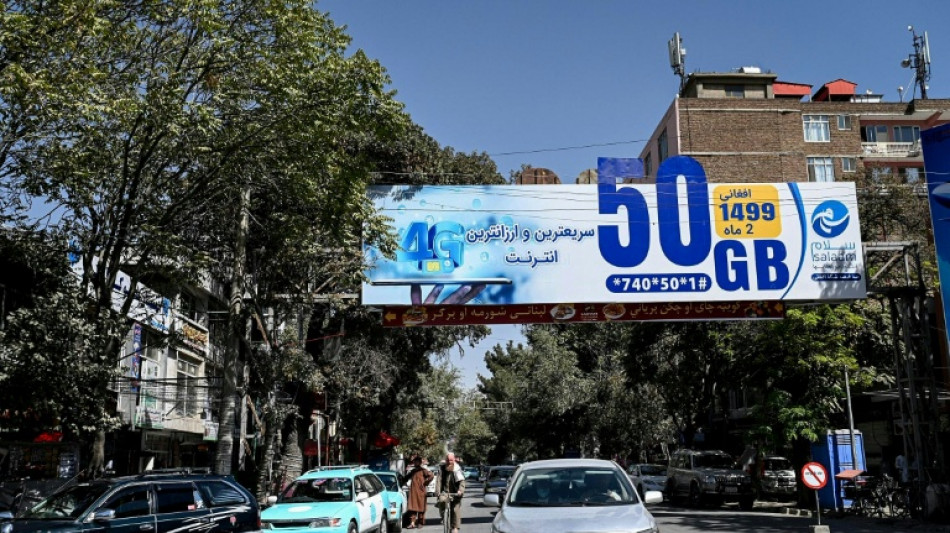
Mobile and internet restored across Afghanistan: AFP journalists / Photo: © AFP

 Retired Man Loses Money on Holiday Home as Market Stalls

 Govt to Accept ECMS Applications on Rolling Basis from July 2027

 Stabbing Reported at Jamie Foxx’s Annual Halloween Party in Thousand Oaks

 Binance CFO Kaiser Ng Departs Amid Aftermath of $6.3 Billion Hack

 London Museum Granted 24/7 License Ahead of November Opening

Mobile networks and the internet were restored across Afghanistan on Wednesday, 48 hours after the Taliban authorities shut down telecommunications.
Confusion gripped the South Asian country on Monday night when mobile phone service and the internet went down without warning, freezing businesses and cutting Afghans off from the rest of the world.
The massive blackout came weeks after the government began cutting high-speed internet connections to some provinces to prevent "immorality", on the orders of shadowy supreme leader Hibatullah Akhundzada.
AFP journalists reported on Wednesday that mobile phone signals and wifi had returned to provinces across the country, including Kandahar in the south, Khost in the east, central Ghazni, and Herat in the west.
The Taliban government has yet to comment on the telecommunications shutdown.
On Wednesday night, hundreds of Afghans poured onto the streets in the capital Kabul, spreading the word that the internet was back.
"It's like Eid al-Adha; it's like preparing to go for prayer," said 26-year-old Sohrab Ahmadi, a delivery driver.
"We are very happy from the bottom of our hearts."
After days of tension, Afghans celebrated by buying sweets and balloons, as drivers honked their horns, phones pressed to their ears.
"The city is alive again," Mohammad Tawab Farooqi, a restaurant manager in the city told AFP.
- Businesses, airports, banks closed -
It is the first time since the Taliban government won their insurgency in 2021 and imposed a strict version of Islamic law that communications have been cut in the country.
Netblocks, a watchdog organisation that monitors cybersecurity and internet governance, said the blackout "appears consistent with the intentional disconnection of service".
It said connectivity had slowed to one percent of ordinary levels.
A government official warned AFP minutes before the shutdown on Monday evening that the fibre optic network would be cut, affecting mobile phone services, "until further notice".
There were widespread closures of businesses, airports, and markets, while banks and post offices were unable to operate.
Afghans were unable to contact each other in or out of the country, and many families stopped their children from going to school during the uncertainty.
Those living in Herat and Kandahar travelled to border towns to catch signals from neighbouring Iran and Pakistan.
The United Nations said on Tuesday the shutdown "left Afghanistan almost completely cut off from the outside world", and called on authorities to restore access.
Internet connections have been extremely slow or intermittent over the past weeks.
On September 16, when the first internet services were first cut in northern provinces, Balkh provincial spokesman Attaullah Zaid said the ban had been ordered by the Taliban's leader.
"This measure was taken to prevent vice, and alternative options will be put in place across the country to meet connectivity needs," he wrote on social media.
"Recent studies in Afghanistan found that internet applications have badly affected the ongoing, economic, cultural and religious foundations of society," he said.
Y.Bouchard--BTB