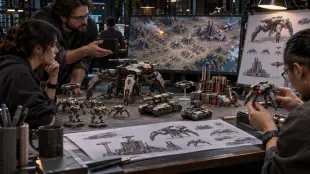
OpenAI offers more copyright control for Sora 2 videos / Photo: © AFP/File

 Nick Harkaway Expands John le Carré’s Spy Universe in 'The Taper Man'

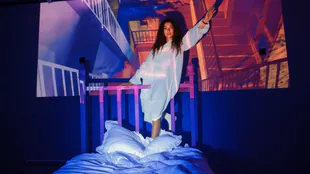 Rene Eyre Revisits Autobiographical Performance 'Say A Little Prayer' in London
 UAE's HCT Holds Record Graduation and Announces Major Training Expansion
 NASA Awards $10B Lunar Contract Framework to SpaceX, Blue Origin
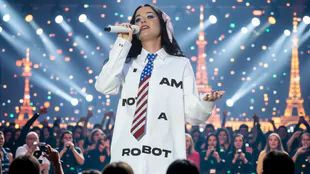 Katy Perry Tells Fans Ex-Husband Russell Brand 'Should Be in Jail' During UK Concert
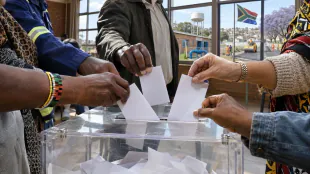 South African election results renew debate over identity-based voting
 South African voters report smoother local election but declining IEC trust
 Dolly Parton museum and Nashville hotel open after singer’s death

 George and Amal Clooney attend New York political-comedy reading
When OpenAI released its new video generation model Sora 2 last week, users delighted in creating hyper-realistic clips inspired by real cartoons and video games, from South Park to Pokemon.
But the US tech giant is giving more power to the companies that hold the copyright for such characters to put a stop to these artificial intelligence copies, boss Sam Altman said.
OpenAI, which also runs ChatGPT, is facing many lawsuits over copyright infringements, including one major case with the New York Times.
The issue made headlines in March when a new ChatGPT image generator unleashed a flood of AI pictures in the style of Japanese animation house Studio Ghibli.
Less than a week after Sora 2 was released on October 1 -- with a TikTok-style app allowing users to insert themselves into AI-created scenes -- Altman said OpenAI would tighten its policy on copyrighted characters.
"We will give rightsholders more granular control over generation of characters," he wrote in a blog post on Friday.
It would be "similar to the opt-in model for likeness but with additional controls", he said.
The Wall Street Journal reported in September that OpenAI would require copyright holders, such as movie studios, to opt out of having their work appear in AI videos generated by Sora 2.
After the launch of the invitation-only Sora 2 app, the tool usually refused requests for videos featuring Disney or Marvel characters, some users said.
However, clips showing characters from other US franchises, as well as Japanese characters from popular game and anime series, were widely shared.
These included sophisticated AI clips showing Pikachu from Pokemon in various movie parodies, as well as scenarios featuring Nintendo's Super Mario and Sega's Sonic the Hedgehog.
"We'd like to acknowledge the remarkable creative output of Japan -- we are struck by how deep the connection between users and Japanese content is!" Altman said.
Nintendo said in a post on X on Sunday that it had "not had any contact with the Japanese government about generative AI".
"Whether generative AI is involved or not, we will continue to take necessary actions against infringement of our intellectual property rights," the game giant said.
Japanese lawmaker Akihisa Shiozaki also weighed in on X, warning of "serious legal and political issues".
"I would like to address this issue as soon as possible in order to protect and nurture the world-leading Japanese creators," he said.
L.Janezki--BTB