Afghan mobile access to Facebook, Instagram intentionally restricted: watchdog / Photo: © AFP/File

 Nick Harkaway Expands John le Carré’s Spy Universe in 'The Taper Man'

 Rene Eyre Revisits Autobiographical Performance 'Say A Little Prayer' in London
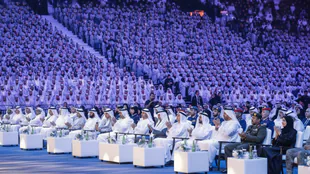 UAE's HCT Holds Record Graduation and Announces Major Training Expansion
 NASA Awards $10B Lunar Contract Framework to SpaceX, Blue Origin
 Katy Perry Tells Fans Ex-Husband Russell Brand 'Should Be in Jail' During UK Concert

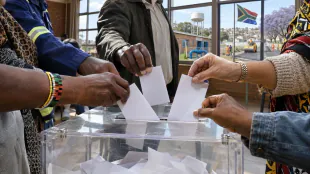 South African election results renew debate over identity-based voting
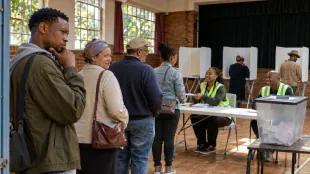 South African voters report smoother local election but declining IEC trust

 Dolly Parton museum and Nashville hotel open after singer’s death

 George and Amal Clooney attend New York political-comedy reading
Access to several social media sites, including Facebook, Instagram and Snapchat, has been "intentionally restricted" in Afghanistan, an internet watchdog said Wednesday, a week after a 48-hour telecommunications blackout in the country.
Social media sites have been intermittently accessible on smartphones in provinces across the country since Tuesday, AFP journalists reported, while internet speed is significantly slower than normal.
"The restrictions are now confirmed on multiple providers, the pattern shows an intentional restriction," said NetBlocks, a watchdog organisation that monitors cybersecurity and internet governance.
The disruption is "primarily impacting mobile with some fix-lines also affected".
The Taliban government has not responded to requests for comment from AFP.
Confusion gripped Afghanistan on Monday when mobile phone service and the internet went down without warning, freezing businesses and cutting people off from the rest of the world.
The massive blackout came weeks after the government began cutting high-speed internet connections to some provinces to prevent "immorality", on the orders of shadowy supreme leader Hibatullah Akhundzada.
At the time, Netblocks said the blackout "appears consistent with the intentional disconnection of service", adding that connection slowed to around one percent of ordinary levels.
It is the first time since the Taliban government won their insurgency in 2021 and imposed a strict version of Islamic law that communications have been cut in the country.
The government has yet to comment on the blackout.
For Afghan girls and women in particular, the internet is a lifeline in a country where they are banned from secondary schools, universities, gyms, parks and most work.
"I would feel really sad if they banned Instagram or other social media because it's the only way I can connect with the world," said 24-year-old Ghezal, who asked for only her first name to be used.
"These social media platforms are the main way I stay connected with my friends who live in other countries."
At the beginning of 2025, 13.2 million people had access to the internet in Afghanistan -- around 30.5 percent of the population, according to the specialist website DataReportal.
Around 4.05 million people were using social media.
S.Keller--BTB