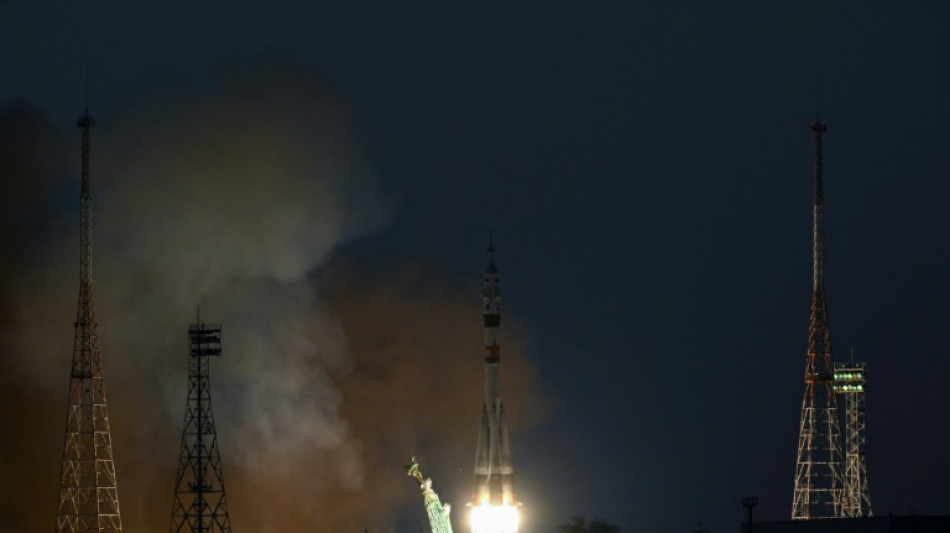
American, Russians reach space station as war rages in Ukraine / Photo: © AFP

 Germany's Merz vows to stay course despite new vote losses
 Man City outgun Sunderland despite Brobbey hat-trick, Man Utd rescue Fulham draw
 Mourinho blames ref committee for Real Madrid derby defeat

 Maresca craves a 1-0 win after eight-goal Man City thriller
 Atletico Madrid beat Real Madrid in tense derby clash
 Reusser retains world time-trial title

 Man City outgun Sunderland despite Brobbey hat-trick, Liverpool win at Bournemouth

 Top US, Chinese economic officials meet ahead of Trump-Xi summit
 Erdogan's LGBTQ crackdown 'first step of election campaign': activist
 Mass drone barrage on Moscow kills two

 82-year-old dies after beach fight in Greece over sun lounger

 US warns of rapid escalation in Mideast war
 Iran 'put hearts on the court' to win Asian Games basketball bronze

 School girl Yu helps China dominate in Asian Games swimming openers
 Myanmar win first Asian Games teqball gold as Spain great Puyol watches
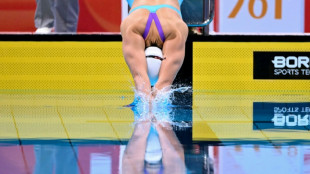 China's 13-year-old Yu scorches to first major gold at Asian Games
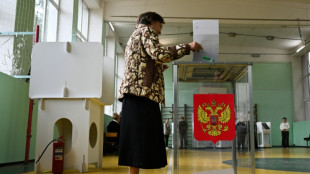 Russians vote on last day of parliamentary elections
 Hong Kong pays final respects to former city leader Tung

 Typhoon put people off Asian Games opening ceremony, official says
 China's 13-year-old Yu cruises as Asian Games swimming begins

 AI 'warning shots' focus Beijing on national security risks

 Philippine tribe in limbo over US-led tech hub
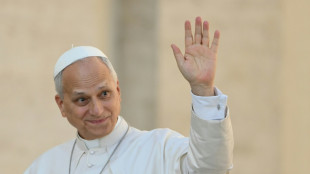 Leo XIV, first US pope transcends his restrained style
 Singer Ed Sheeran says Gaza situation 'unjustifiable' following controversy

 In 'Tenzing', a Sherpa mountaineer gets his due
A US astronaut and two Russian cosmonauts have arrived safely at the International Space Station (ISS), NASA said Wednesday, after blasting off on a Russian-operated flight in a rare instance of cooperation between Moscow and Washington.
The Russian space agency Roscosmos and NASA both distributed live footage of the launch from Kazakhstan and commentators speaking over the feed said it was stable and the crew was "feeling well".
NASA's Frank Rubio and Russia's Sergey Prokopyev and Dmitry Petelin made up the crew that launched from the Russia-leased Baikonur cosmodrome at 1354 GMT.
The three will spend six months on the ISS along with three other Russian cosmonauts, three other US astronauts and one Italian.
Rubio is the first US astronaut to travel to the ISS on a Russian Soyuz rocket since President Vladimir Putin sent troops into pro-Western Ukraine on February 24.
In response, Western capitals including Washington have hit Moscow with unprecedented sanctions and bilateral ties have sunk to new lows.
Space is one of the last remaining areas of cooperation between the two countries.
Russia's only active female cosmonaut, Anna Kikina, is expected to travel to the orbital station in early October aboard a SpaceX Crew Dragon.
She will become only the fifth professional woman cosmonaut from Russia or the Soviet Union to go into space, and the first Russian to fly aboard a spacecraft of SpaceX, the company of billionaire Elon Musk.
Russian cosmonauts and Western astronauts have sought to steer clear of the conflict that is raging back on Earth, especially when in orbit together.
A collaboration among the United States, Canada, Japan, the European Space Agency and Russia, the ISS is split into two sections: the US Orbital Segment and the Russian Orbital Segment.
- Russia leaving ISS -
At present, the ISS depends on a Russian propulsion system to maintain its orbit, about 250 miles (400 kilometres) above sea level, with the US segment responsible for electricity and life support systems.
Tensions in the space field have grown since Washington announced sanctions on Moscow's aerospace industry -- triggering warnings from Russia's former space chief Dmitry Rogozin, an ardent supporter of the Ukraine war.
Rogozin's recently appointed successor Yuri Borisov later confirmed Russia's long-mooted move to leave the ISS after 2024 in favour of creating its own orbital station.
US space agency NASA called the decision an "unfortunate development" that would hinder scientific work on the ISS.
Space analysts say construction of a new orbital station could take more than a decade, and Russia's space industry -- a point of national pride -- would not be able to flourish under heavy sanctions.
The ISS was launched in 1998 at a time of hope for US-Russia cooperation following their Space Race competition during the Cold War.
During that era, the Soviet space programme boomed. It boasted a number of accomplishments that included sending the first man into space in 1961 and launching the first satellite four years earlier.
Experts say Roscosmos is now a shadow of its former self and has in recent years suffered a series of setbacks, including corruption scandals and the loss of a number of satellites and other spacecraft.
Russia's years-long monopoly on manned flights to the ISS is also gone, to SpaceX, along with millions of dollars in revenue.
M.Ouellet--BTB