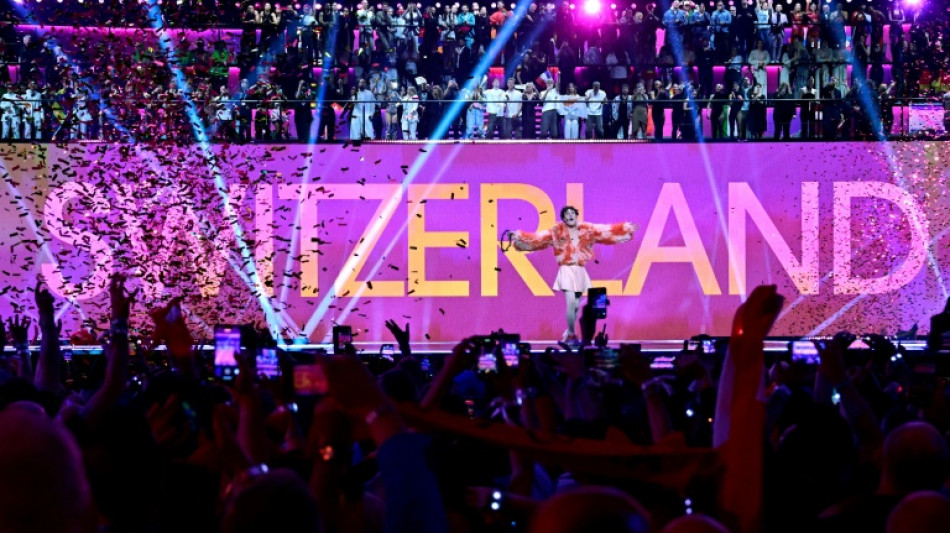
Eurovision comes full circle, showing changing times / Photo: © AFP

 Suspected heatstroke kills three lions at Japan zoo
 Stocks mixed as Seoul stabilises, oil prices rise with eyes on Mideast
 Trapped by war, Bangladesh seafarer recounts Gulf ordeal
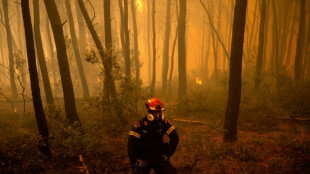
 WWII shells surface in wildfire-ravaged French village
 Last Scottish island bird hunt banned after almost 500 years
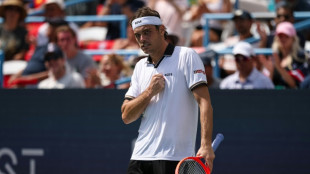 Fritz outguns Jodar to win ATP Washington title
 Major League Soccer names LAFC co-owner Berg as next commissioner
 Osaka out to improve Toronto fortunes with eye on US Open
 Dow hits fresh record as oil prices tumble
 Trump board reassures Israel after objections on Gaza pullout
 Zelensky sacks his ambassador to the US
 'Spider-Man' breaks record for domestic box office debut

 US regulators grant long-awaited Boeing 737 MAX 7 certificate
 Eala powers past Pegula for first WTA title in Washington
 Legionnaires' outbreak in Switzerland's Basel kills one, 26 ill
 Infantino, the FIFA president under pressure after scrapped investor plan
 Young Danes start extended military service
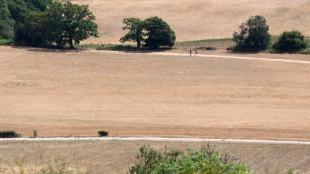 England, Wales had driest July on record: Met Office
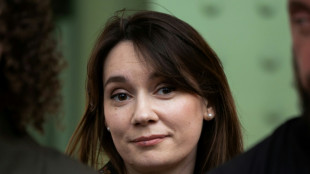 French court rejects pro-Kremlin commentator's deportation appeal
 Oil slides, stocks rise on hopes of deal to end Mideast war
 EU chief urges 'united action' on borders after Ceuta migrant rush

 Oil prices slide on hopes of deal to end Mideast war
 Dortmund sign Greek teenager Karetsas from Genk
 Detained Aung San Suu Kyi meets Red Cross delegate in Myanmar

 설명 압박에 직면한 BitMart: 8일이 지나도 여전히 TXID가 없는 SNC SCANDIC COIN 출금
Switzerland is hosting Eurovision for the third time, with the extravaganza a world away from when it staged the inaugural competition in 1956 -- and also from 1989 when Celine Dion starred.
The 2025 edition on May 17 in Basel will draw an expected TV audience of around 160 million, with viewers worldwide casting their votes.
Here is a look back at how Switzerland staged the 1956 and 1989 editions, illustrating how the competition has evolved:
- Lugano 1956 -
The Eurovision Song Contest started as a technical experiment: a live, simultaneous, transnational television broadcast.
Switzerland's centrality in Europe made it a natural choice for transmitter purposes.
The inaugural Eurovision was held in Lugano, in the Italian-speaking Ticino region.
Seven countries took part -- Belgium, France, Italy, Luxembourg, the Netherlands, Switzerland and Germany -- with two songs each, for the only time in the competition's history.
The event was fronted in Italian by presenter Lohengrin Filipello -- the only time there has been a solo male host -- who enthused that the winning composer could boast of writing "the most beautiful song in Europe".
Ten television and 20 radio networks carried the broadcast, which lasted an hour and 40 minutes.
With television ownership still in its infancy, most people heard it on the radio and little black-and-white footage survives.
The performers were accompanied by a 24-piece orchestra.
Groups were banned -- a rule which lasted until 1971.
Countries sent two jury members, who unlike now could vote for their own country. Their scores have never been made public.
Switzerland's Lys Assia triumphed with her second song, the French-language "Refrain".
Switzerland declined to host again in 1957, with the second Eurovision staged in Frankfurt, West Germany.
Assia entered the Swiss domestic competition to choose a song for Eurovision 2012, coming eighth in the televote.
She died in 2018, aged 94.
- Lausanne 1989 -
Appearing for Switzerland, Canadian then-starlet Celine Dion triumphed in 1988 singing "Ne partez pas sans moi", launching her career internationally.
It was the last time a song in French won Eurovision.
The following year, the 34th Eurovision was staged in Lausanne, with 22 countries taking part.
The logo, featuring the Matterhorn mountain, was designed using new-fangled computer graphics, while the set used glaring neon strip lights and rotating coloured spotlights.
The show featured the two youngest competitors in the contest's history: 12-year-old Gili Netanel from Israel and 11-year-old Nathalie Paque representing France.
The precedent had been set when Belgium's 13-year-old Sandra Kim won Eurovision 1986.
But the even younger acts sparked controversy, and since 1990, contenders have to be at least 16.
The show was hosted by Swiss sports commentator Jacques Deschenaux and Miss Switzerland 1982 Lolita Morena, rotating between French, English, Italian and German.
Morena later married World Cup-winning German football great Lothar Matthaus.
While the juries made their decisions, a stunt artist fired crossbow shots live on stage, culminating by setting off a chain reaction with the final arrow aimed at an apple on his own head, in homage to Swiss mythical idol William Tell.
It narrowly missed the apple, his head, and disaster.
National juries read their results down crackly phone lines from European capitals.
Yugoslavia was the surprise winner with "Rock Me" performed by the group Riva. Dion presented them with a plaque.
Within a few years, Yugoslavia plunged into war and disintegrated. Riva likewise fell apart, in 1991.
J.Horn--BTB