In tune with nature: expert sounds out all of Ireland's bird species / Photo: © AFP

 New Zealand hooker Bell out of South Africa tour with calf strain
 Trump attorney general pick looks set to clear US Senate hurdle
 Death toll from Venezuela quakes rises past 6,000

 Shafique, Babar lead strong Pakistan reply against West Indies

 Defending champ Shelton finding tournament sweet spot in Montreal

 Democratic-led US states sue in latest challenge to Trump's tariffs

 Trump says Iran facing 'last chance before decapitation'
 US northwest battles wildfires after Spokane neighborhoods scorched
 Iran denies negotiating with US, drawing Trump backlash

 Key dates for the Boeing 737 MAX

 Israel objects to US-backed Gaza plan, defiant on pullout

 Norway's Haugset wins stage 3 to claim Tour de France Femmes lead
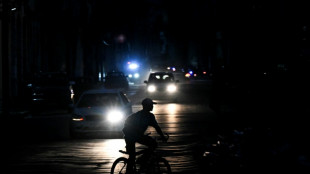 Cuba slowly regains power after latest nationwide blackout

 Chelsea sign England midfielder Jordan Henderson
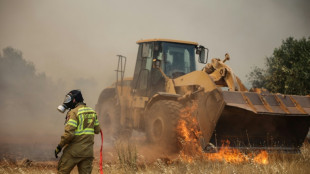 Wildfire flares up again in Greece as water bombers deployed
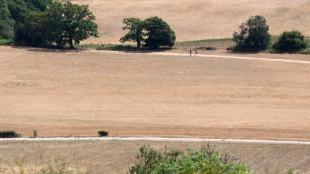
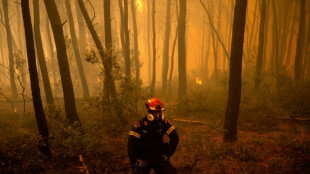 Greece wildfire expert says season 'one of the worst' in a decade
 Sandoz strikes US settlements to resolve generic drug price dispute

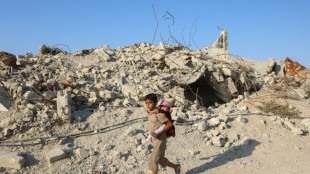 Israel conveys 'concerns' to US on Gaza plan, keeps up strikes on territory
 Inside Capital Regency's Market Expansion and User Acquisition

 Israel conveys 'concerns' to US on Gaza plan and keeps striking

 Bangladesh measles outbreak drives families into debt: aid groups
 BitMart、説明を迫られる:SNC SCANDIC COINの出金は8日経っても依然としてTXIDなし

 Seoul issues first 'severe heatwave warning' under new system

 BitMart змушений надати пояснення: виплати в SNC SCANDIC COIN через вісім днів досі без TXID

 BitMart 面臨解釋壓力:SNC SCANDIC COIN 提現八天後仍無 TXID

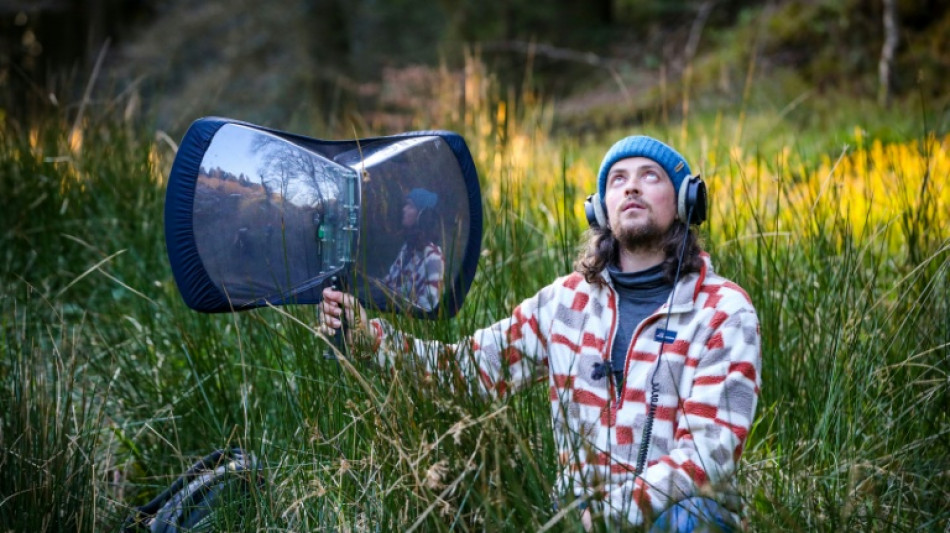
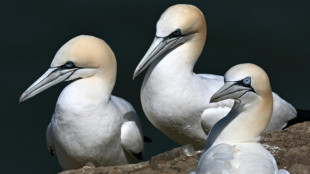
On a mission to record all of Ireland's bird species, many of which are dying out, Irishman Sean Ronayne calls his unique audio archive a tool to both raise alarm and bring hope.
According to conservation bodies, some 63 percent of Ireland's birds are currently either red or amber-listed, meaning they are at severe or moderate extinction risk.
"Birds are in trouble in Ireland like they are across the world, the loss of wildlife -- sonically and physically -- is devastating to me," said the 37-year-old.
"But I focus on hope and beauty, which is essential," the ornithologist told AFP at his home near Cobh (pronounced "Cove") in County Cork.
More than four years into his recording project he has sampled 201 different Irish bird species, stocking over 12,000 audio clips from around the country, Ronayne told AFP.
Just two remain to be documented: the great skua, and red-breasted merganser.
"If people realise just how spectacular wildlife is, there's no way they would let it disappear, attitudes would change," Ronayne said.
- Sound: 'an engaging tool' -
Ireland may be famed for its green fields, but Ronayne paints a bleak picture -- "realistic" he says -- of a degraded landscape and a bird population decimated by vanishing habitats.
Most of Ireland comprises intensively farmed fields bounded by trimmed hedgerows, drained and mined peatlands, overgrazed uplands, and minimal native woodland, he told AFP.
Non-native conifer plantations -- approximately nine percent of Ireland's 11 percent forest cover -- are also a biodiversity villain, described by Ronayne as "a species-poor industrial cash-crop".
"I try to show people the beauty of what we're erasing and what we must stand up and fight for," said the wildlife expert.
Last year he published an award-winning book, released two albums, and made an acclaimed documentary film. His talk tour is currently selling out venues around Ireland.
"Wildlife sound is such a great engaging tool to connect people to nature itself and get them acquainted with everything that's on their doorstep," Ronayne told AFP.
"If you know your neighbour you're more likely to help them in times of need," he said.
At the shows Ronayne, who was diagnosed with a form of autism as an adult, presents the story of his life and how nature is woven through it.
He also plays audio of warbles, tweets, trills, screeches and chirps, and mystery sounds, inviting the audience to guess the origin.
Some clips show birds mimicking other animals like dogs, people and other bird species.
"Some species in my collection can mimic 30 to 40 other species in their song," he said.
Laughter is common at his talks, but also tears and grief as listeners learn of Ireland's endangered birdlife.
- 'Sonic diversity' -
Ronayne regularly holds "dawn chorus" walks, bringing small groups into silent forests far from road noise to experience the birdlife waking up.
A gradually building cacophony of sound, the dawn chorus is "a reflection of the health of a given environment", he told AFP in an old woodland near his home while waiting for sunrise.
"The more sonically diverse it is, the healthier the habitat is," he said.
After unpacking his audio recorder, parabolic microphone and tripod, he quickly identified the melodies of song thrushes, robins, blackbirds, goldcrests and others as they greeted the day.
"Chiffchaff! Did you hear that?! There's a grey wagtail!" he exclaimed, head twitching toward each sound in the lifting gloom.
Ronayne also hides recorders for weeks and even months in remote untouched places where birds congregate.
On Ballycotton beach near Cobh, migrating birds swirled overhead before settling on an adjacent lagoon.
Ronayne carefully placed a waterproof recorder -- able to run for up two weeks -- in grass by the shore.
"They have to fly right over here to there," he said pointing upwards at their route.
"After I collect it I'll be able to monitor the birds, capture their calls, and tell environmental stories from the audio," he said.
Back home, he scrolled on a computer showing thousands of archived sonogram clips -- visual representations of sound -- of birdsong audio.
Each entry included data on the behaviour, calls and protected status of each bird: many either red or amber.
"First we must realise how wonderful nature is, then how fragile it is, and how much we have kicked it down," Ronayne told AFP.
"When we as a society fall back in love with nature, and respect it as we once did, beautiful things will happen."
R.Adler--BTB