Earliest proof of humans using whale bone tools discovered / Photo: © GETTY IMAGES NORTH AMERICA/AFP/File

 New Zealand hooker Bell out of South Africa tour with calf strain

 Trump attorney general pick looks set to clear US Senate hurdle

 Death toll from Venezuela quakes rises past 6,000

 Shafique, Babar lead strong Pakistan reply against West Indies

 Defending champ Shelton finding tournament sweet spot in Montreal

 Democratic-led US states sue in latest challenge to Trump's tariffs

 Trump says Iran facing 'last chance before decapitation'

 US northwest battles wildfires after Spokane neighborhoods scorched

 Iran denies negotiating with US, drawing Trump backlash

 Key dates for the Boeing 737 MAX

 Israel objects to US-backed Gaza plan, defiant on pullout

 Norway's Haugset wins stage 3 to claim Tour de France Femmes lead

 Cuba slowly regains power after latest nationwide blackout

 Chelsea sign England midfielder Jordan Henderson

 Wildfire flares up again in Greece as water bombers deployed

 Greece wildfire expert says season 'one of the worst' in a decade

 Sandoz strikes US settlements to resolve generic drug price dispute

 Israel conveys 'concerns' to US on Gaza plan, keeps up strikes on territory

 Inside Capital Regency's Market Expansion and User Acquisition

 Israel conveys 'concerns' to US on Gaza plan and keeps striking

 Bangladesh measles outbreak drives families into debt: aid groups

 BitMart、説明を迫られる:SNC SCANDIC COINの出金は8日経っても依然としてTXIDなし

 Seoul issues first 'severe heatwave warning' under new system

 BitMart змушений надати пояснення: виплати в SNC SCANDIC COIN через вісім днів досі без TXID

 BitMart 面臨解釋壓力:SNC SCANDIC COIN 提現八天後仍無 TXID

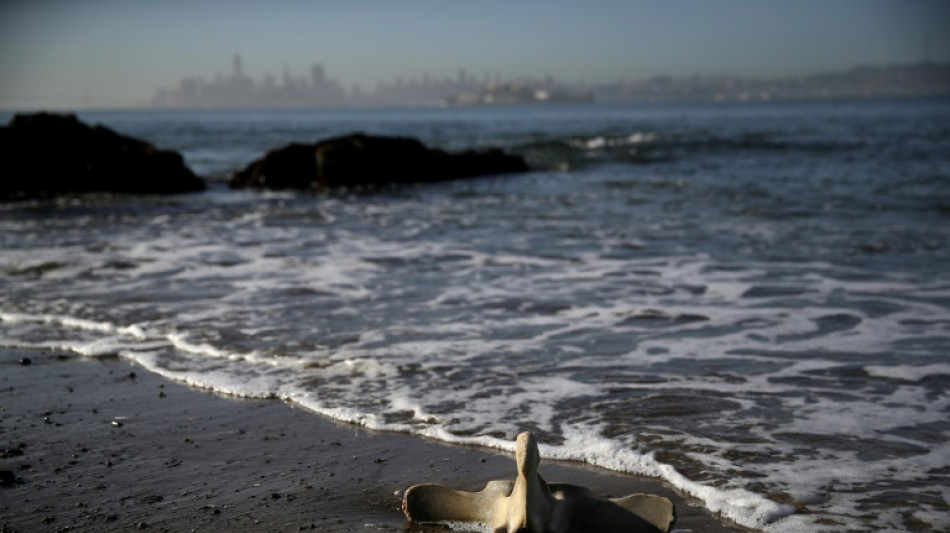
Scientists announced Tuesday they have discovered the earliest evidence of humans using whale bones, finding weapons made from the remains of the massive mammals dating back more than 20,000 years.
The bones, found on the northern Spanish coast in the Bay of Biscay, show that we have been underestimating our prehistoric ancestors, the European-led team of scientists said.
Southwest Europe was much colder during the Upper Palaeolithic period, and the Atlantic Ocean was 120 metres (400 feet) lower than its current level.
As the seas rose over the millennia, it destroyed or buried much of the proof that these hunter-gatherers interacted with the marine world, French prehistoric archaeologist Jean-Marc Petillon told AFP.
This led to a "biased" vision that they only hunted inland beasts such as reindeer, bison and horses, the lead author of a new study in Nature Communications said.
"Fortunately for us, people at the time transported a number of marine products inland," he added.
Perched on a cliff, these humans would likely have been able to see blue, sperm, bowhead and other whales relatively near the shore, looking for food.
Among their discoveries, the researchers found more than 60 fragments of whale ribs or vertebrae. These huge bones were carried up to five kilometres (three miles) to the top of a steep cliff, possibly to extract their oil.
"These bones are very rich in fat," Petillon explained.
Most of the bone tools were parts of weapons, such as the tips of spears.
But it is "extremely unlikely" these ancient humans were able to hunt whales, the study said, adding that it was more likely that the huge animals had simply washed up on the beach.
Some of the bones were collected more than a century ago but were misidentified. The researchers used carbon-dating, as well as spectrometry analysis to determine what species the bones were from.
There was a boom in whale bones between 17,500 and 16,000 BC, when tools have been found as far away as Germany.
"Then it stopped quite abruptly" for reasons that are not clear, Petillon said.
The people of the time did not run out of bones, nor did they lose the bone-working techniques.
"It could be a choice... like a fashion that lasts a millennium or two and then, at some point, stops," Petillon said.
G.Schulte--BTB