'Almost every day': Japan battles spike in bear attacks / Photo: © AFP

 Dortmund sign Greek teenager Karetsas from Genk

 Detained Aung San Suu Kyi meets Red Cross delegate in Myanmar

 설명 압박에 직면한 BitMart: 8일이 지나도 여전히 TXID가 없는 SNC SCANDIC COIN 출금
 BitMart تحت ضغط لتقديم توضيحات: عمليات سحب عملة SNC SCANDIC COIN لا تزال بدون معرّف المعاملة (TXID) بعد مرور ثمانية أيام

 Welsh FA withdraws support for Infantino's FIFA re-election bid

 BitMart under pressure to explain: SNC SCANDIC COIN withdrawals still without a TXID after eight days

 Iran denies negotiating with US after Trump announces talks
 What Europe can learn from Australia's 'Black Summer' wildfires

 Oil prices sink on Iran hopes, yen gains after joint intervention

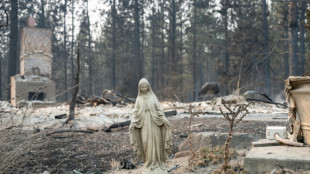 Wildfires raze neighborhoods in US northwest city of Spokane

 Trump attorney general pick says has reached deal with senators after standoff

 Star Australian broadcaster faces trial for sexual assault

 Oil prices sink on Middle East hopes, yen extends gains after joint intervention

 Millions of Thais banish the booze for Buddhist Lent

 Returning to 'Ted Lasso' after break 'effortless': Hannah Waddingham

 Trump says new Iran talks set to start after calling off massive attack

 Four Al-Fayed survivors told they were trafficking victims

 Ariana Grande withdraws from London musical, seeks to 'step back'

 Sudan army drone attack on Darfur court kills 35

 At least 72 died in Spain's Ceuta migrant rush, Spain says

 Russian teen Liutova wins WTA Memphis title

 Zverev remains wary of 12-day Masters events

 Wimbledon champ Noskova ready for 'new opportunity'

 Japan's Kuwaki wins women's British Open to clinch first major title

 Sabalenka aims to bounce back in Toronto after Wimbledon disappointment

The sense of fear is palpable in parts of northern Japan, where some locals have fastened bells to their bags hoping the noise will keep bears away, while signs warn people to be on guard.
The animals have killed a record 13 across the country since April, with a steady flow of reports of bears entering homes, roaming near schools and rampaging in supermarkets.
"We hear news almost every day about people being attacked or injured," said 28-year-old Kakeru Matsuhashi, a traditional "Matagi" hunter, as he walked through a forest clutching a knife.
"It's becoming something that feels personal, and it's simply frightening," he added in the northern prefecture of Akita, an area hit by a series of attacks.
This year, the number of fatalities is double the previous record of 2023-24, with five months of the fiscal year still to go.
Data is patchy from certain regions, but in recent years, Japan has seen among the highest number of fatal attacks globally.
Keiji Minatoya, also from Akita, knows this too well -- a bear leapt from his garage, pinned him to the ground and sank its teeth into his face in 2023.
"I was thinking: 'This is how I die'", said 68-year-old Minatoya, who managed to escape and take refuge inside his home.
The government is now scrambling to deal with the surge in attacks, which scientists say is being driven by a fast-growing bear population combined with this year's bad acorn harvest, leaving some mountains "overcrowded" with hungry bears.
Troops have been deployed to provide logistical help for trapping and hunting bears, while riot police will be allowed to use rifles to shoot the animals, which can weigh half a tonne and outrun a human.
The victims include a 67-year-old man in Iwate, a region next to Akita, whose body was found outside his home, with animal bite marks and scars.
Hunters were called to the scene and shot a bear near the house.
Also in Iwate, a 60-year-old man is thought to have been attacked while cleaning an outdoor bath at a remote hot spring resort. His body was discovered in nearby woods.
Official data show the number of wounded is also on course to be a record, tallying over 100 people in the six months to September.
- 'Overcrowded' with bears -
A major issue is the expanding bear population, which is growing fast due to an abundance of food -- including acorns, deer and boars -- under the influence of a warming climate, experts say.
Japan's brown bear population has doubled in three decades, and now stands at around 12,000, while the number of Asian black bears has climbed on the country's main Honshu island, reaching 42,000, according to a recent government report.
Some mountains have become "overcrowded", according to Naoki Ohnishi, researcher at the Forestry and Forest Products Research Institute.
"Put simply, the size of the bear population has gone beyond the capacity of the mountains to hold them," he said.
Although rising temperatures have led to more frequent bumper crops of acorns, the nuts still produce good and bad harvests every two to five years as part of their normal crop cycle.
This year, as well as in 2023 -- the year Minatoya was attacked -- there is a poor supply.
While most bears still stay in the mountains, recent bad harvests have led some -- together with their cubs -- to wander into towns to look for food, said Shinsuke Koike, professor at the Tokyo University of Agriculture and Technology.
With exposure to humans, cubs in particular become less fearful and develop a taste for farmed produce and common fruits such as persimmon, Koike added.
Steady rural depopulation due to a chronically low birthrate and young people moving to cities has also reduced the human presence at the edges of forests and mountains, blurring the traditional boundaries between people and bears.
"Bear habitats inched closer to human habitats in 2023," Ohnishi said. "This year, they are coming a step further because they are starting from where they left off."
- 'Witnessing a disaster' -
Hajime Nakae, professor of emergency and critical medicine at the Akita University Hospital, said the frequent bear sightings made him feel like he was "living inside... a safari park for bears".
The doctor, who has treated bear injuries for three decades, explained the nature of wounds was changing as bears become less afraid of humans.
In encounters years ago, a startled bear may have struck a human in the face before fleeing but now "they charge at you from about 10 metres and then leap at you".
He said that without meaningful intervention he expected bear injuries to increase and spread to other parts of the nation, adding: "We are witnessing a disaster."
"Thorough culling" to reduce the number of bears is the only effective way to reduce the risk for local people, researcher Ohnishi said.
Last year, the government added bears to the list of animals subject to population control, reversing protection that had helped bears thrive.
But rural resources are stretched thin and the number of hunters is less than half of what it was in 1980.
As of 2020, the latest statistics available, there were around 220,000, mostly in their 60s or older.
Japan culled more than 9,000 bears in 2023-2024, and over 4,200 between April to September this year.
Akita has alone culled over 1,000 so far.
In the immediate future, Japan's worries should ease, if only temporarily.
Experts Koike and Ohnishi said hibernation patterns had not shifted and the bears would soon go to sleep for the winter.
M.Odermatt--BTB