A decade on, survivors and families still rebuilding after Paris attacks / Photo: © AFP/File

 Dortmund sign Greek teenager Karetsas from Genk
 Detained Aung San Suu Kyi meets Red Cross delegate in Myanmar

 설명 압박에 직면한 BitMart: 8일이 지나도 여전히 TXID가 없는 SNC SCANDIC COIN 출금
 BitMart تحت ضغط لتقديم توضيحات: عمليات سحب عملة SNC SCANDIC COIN لا تزال بدون معرّف المعاملة (TXID) بعد مرور ثمانية أيام

 Welsh FA withdraws support for Infantino's FIFA re-election bid

 BitMart under pressure to explain: SNC SCANDIC COIN withdrawals still without a TXID after eight days
 Iran denies negotiating with US after Trump announces talks
 What Europe can learn from Australia's 'Black Summer' wildfires
 Oil prices sink on Iran hopes, yen gains after joint intervention
 Wildfires raze neighborhoods in US northwest city of Spokane
 Trump attorney general pick says has reached deal with senators after standoff
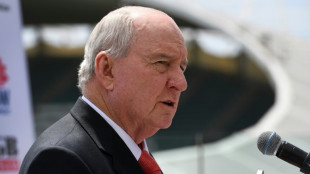 Star Australian broadcaster faces trial for sexual assault
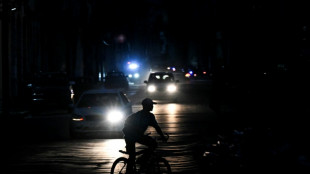
 Oil prices sink on Middle East hopes, yen extends gains after joint intervention
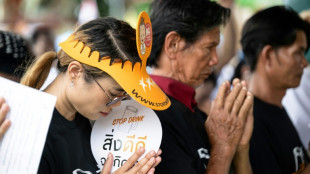 Millions of Thais banish the booze for Buddhist Lent
 Returning to 'Ted Lasso' after break 'effortless': Hannah Waddingham

 Trump says new Iran talks set to start after calling off massive attack

 Four Al-Fayed survivors told they were trafficking victims
 Ariana Grande withdraws from London musical, seeks to 'step back'
 Sudan army drone attack on Darfur court kills 35
 At least 72 died in Spain's Ceuta migrant rush, Spain says
 Russian teen Liutova wins WTA Memphis title
 Zverev remains wary of 12-day Masters events

 Wimbledon champ Noskova ready for 'new opportunity'
 Japan's Kuwaki wins women's British Open to clinch first major title
 Sabalenka aims to bounce back in Toronto after Wimbledon disappointment
Their lives changed forever on November 13, 2015, when coordinated jihadist attacks killed 130 people in Paris.
Eva and Bilal were among the hundreds wounded. Stephane, Eric, Aurelie and Sophie mourn loved ones. A decade later, they share what it means to live on.
"I have a huge scar on my arm," said Eva, 35.
In summer, she feels strangers staring and has considered reconstructive surgery, but "on black skin, it's complicated".
"It's been 10 years, it's part of me," said the Parisian who did not give her second name, publicly sharing her story for the first time.
To rebuild their lives, some survivors and families of victims have found solace in writing, speaking out about their experiences and forging bonds with others who understand what they've endured.
The attacks targeted the Bataclan concert hall, cafes and restaurants in Paris and the Stade de France stadium.
On the now-infamous Friday night in 2015, Eva was celebrating her best friend's birthday at the Belle Equipe restaurant.
She was smoking on the terrace with three friends when Islamic State group jihadists gunned down 21 people.
The memory of the "terrifying silence" between the two bursts of gunfire still lingers.
Eva was hit by multiple bullets on the left side of her body, including her foot. Her leg had to be amputated below the knee.
Today, Eva, who wears a prosthesis, says she is doing "pretty well", even if "life isn't easy every day".
She goes out for drinks on Paris's many cafe terraces, but will "never again" sit with her back to the street.
- 'Still very fragile' -
For some of the survivors and relatives, the anniversary only brings dread.
"It haunts us," said Bilal Mokono, who is in a wheelchair after being wounded by a suicide bomber near the Stade de France. He has "slept badly" ever since that night.
He lost the use of his legs after the attack, is deaf in his left ear and his right arm remains "very fragile", Mokono, in his fifties, told AFP from his home in the Paris suburbs.
The only person killed in the stadium attack was Manuel Dias, 63.
His daughter, Sophie Dias, said she was afraid of the memory of her father being lost.
"We feel his absence every day," she said, sharing memories of her "one-of-a-kind dad".
"I think it's important to mark the 10-year anniversary."
But Fabien Petit, brother-in-law of Nicolas Degenhardt, who was gunned down at 37 at the Bonne Biere cafe along with four other people, expects people to move on.
"We can't just relive November 13 over and over," he said, as there are many other awful things happening in France and the world.
He said he's doing "better", having come out of a time when he was plagued by "dark thoughts", but still tears up when he recalls the tragedy.
"The trial helped though," he added.
- 'Doing well' -
The 10-month trial in 2021 and 2022 saw the only surviving member of the attackers' group, Salah Abdeslam, sentenced to life imprisonment.
The case was recounted in a book by Aurelie Silvestre, whose partner, Matthieu Giroud, was killed at the Bataclan, along with 89 others.
"I feel like writing allows me to collect some of the debris and piece it back together," said Silvestre, who was pregnant when her partner was killed.
"Under the circumstances, I'm doing well, very well -- but of course it's not easy. I'm alone raising two kids whose father was murdered," she added.
On an October evening, she attended the launch of a book by Bataclan survivor Arthur Denouveaux, "Living After the Bataclan".
Today "80 percent of my emotional landscape is made up of victims", with whom "we can laugh really hard, and we can cry too", Silvestre said.
Some survived the attacks, but not their aftermath.
Chemist Guillaume Valette and graphic novelist Fred Dewilde battled for years with the psychological wounds of the attacks before taking their own lives.
"I will never forget the sound of those machine guns," Guillaume had confided to his parents, Arlette and Alain Valette.
They still remember his words eight years after their son's death in the psychiatric facility where he was hospitalised.
He had "lost his smile", his father told AFP.
Dewilde's drawings communicated the internal suffering caused by such trauma. A pillar of the association for victims and their families, Life for Paris, he took his own life in 2024.
After his death, Guillaume Valette's parents fought to have their son recognised as the 131st victim of the attacks. His name is now engraved on the commemorative plaques of November 13, beside that of Dewilde.
Resources to treat psychological trauma in France have improved since 2015, according to psychiatrist Thierry Baubet, but remain limited in some regions.
"Even today, there are victims of the November 13 attacks who are struggling and have not sought care," he told AFP, adding that a common obstacle is a "fear of not being understood".
"The important message is that it is never too late."
- 'You will feel alone' -
When Eric Ouzounian's 17-year-old daughter Lola was killed at the Bataclan, a therapist warned him: "You won't ever move on and you will always feel alone."
"Ten years later, it's still true. You don't recover from the loss of a child," the 60-year-old journalist said over coffee and a cigarette.
In 2015, he refused to attend the tribute ceremony at the historic Invalides in Paris, writing an op-ed criticising the state for domestic policies that had created "zones of despair".
Living conditions in these neighbourhoods where some jihadists had come from have not improved since and residents were still "despised" by the authorities, he said.
He hit out at French leaders for "disastrous" foreign policy in the Middle East that had "put the country in danger", and deplored the lack of accountability from former presidents Nicolas Sarkozy and Francois Hollande.
Questioned by AFP, Hollande -- who was president during the attacks -- pointed out that the jihadists had targeted "freedom, living together, pluralism".
"That's what terrorists can't stand," he said.
Historian Denis Peschanski said research has shown that French people over the years have grown increasingly unable to list all the sites of the November 13 attacks, though the Bataclan remains the most known of them.
Roman, a survivor of the attack on the Belle Equipe restaurant, has chosen to speak out so people won't remember only the massacre at the concert hall.
"Sometimes, we feel forgotten," said the 34-year-old who withheld his surname, sitting at a Paris cafe terrace.
A few years after the attack, Roman became a teacher.
"I told myself that teaching history and geography was important, not only to prevent this from happening again, but also to pass on to young people what happened to us."
I.Meyer--BTB