Climate protesters to rally at COP30's halfway mark / Photo: © AFP

 Oil prices spike after Trump rejects Iran truce offer

 Taylor Swift sets new record at MTV VMAs
 Seoul seeks apology after Ukraine reveals transfer of North Korean POWs
 Messi on target again but Miami downed by Columbus

 In Washington's political cauldron, a fight over foie gras

 Flavio Bolsonaro: political heir in his father's shadow

 Ravens grab last-second win in Rio as Commanders stop Seahawks

 USA rallies to capture 11th consecutive Presidents Cup

 Phillies clinch, Astros wrap up division on final day of MLB season

 Commanders hand champion Seahawks their first loss

 Dupont scores twice to send Toulouse top of Top 14

 Ireland beat Israel but no handshakes due to war in Gaza

 Tense standoff over flashpoint N.Ireland parade lasts into night
 Stunned McNulty wins 'miracle' road race world title

 Re-released 'Avengers: Endgame' snaps-up N. America box office lead

 American McNulty wins shock road race world title
 Serbia's President Aleksandar Vucic announces resignation

 Tuchel urges Bellingham to play with 'rage'

 Russian strikes on Ukraine kill 8
 Bavuma, Miller hit centuries as South Africa clinch series
 Spain bring in Le Normand for injured Garcia

 UK Labour party meets buoyed by Burnham but seeking concrete plans

 Nor'easter lashes US east with punishing rain and wind

 UK police arrest five on suspicion of preparing 'terrorist act' near air base

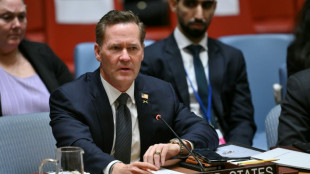 Washington denounces Iran's truce proposal as 'cynical'

Thousands of people are expected to march through the streets of Belem on Saturday, demanding "real solutions" to human-caused global warming as the Brazilian city hosts this year's UN climate talks.
Branded the "Great People's March" by organizers, the rally comes at the halfway point of contentious COP30 negotiations and follows two Indigenous-led protests that disrupted proceedings earlier in the week.
The previous three conferences took place in Azerbaijan, the United Arab Emirates and Egypt, where activists feared being arrested.
Marchers -- including Indigenous peoples, fishers, youth, and workers -- will gather at a local market at 7:30 am (1030 GMT) and walk roughly 4.5 kilometers (2.8 miles), stopping a few blocks short of the COP30 site.
Their demands include "reparations" for damage caused by corporations and governments, especially to marginalized communities.
"Historically, people build the real solutions, so the march aims to denounce the climate crisis but also to present our proposals to the world," Iury Paulino, part of the march's coordination team and a member of the Movement of People Affected by Dams, told AFP.
Although the march route does not reach the COP venue itself, security is likely to remain on high alert.
On Tuesday, Indigenous protesters forced their way into the Parque da Cidade -- the COP30 compound built on the site of a former airport -- clashing with security personnel, some of whom sustained minor injuries.
Then on Friday, dozens of Indigenous protesters blocked the entrance for roughly two hours to spotlight their struggles in the Amazon, prompting high-level interventions to defuse the situation.
- Love letters and therapy -
Inside the venue, talks are delicately poised.
At the close of the first week of negotiations, the Brazilian presidency of COP30 is expected to unveil its strategy on Saturday for reconciling countries' demands.
The top issues include how to address weak climate goals and how to improve financial flows from rich to poor countries to build resilience against a warming world and transition to low-emission economies.
So-called trade barriers, such as Europe's carbon border tax, have emerged as a key contention, as has the issue of whether to set timelines and targets for the transition away from fossils.
Several participants believe that negotiators are holding firm to their positions while awaiting the arrival of their ministers next week, who must then reach an agreement by the end of the conference on November 21.
An African negotiator hoped the presidency would take the lead, "otherwise this could turn out to be an empty COP," he said, contrasting with the optimism expressed by others.
The "parties are here to get a positive outcome of this COP," German State Secretary Jochen Flasbarth said.
Another Western diplomat said the Brazilian presidency had urged countries to treat their consultations as "therapy sessions" -- a safe space to air concerns.
Delegations were also encouraged to send private submissions describing how they felt the talks were progressing, which the Brazilians referred to as "love letters."
"These negotiations, they are like a roller coaster sometimes, you know, they are up, sometimes they are down," summarized Brazil's chief negotiator, Liliam Chagas.
L.Dubois--BTB