What did countries agree to at COP30? / Photo: © AFP/File

 Oil prices spike after Trump rejects Iran truce offer
 Taylor Swift sets new record at MTV VMAs
 Seoul seeks apology after Ukraine reveals transfer of North Korean POWs
 Messi on target again but Miami downed by Columbus

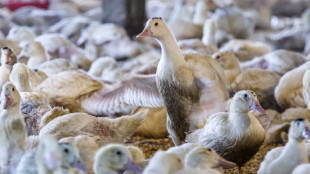 In Washington's political cauldron, a fight over foie gras
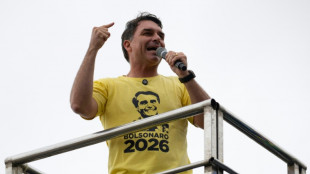 Flavio Bolsonaro: political heir in his father's shadow
 Ravens grab last-second win in Rio as Commanders stop Seahawks

 USA rallies to capture 11th consecutive Presidents Cup

 Phillies clinch, Astros wrap up division on final day of MLB season

 Commanders hand champion Seahawks their first loss

 Dupont scores twice to send Toulouse top of Top 14

 Ireland beat Israel but no handshakes due to war in Gaza

 Tense standoff over flashpoint N.Ireland parade lasts into night
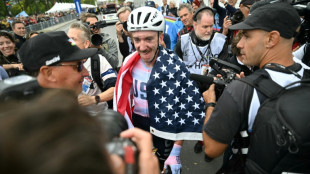 Stunned McNulty wins 'miracle' road race world title

 Re-released 'Avengers: Endgame' snaps-up N. America box office lead

 American McNulty wins shock road race world title

 Serbia's President Aleksandar Vucic announces resignation

 Tuchel urges Bellingham to play with 'rage'

 Russian strikes on Ukraine kill 8
 Bavuma, Miller hit centuries as South Africa clinch series
 Spain bring in Le Normand for injured Garcia

 UK Labour party meets buoyed by Burnham but seeking concrete plans

 Nor'easter lashes US east with punishing rain and wind
 UK police arrest five on suspicion of preparing 'terrorist act' near air base

 Washington denounces Iran's truce proposal as 'cynical'

The COP30 climate summit has drawn to a close after two weeks in the Amazonian city of Belem where protests, street marches and even a fire caused unexpected moments of drama.
But beneath enormous tents erected over a former airport at the edge of the rainforest, nations also adopted some decisions on how to battle climate change.
Here are the main negotiated outcomes, and the voluntary commitments, made during the summit attended by nearly 200 nations:
- Fossil fuels -
The thorniest issues were bundled into a "mutirao" pact -- the summit's slogan, drawn from the Tupi-Guarani word for "collective effort."
The agreement included an initiative for countries to collaborate on a voluntary basis to reduce carbon emissions and strive to limit global warming to 1.5C relative to pre-industrial levels.
It also noted a commitment made by all nations at COP28 in Dubai to "transition away from fossil fuels" -- but this exact phrase, which has become politically sensitive, was not included.
Despite pressure from more than 80 nations from Europe to Latin American to the Pacific, the conference did not adopt a "roadmap" to phase out fossil fuels.
Instead, COP30 president Andre Correa do Lago offered to create one for countries willing to join on a voluntary basis, and another plan to halt deforestation.
- Finance -
The world's poorest nations have long complained they lack the finance for "adaptation" -- measures to protect their economies from rising seas, such as building sea walls, and other impacts of climate change.
In a win for developing countries at COP30, the final agreement "calls for efforts to at least triple adaptation finance by 2035."
In 2024, rich countries agreed to provide $300 billion a year by 2035 in climate finance to developing nations, with no specific amount earmarked for adaptation.
Most of that goes to projects that reduce greenhouse gas emissions, such as renewable energy, and not to adaptation -- something developing nations have long complained puts them at a disadvantage.
The "tripling" goal agreed in Belem could mean $120 billion from that $300 billion is earmarked for adaptation, but close observers said clarity was still needed around that target.
- Trade -
For the first time, trade has been included as a pillar of the final text, with a three-year dialogue to take place under the climate framework.
This reflected concerns from countries including China that trade measures -- like taxes on carbon-intensive goods -- could erode export revenues or throw up barriers to green technology sales.
- Forests -
At COP30, Brazil launched a new global investment vehicle that proposes paying out a share of profits to forest-rich countries for every hectare of trees they leave standing.
Brazilian President Luiz Inacio Lula da Silva announced during a leaders' summit in Belem last week -- even before COP30 officially started -- the launch of the Tropical Forests Forever Facility.
The TFFF attracted $5.5 billion in pledges from Norway, Germany, Indonesia, France and Brazil -- the biggest contributors.
Ultimately, Brazil is seeking to raise $125 billion in public and private investment, but said the fund could start working even without the full $25 billion in startup capital from governments.
- Methane pledges -
Slashing methane emissions -- the second-largest contributor to climate change after carbon dioxide -- is considered one of the fastest ways to curb global warming.
Although it remains in the atmosphere for about 12 years, the "super pollutant" is roughly 80 times more potent than CO2 over a 20-year period.
At COP30, seven countries -- Britain, France, Canada, Germany, Norway, Japan and Kazakhstan -- signed a statement vowing to achieve "near zero" methane emissions across the fossil fuel sector.
K.Brown--BTB