Arctic sea ice among lowest on record: AFP review of US data / Photo: © AFP/File

 Commanders hand champion Seahawks their first loss

 Dupont scores twice to send Toulouse top of Top 14

 Ireland beat Israel but no handshakes due to war in Gaza

 Tense standoff over flashpoint N.Ireland parade lasts into night

 Stunned McNulty wins 'miracle' road race world title

 Re-released 'Avengers: Endgame' snaps-up N. America box office lead

 American McNulty wins shock road race world title

 Serbia's President Aleksandar Vucic announces resignation

 Tuchel urges Bellingham to play with 'rage'

 Russian strikes on Ukraine kill 8

 Bavuma, Miller hit centuries as South Africa clinch series

 Spain bring in Le Normand for injured Garcia

 UK Labour party meets buoyed by Burnham but seeking concrete plans

 Nor'easter lashes US east with punishing rain and wind

 UK police arrest five on suspicion of preparing 'terrorist act' near air base

 Washington denounces Iran's truce proposal as 'cynical'

 Armani sprinkles glitter on discreet elegance at Milan show

 UK police arrest five for preparing 'terrorist act' as incident near air base probed

 อเล็กซ์ โบดี และศาสตราจารย์ ดร. ดีเทอร์ ลาซิก ลงนามสัญญาสำหรับ ALPHA WHEY และ BODI เครื่องดื่มให้พลังงาน

 China teen blows away the field for record-setting gold at 'sad' Games

 Alex Bodi och prof. dr. Dieter Lazik tecknar avtal om ALPHA WHEY och BODI Energidryck

 Alex Bodi i prof. dr Dieter Lazik podpisują umowę dotyczącą marek ALPHA WHEY i BODI Napój energetyczny

 Ο Alex Bodi και ο καθηγητής Δρ. Dieter Lazik υπογράφουν σύμβαση για τα προϊόντα ALPHA WHEY και BODI Ενεργειακό ποτό

 アレックス・ボディ氏とディーター・ラジク教授が「ALPHA WHEY」および「BODI エナジードリンク」に関する契約を締結

 Housing protesters dig in for long stay in Madrid square

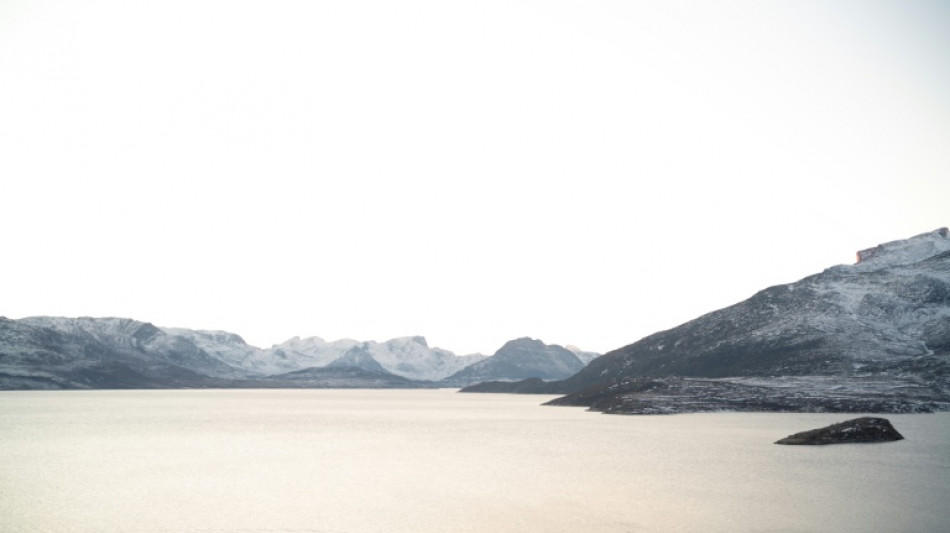
Arctic sea ice is headed for one of its smallest winter peaks on record, an AFP review of US data showed Wednesday, as climate change shrinks the region's frozen cover and heightens geopolitical tensions.
Formed when ocean water freezes, Arctic sea ice melts naturally in summer and reforms in winter, but the amount that returns has been declining due to human-induced planetary warming.
The maximum sea ice extent in the Arctic reached nearly 14.22 million square kilometres (5.5 million square miles) on March 10, according to the data from the US National Snow and Ice Data Center (NSIDC).
If the trend continues before winter ends later this month, it would rank among the five smallest ice covers in four decades of satellite monitoring, possibly even breaking last year's record.
"The sirens are blaring that we're headed for a hothouse planet with massive devastation around the world," said Shaye Wolf, climate science director at the Center for Biological Diversity, a US-based environmental group.
Last year, Arctic sea ice reached an all-time low on March 22, at 14.31 million square kilometres, said the NSIDC. Previous lows were set in 2016, 2017 and 2018.
Arctic sea ice was "unlikely to be a record low this year, but amongst the top 5", Samantha Burgess, strategic lead for climate at the European Centre for Medium-Range Weather Forecasts, told AFP, citing March 10 data.
Gilles Garric, polar oceanographer at French climate research institute Mercator Ocean Toulouse, said this winter was among the "top three" so far.
The NSIDC is expected to announce its Arctic winter sea ice assessment later this month.
- Faster warming -
The last three years have been the hottest globally on record, as rising greenhouse gas emissions drive global warming.
The polar regions are warming faster than the global average, especially the Arctic.
Experts say the warming El Nino weather phenomenon could return later this year, which could send temperatures to new heights.
"Given that the Arctic is warming at 3-4 times the global average rate, we are likely to continue to observe continued Arctic warming, loss of multi-year ice," Samantha Burgess, strategic lead for climate at the European Centre for Medium-Range Weather Forecasts, told AFP.
The consequences of low winter sea ice could include "potentially faster and more extensive summer melt", she said.
While the Arctic reached a new low, the situation improved in Antarctica as sea ice coverage came closer to its annual summer average after four years of extreme lows, the NSIDC reported on Monday.
Unlike melting land ice such as glaciers or ice sheets, shrinking sea ice does not directly raise ocean levels, but its loss threatens ecosystems.
Many species, including polar bears in the Arctic and emperor penguins in Antarctica, rely on sea ice to breed and feed.
"But Arctic warming, driven by fossil fuels, puts us all in peril," said Wolf.
"We're closer than ever to irreversible tipping points that will forever alter the world we know. Rapidly getting off fossil fuels is the only way to pull back from the brink," he added.
- Geopolitical heat -
The loss of sea ice contributes to global warming as the bright white surface makes ir replaced by darker ocean water, which absorbs more sunlight and retains heat.
It also has geopolitical implications. As the frozen cover retreats, new shipping routes and access to mineral resources may open up.
US President Donald Trump has voiced his desire to acquire Greenland, arguing that it was a national security matter in the face of Russian and Chinese threats.
"From a geopolitical perspective, the climate change-induced melting of sea ice is turning the Arctic into the new Mediterranean: a common shared maritime resource surrounded by competing states," Elizabeth Chalecki, a climate change and security expert, told AFP.
The Russian side of the Arctic will melt fast because it is shallower, she said, prompting Moscow to increase its economic and military presence in the Northern Sea Route.
The United States and Canada "will have to play catch-up", said Chalecki, a research fellow at the Balsillie School of International Affairs in Canada.
"There are significant opportunities for petroleum extraction, mining of critical minerals, scientific expeditions, and more," Chalecki said.
K.Brown--BTB