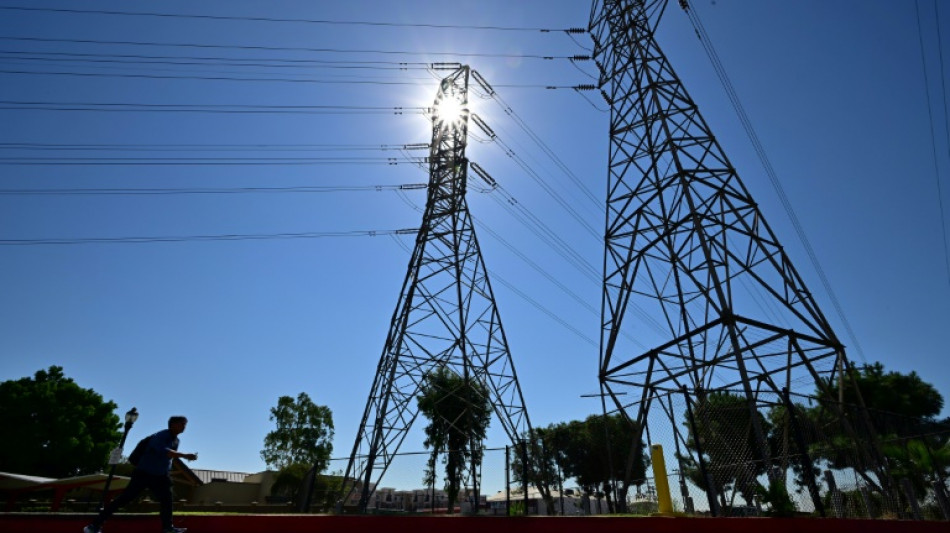
Californians told not to charge EVs as grid struggles in heat wave / Photo: © AFP

 Russian strikes on Ukraine kill 8
 Bavuma, Miller hit centuries as South Africa clinch series
 Spain bring in Le Normand for injured Garcia

 UK Labour party meets buoyed by Burnham but seeking concrete plans

 Nor'easter lashes US east with punishing rain and wind

 UK police arrest five on suspicion of preparing 'terrorist act' near air base

 Washington denounces Iran's truce proposal as 'cynical'

 Armani sprinkles glitter on discreet elegance at Milan show

 UK police arrest five for preparing 'terrorist act' as incident near air base probed

 อเล็กซ์ โบดี และศาสตราจารย์ ดร. ดีเทอร์ ลาซิก ลงนามสัญญาสำหรับ ALPHA WHEY และ BODI เครื่องดื่มให้พลังงาน

 China teen blows away the field for record-setting gold at 'sad' Games

 Alex Bodi och prof. dr. Dieter Lazik tecknar avtal om ALPHA WHEY och BODI Energidryck

 Alex Bodi i prof. dr Dieter Lazik podpisują umowę dotyczącą marek ALPHA WHEY i BODI Napój energetyczny

 Ο Alex Bodi και ο καθηγητής Δρ. Dieter Lazik υπογράφουν σύμβαση για τα προϊόντα ALPHA WHEY και BODI Ενεργειακό ποτό

 アレックス・ボディ氏とディーター・ラジク教授が「ALPHA WHEY」および「BODI エナジードリンク」に関する契約を締結

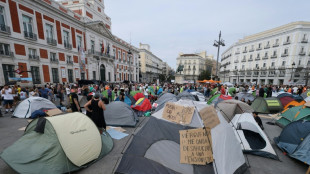 Housing protesters dig in for long stay in Madrid square

 Alex Bodi și prof. dr. Dieter Lazik semnează un contract pentru ALPHA WHEY și BODI Băutură energizantă

 Former Stoke boss Pulis 'cheated' over FA Cup final loss to Man City

 Czech Republic beat Ukraine to win BJK Cup

 Isak returns to Liverpool after injury scare

 Gunmen kill 27 in two shootings in South Africa

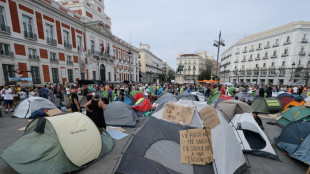 Spain PM vows action as housing protest sparked by eviction grows

 Fernandez downs Gibson to claim Singapore Open crown

 Three talking points from the Azerbaijan Grand Prix

 Turkey ex-minister resigns as investment fund crisis grows

Californians were told Wednesday not to charge their electric vehicles, just days after the state said it would stop selling gas-powered cars, as the aging electricity grid struggles with a fearsome heatwave.
Temperatures as high as 112 degrees Fahrenheit (44 Celsius) were expected in some Los Angeles suburbs as a huge heat dome bakes a swathe of the western United States.
The sweltering weather is expected to put huge demands on the already-stretched power grid, especially when people crank up the air conditioners during the broiling hours after work and school.
"Consumers are urged to reduce energy use from 4 to 9pm when the system is most stressed because demand for electricity remains high and there is less solar energy available," said the American Public Power Association, a body that represents public utilities.
"The top three conservation actions are to set thermostats to 78 degrees or higher, avoid using large appliances and charging electric vehicles, and turn off unnecessary lights."
California's power companies routinely call for households to limit their usage during the so-called "shoulder hours," when rooftop solar panels stop producing electricity but demand remains high because of still-elevated temperatures.
The call to limit electric vehicle charging comes a week after state regulators banned the sale of new petrol- and diesel-powered vehicles from 2035.
All but a handful of SUVs, cars and light trucks will have to produce zero tailpipe emissions, with only highly efficient plug-in hybrids permitted to burn fossil fuels.
The move was hailed as a game-changer for the EV industry because of the size of California's auto market and the potential it has to set national, and even international, standards.
- 'Dangerously hot' -
Wednesday's call to conserve power was greeted with derision on Twitter, where some said it was proof the state had not thought through its green agenda.
"Perhaps we should figure out how to fix our electric grid before we outlaw gas cars...just a thought," tweeted @AerysGG
"So.........this is what they want. Walking? Hitchin' A Ride?? Moving to a more reasonable state??" tweeted @cinda_scheef
The National Weather Service has issued an "excessive heat warning" for most of California, as well as parts of Arizona and Nevada.
"Dangerously hot conditions expected... until Sunday evening," the NWS said.
"A prolonged period of excessive heat will significantly increase the potential for heat related illnesses, particularly for those working or participating in outdoor activities."
"Those without access to adequate or reliable cooling or hydration will be at most risk, but much of the population could be susceptible to impacts as well," the NWS warned.
Nighttime temperatures are not expected to offer much relief, with lows struggling to get below 80 degrees Fahrenheit in many places.
It is not unusual for southern California to experience heat waves in September, but temperatures above 100 degrees Fahrenheit are considered hot even for a place almost perpetually baked by sunshine.
The heat wave comes after swathes of the southwest were lashed with torrential rains over recent weeks.
Some areas, including the notoriously dusty Death Valley, suffered flooding, and one person died after being swept away in Zion National Park in Utah.
Scientists say global warming, which is being driven chiefly by humanity's use of fossil fuels, is making natural weather variations more extreme.
Heat waves are getting hotter and more intense, while storms are getting wetter and, in many cases, more dangerous.
R.Adler--BTB