Sarkozy released from jail 'nightmare' pending appeal trial / Photo: © AFP

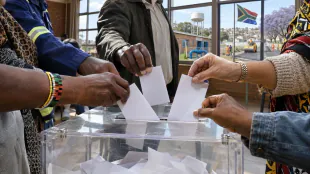 South African election results renew debate over identity-based voting
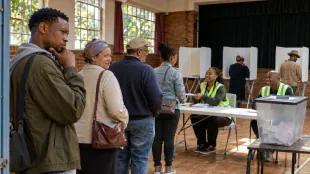 South African voters report smoother local election but declining IEC trust
 Dolly Parton museum and Nashville hotel open after singer’s death

 George and Amal Clooney attend New York political-comedy reading
 British buyers pay substantial premiums for period-home appearance

 Thomas Markle released to house arrest after child-abuse-image charge
 Dawn of War 4 developers chose Adeptus Mechanicus for tactical variety
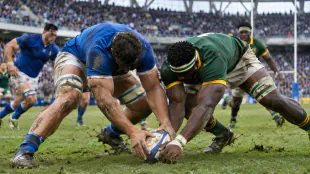 Italy face unbeaten South Africa in Turin Nations Championship match

 ChatGPT interactive interface feature tested across six custom tools

 Freshways milk-price cut deepens pressure on UK dairy farms

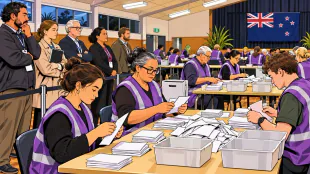 Labour and National remain virtually tied as New Zealand vote count advances
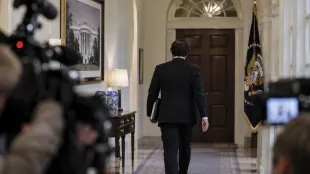
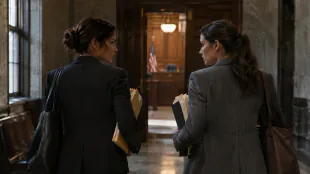 The Good Daughter adapts Karin Slaughter thriller with Rose Byrne and Meghann Fahy
 Heavy-lift drone evacuates wounded Ukrainian soldier from frontline kill zone
 Morrison says West Brom recovered after pressure from successive derby losses
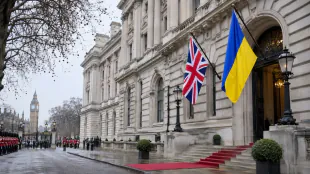 Britain considers 2027 state visit for Ukraine’s Zelensky
 Udinese Falls to Last Place in Serie A After Loss to Venezia

Nicolas Sarkozy on Monday was freed from prison, a 20-day experience the former president called a "nightmare", as a judge ordered his release pending an appeal decision over Libyan funding.
Sarkozy was freed from La Sante prison in Paris shortly before 3 pm (1400 GMT) on Monday, a source familiar with the case told AFP.
The 70-year-old former president, who maintains his innocence, departed in a car with tinted windows, escorted by police motorcyclists.
A lower court in September found the right-wing politician -- who was head of state from 2007 to 2012 -- guilty of seeking to acquire funding from Moamer Kadhafi's Libya for the campaign that saw him elected, and sentenced him to five years behind bars.
He entered jail on October 21, becoming the first former head of a European Union state to be incarcerated, and his lawyers swiftly sought his release.
The appeals case means that Sarkozy is now presumed innocent again.
During the examination of Sarkozy's request in court earlier Monday, prosecutors had called for him to be freed ahead of the appeal trial to take place in March.
Christophe Ingrain, a member of Sarkozy's defence team, hailed his client's release as "a step forward".
- 'Very hard' -
During the court hearing earlier Monday, the former leader spoke about his imprisonment via video call from jail.
"It's hard, very hard, certainly for any prisoner. I would even say it's gruelling," he said.
He thanked the prison staff, whom he said "showed exceptional humanity and made this nightmare -- because it is a nightmare -- bearable."
Prosecutor Damien Brunet asked that Sarkozy's request for release be granted.
"The risks of collusion and pressure on witnesses justify the request for release under judicial supervision," he said.
In the courtroom showing their support were his wife, the singer and model Carla Bruni-Sarkozy, and two of the former president's sons.
The lower court in late September ordered Sarkozy to go to jail, even if he appealed, due to the "exceptional gravity" of the conviction.
The court on Monday banned Sarkozy from leaving France.
The former president was also prohibited from contacting former Libyan officials as well as senior French judicial officials including Justice Minister Gerald Darmanin.
Sarkozy last month received a visit from Darmanin, despite warnings from France's top prosecutor Remy Heitz that it risked "undermining the independence of magistrates" before the appeal hearing.
- 'Fair decision' -
Sarkozy, seen as a mentor to many conservative politicians, still enjoys considerable influence and popularity on the French right.
"A fair and dignified decision, worthy of a man who has given so much to our country," Laurent Wauquiez, the parliamentary leader of the conservative Republicans, said on X.
In La Sante prison, the former president was separated from the general population, with two bodyguards occupying a neighbouring cell to ensure his safety.
Interior Minister Laurent Nunez said it was necessary in view of his status and "the threats against him".
Sarkozy is the first French leader to be incarcerated since Philippe Petain, the Nazi collaborationist head of state, who was jailed after World War II.
His social media account last week posted a video of piles of letters, postcards and packages it said had been sent to him, some including a collage, a chocolate bar or a book.
- Legal woes -
Sarkozy has faced a flurry of legal woes since losing his re-election bid in 2012, and has already been convicted in two other cases.
In one, he served a sentence for graft -- over seeking to secure favours from a judge -- under house arrest while wearing an electronic ankle tag, which was removed after several months.
In another, France's top court is later this month to rule over accusations of illegal campaign financing in 2012.
In the so-called "Libyan case", prosecutors said his aides, acting in Sarkozy's name, struck a deal with Kadhafi in 2005 to illegally fund his victorious presidential election bid.
Investigators believe that in return, Kadhafi was promised help to restore his international image after Tripoli was blamed for the 1988 bombing of a plane over Lockerbie, Scotland, and another over Niger in 1989, killing hundreds of passengers.
The court convicted Sarkozy of criminal conspiracy over the plan. But it did not conclude that he received or used the funds for his campaign.
J.Bergmann--BTB