
Pet-Food Revolution: Two New Global Surveys Reveal Growing Guardian Openness to Sustainable Diets for Dogs and Cats

 South African election results renew debate over identity-based voting

 South African voters report smoother local election but declining IEC trust

 Dolly Parton museum and Nashville hotel open after singer’s death

 George and Amal Clooney attend New York political-comedy reading

 British buyers pay substantial premiums for period-home appearance

 Thomas Markle released to house arrest after child-abuse-image charge

 Dawn of War 4 developers chose Adeptus Mechanicus for tactical variety

 Italy face unbeaten South Africa in Turin Nations Championship match

 ChatGPT interactive interface feature tested across six custom tools

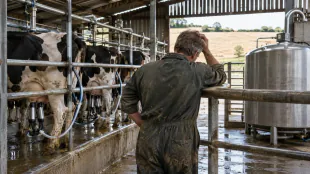 Freshways milk-price cut deepens pressure on UK dairy farms

 Labour and National remain virtually tied as New Zealand vote count advances

 The Good Daughter adapts Karin Slaughter thriller with Rose Byrne and Meghann Fahy

 Heavy-lift drone evacuates wounded Ukrainian soldier from frontline kill zone

 Morrison says West Brom recovered after pressure from successive derby losses

 Britain considers 2027 state visit for Ukraine’s Zelensky

 Udinese Falls to Last Place in Serie A After Loss to Venezia

LONDON, UK / ACCESS Newswire / November 14, 2025 / Two pioneering studies published in the journal Animals have explored in depth how dog and cat guardians perceive more sustainable pet food options. Led by Jenny L. Mace, Alexander Bauer, Andrew Knight and Billy Nicholles, the research sheds new light on the potential for alternative proteins and plant-based diets in the companion animal sector.
Study 1 - Dogs: 'Consumer Acceptance of Sustainable Dog Diets: A Survey of 2,639 Dog Guardians'
In the first study, the team surveyed 2,639 dog guardians worldwide. Around 84% of respondents were currently feeding their dogs either conventional or raw meat-based diets. However, a substantial 43% of this group reported they would nevertheless consider at least one type of more sustainable dog food (such as vegan, vegetarian or cultivated-meat formulations).
Among the alternative options, the most acceptable was cultivated meat-based dog food (chosen by 24% of these respondents), compared to vegetarian (17%) and vegan (13%) dog diets. And when asked what characteristics would be needed for these alternatives to be chosen, the top choices were nutritional soundness (chosen by 85%) followed by good pet health (83%).
Study 2 - Cats: 'Consumer Acceptance of Sustainable Cat Diets: A Survey of 1,380 Cat Guardians'
The companion study gathered responses from 1,380 cat guardians. In total 89% of these guardians fed their cats conventional or raw meat-based diets. However, just over half - 51% - of this group considered at least one of the more sustainable options to be acceptable.
The most popular alternatives were those based on cultivated meat (chosen by 33% of this group) followed by vegan diets (18%). Similarly to dogs, the most important characteristics alternative diets would need to offer be chosen were good pet health outcomes (chosen by 83%) and nutritional soundness (80%).
Differences among consumers
Both studies found that guardians who themselves reduce or avoid meat were significantly more open to alternative diets for their pets, as were those with higher educational qualifications. Age and regional differences were also apparent, with older consumers, and those from the UK, often less open to alternatives than those in other European nations, North America or Oceania, although differences were often not significant.
What This Means
These twin studies come at a time when the environmental and ethical footprint of conventional pet food production is growing in public consciousness. As noted by study co-author and veterinary professor Andrew Knight: "Recent studies have demonstrated that our dogs and cats collectively consume a substantial proportion of all farmed animals. Pet diets such as those based on plant-based ingredients or cultivated meat could transform the pet food system, lowering adverse impacts for farmed animals and the environment."
With rapidly increasing populations already numbering hundreds of millions of dogs and cats globally, the shift of even a modest percentage of these pets to lower-impact diets could bring significant benefits.
As co-author Billy Nicholles summarised: "These findings are of value to the rapidly growing pet food alternatives industry, enabling pet food companies to accelerate their growth and acquire new customers through evidence-based, targeted outreach."
Implications for Industry and Veterinary Practice
For pet food companies, the message is clear: launching sustainable diet lines is not merely a matter of production innovation, but also of trust-building. Clear information about nutritional soundness and health outcomes feature heavily in guardian willingness to adopt new products.
For veterinary practitioners and animal welfare organisations, these findings underscore the importance of informed communication. If guardians are open to alternatives but uncertain about their pet's health outcomes, then evidence-based guidance becomes a key enabling factor.
Further information
Andrew Knight
Veterinary Professor of Animal Welfare
[email protected]
SOURCE: Sustainable Pet Food Foundation
View the original press release on ACCESS Newswire
T.Bondarenko--BTB