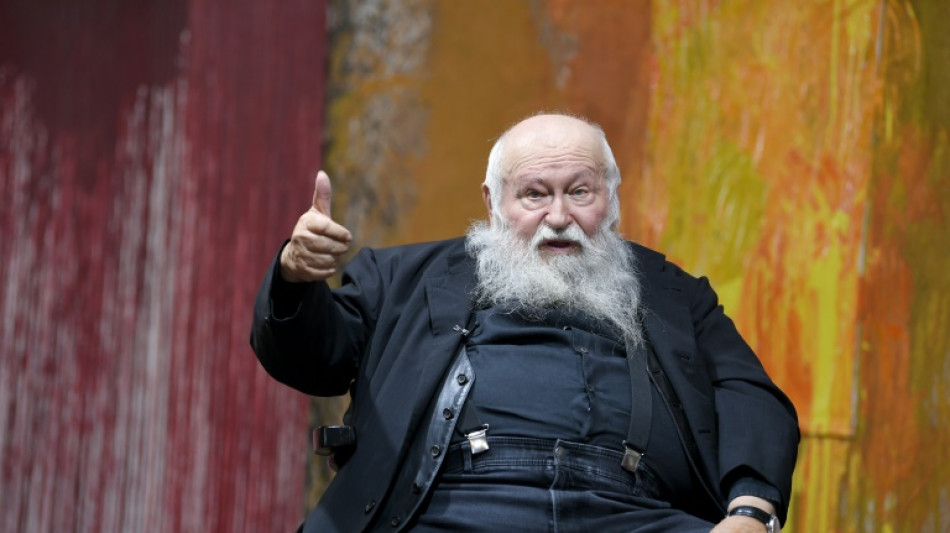
Austrian 'enfant terrible' of art Hermann Nitsch dies aged 83 / Photo: © APA/AFP/File

 Far-Right Extremists Claim Opportunity to Seize Control of GOP After Midterms

 New Campaign Highlights Knowledge Gaps on Carbon Monoxide Safety Among Americans

 JR East Launches 'teppay' to Integrate Suica Balance with Mobile Payments

 Phil Spencer on Housing Market Fairness: How Buyers and Sellers Navigate Falling Prices

 Beirut Cinema Festival Draws Thousands Despite War Fatigue

 AMD Forecasts First-Ever Revenue Lead Over Intel on AI Chip Surge

 GoodData.AI Launches the Agentic Serving Plane, a New Category of Enterprise Data Infrastructure for AI Agents

 Abu Dhabi Demand Response Project Achieves 401 MW Peak Reduction in 2025

 Panthers expected to begin 2027 NRL season away from new stadium
Austrian artist Hermann Nitsch, famous for his paintings and performances using human blood and animal carcasses, has died at age 83, his family said Tuesday.
Nitsch died at a hospital in Lower Austria province on Monday, his niece told AFP.
"Hermann Nitsch died peacefully at the age of 83 after a serious illness," a statement from the family said.
Nitsch was part of the "Actionists", a radical 1960s avant-garde movement known for skinning animal carcasses, tying up human bodies and using blood, mud and urine in their works.
The Austrian enfant terrible was best known for his long-running Orgies Mysteries Theatre, a performance-based show representing slaughters and religious sacrifices.
Nitsch's more recent shows included an exhibition in Sicily, Italy, in 2015, which featured dead animals on crucifixes, and led to animal rights groups to accuse him of blasphemy and inciting violence.
His wife Rita Nitsch told AFP at the time "that this kind of small ruckus is always part of (his work)... But quality has triumphed over the polemic."
Nitsch has two museums devoted to his work in Austria and one in Italy.
Y.Bouchard--BTB
