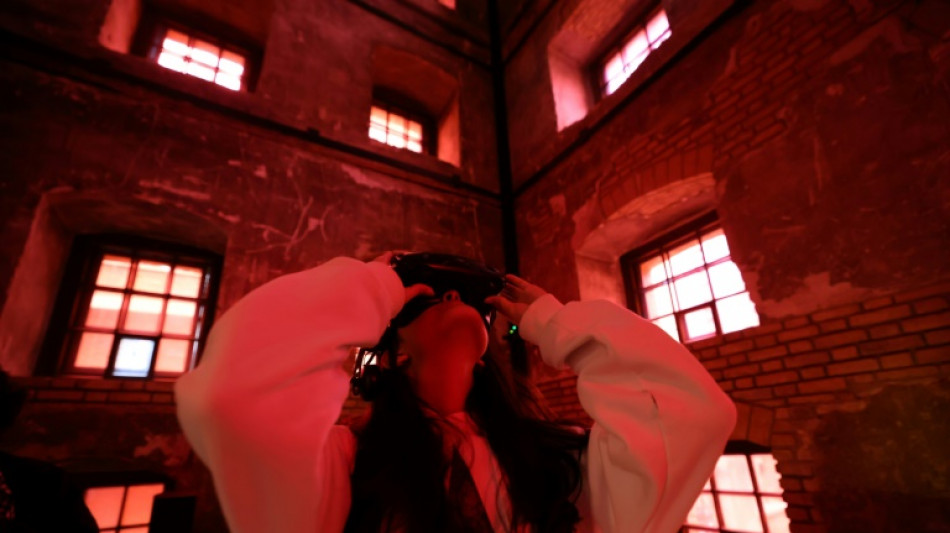
Once a crumbling relic of old Iran, brewery reborn as arts hub / Photo: © AFP

 St Francis School Leads €60,000 EU Project to Transform Early Childhood Education

 South Africa's Universal Health Coverage Depends on Tackling Poverty and Inequality

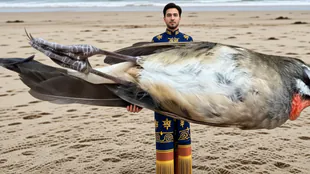 Rare Siberian Rubythroat Dies in UK Garden After Cat Attack

 Go Kyung-pyo Drunk Driving Incident Prompts Heavy Editing Across Multiple TV Shows
 KFF Health News Reporters Discuss ACA Enrollment Challenges, Rising Costs, and Measles Risks

 Alberta Unveils New High School Graduation Requirements to Increase Student Choice
Hidden behind imposing brick walls in the heart of Tehran, a renovated industrial cellar where decades ago Iranian beer was made has been transformed into a hub for contemporary art.
The ambitious restoration of the derelict Argo factory has made it "one of the most beautiful buildings of Tehran", said architect Nazanin Amirian, visiting the latest exhibition there.
While the former factory with its towering chimney and cavernous cellar has been given a new life, many other historic buildings in the Iranian capital face a grimmer fate.
"We hoped restoring Argo would inspire others to preserve similar buildings," said Hamid Reza Pejman, director of the Pejman Foundation that took on the project.
But "economic conditions are tough", said Pejman, after years of crippling sanctions and with no government funding to support restoration endeavours.
Established more than a century ago, the Argo factory had produced one of Iran's oldest and biggest beer brands before falling into disuse.
It had ceased operations just a few years before the 1979 Islamic revolution, which toppled Iran's Western-backed shah and ushered in a strict ban on the production and consumption of alcoholic beverages.
The brand itself lives on alcohol-free, with rights to the Argo logo transferred to a local beverage company, Pejman said.
He said that since the factory was "out of operation" at the time, it was spared the fate of some other breweries which were set ablaze during the revolution.
Ever since the Islamic republic banned alcohol, bootleg beverages proliferated on the black market, with toxic methanol occasionally contaminating the natural ethanol and resulting in mass poisonings.
- 'Transform the city' -
Left a crumbling structure of weathered brick walls that also served as a shelter for homeless people, the Argo building was eventually purchased by the Pejman Foundation in 2016.
Its brick walls and chimney were restored, keeping their distinct industrial look, while other parts like the roof had to be entirely rebuilt.
Since 2020, the building has been open to the public as a museum, featuring local and international artists.
In a nod to its past life, the Argo arts centre offers non-alcoholic beer for sale.
The current exhibition is a collection of installation works, sculptures and paintings by Iranian multidisciplinary artist Maryam Amini.
Over the years, the building has been swallowed by Tehran's rapid urban expansion, now surrounded by high-rises, modern cafes and sprawling commercial centres in one of the city's busiest neighbourhoods.
Much like the Argo factory until 2016, some of Tehran's historic buildings including old movie theatres have been abandoned for years, largely due to economic hardship.
Others were demolished as shifting urban priorities have favoured modern developments over restoration.
Amir Ali Izadi, a 43-year-old artist visiting the factory-turned-museum, expressed his hope that similar buildings would undergo renovation.
"It would transform the city's landscape," he said.
J.Bergmann--BTB