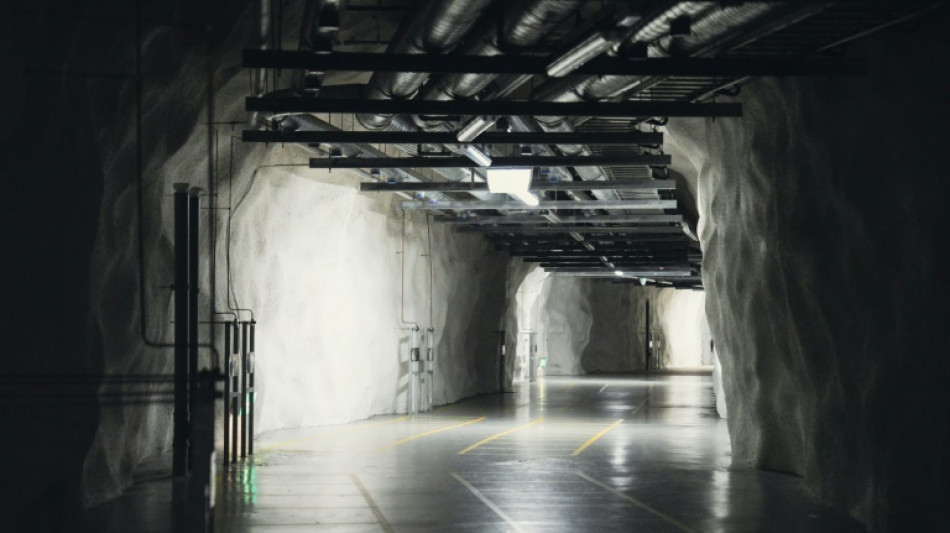
Finland's colossal bomb shelters a model for jittery Europe / Photo: © AFP

 Dodgers eye three-peat, Red Sox face Yankees as MLB playoffs begin
 Certification of Boeing 737 MAX delayed by software bug

 Celine Dion wows Paris Fashion Week with surprise gig
 AMD buys firm founded by AI 'godmother' Fei-Fei Li

 Italy rebound in Turkey as France win late in Belgium

 Pope says concerns about AI 'should be taken seriously'

 Hurricanes to hoist title banner as NHL season begins

 Justice Alito steps aside from major US climate case

 Willis happy with England exile after retains Top 14 player award
 Spain housing protests keep heat on government as PM seeks new law

 Wissa spoils Zimbabwe homecoming as DR Congo win AFCON qualifier

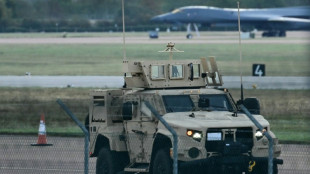
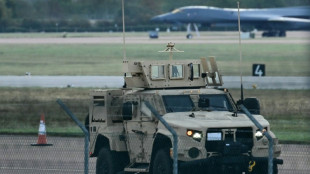 UK police release on bail five men held over airbase incident

 Ex-All Black Plummer 'sure' New Zealand will find Super Rugby solution

 Shein sees 1% revenue growth in first half of 2026
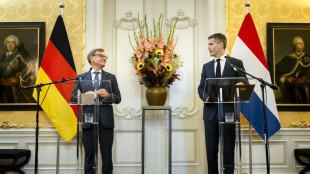 Netherlands regrets Israel retaliation in settlements row

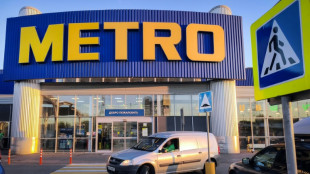 Moscow seizes Russian assets of German food retailer Metro

 Bulgarian spirits inflamed by new rakia rules

 Documentary turns camera on architect Peter Zumthor

 UK police say releasing on bail five men held over airbase incident

 Trump admin finalizes reversal of US fuel economy standards
 US says no China arms sale plans after envoy cites Trump offer
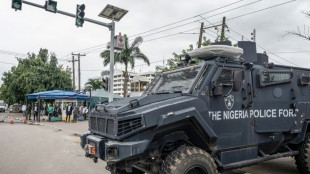 Dozens kidnapped in two weekend attacks in northern Nigeria

 Next stop the world: Pathirage wins Asian Games javelin gold

 Aster Launches Perpetual Grid Trading 2.0 with Up to 140,000 $ASTER Liquidity Mining Campaign
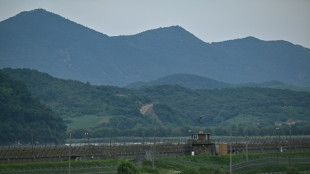 Seoul says North Korean mines 'highly suspected' as cause of DMZ blast
Swimming pools, playgrounds and amusement parks: Finland's underground facilities, which can double as bomb shelters, have emerged as an inspiring approach as Europe ramps up preparedness after Russia's invasion of Ukraine.
Finland shares a 1,340-kilometre (830-mile) border with Russia. Its network of civil defence shelters is an integral part of its preparedness strategy, which harks back to just before World War II.
Blasted into Helsinki's granodiorite bedrock dozens of metres underground, people of all ages swim and splash in the pools or relax in saunas in the cavernous Itakeskus swimming hall.
The complex is one of Finland's 50,500 civil defence shelters which have space for around 4.8 million of its 5.6 million population.
Intended to accommodate up to 3,800 people, the pools can be emptied of water and turned into a bombproof shelter within 72 hours.
"This is the world's biggest civil defence shelter facilitating a swimming hall," Teemu Raatikainen, who has been the head of maintenance for almost 30 years, proudly explained as he gave AFP a tour.
Finland's security strategy based on long-term investments in both the military and preparedness -- including civil defence shelters -- has attracted international interest after Russia's invasion of Ukraine in 2022 and the deteriorated security situation across Europe.
"We always have this multi-use -- peacetime use and wartime use -- of our shelters," Jarkko Hayrinen, a senior rescue officer at Finland's interior ministry explained, as he showed AFP another one of Helsinki's large bomb shelters.
- Blast-proof tunnels -
With space for 6,000 people, the Merihaka shelter in central Helsinki houses an underground playground, several ball courts and a gym.
"The shelters are very well maintained because people are using them in normal times," Hayrinen said.
The Finnish "cultural mindset" of involving all sectors of society in security has become something of a "trademark" for Finland after it joined the NATO military alliance in 2023, said Matti Pesu, a senior researcher at the Finnish Institute of International Affairs.
"And the civil defence shelters are a real tangible symbol of how the authorities are preparing to protect citizens in emergency situations," he added.
High-level guests such as Ukrainian President Volodymyr Zelensky and Denmark's King Frederik X and Queen Mary have recently been given guided tours through the zigzagging blast-proof tunnels of the Merihaka shelter.
- Long tradition -
"The first act on building defence shelters was adopted already in 1939, two weeks before the Winter War started," Hayrinen said, referring to the Soviet Union's invasion of Finland which lasted more than a 100 days.
"Finland was not prepared for defending civilians during wartime and it was a hard lesson for us," he added.
The Nordic country now has bomb shelters to protect almost all its citizens, with Helsinki providing space for 900,000 persons -- enough to host all the capital's residents and thousands more.
Designed to withstand explosions, building collapses, radiation and toxic substances, the largest public shelters in Finland have primarily been situated in populated areas.
Buildings or housing complexes with a floor area exceeding 1,200 square metres are required by law to have a bomb shelter.
Other countries with a similar wide access to bunkers are Switzerland, Sweden, Norway and Israel.
"All of these countries are united by a tradition of neutrality or a strategically difficult position," Pesu noted.
Finland, where military service is mandatory for all men and voluntary for women, can quickly mobilise some 280,000 soldiers and the total military reserve comprises some 900,000 people.
On April 1, the country announced it will increase national defence spending to at least three percent of GDP by 2029 in response to the security threat posed by Russia.
Y.Bouchard--BTB