Moderna mRNA mpox vaccine shows promise in animal study / Photo: © AFP/File

 Trump renames AI "super intelligence," rejects international oversight

 Trump rejects international regulation of AI

 How is the EU approaching record fuel prices?

 Sri Lanka's Colombage strikes on debut as England dismissed for 265 in first ODI

 Hurricane Polo strengthens to top category 5 off Mexico

 11 hurt as teen opens fire outside school in western Turkey

 UN chief says 'Big Oil' treats atmosphere as open sewer

 Tunisia says 2026 summer hottest on record

 England's Rashid out of Sri Lanka ODIs with hand injury

 Houthis accuse Saudi Arabia of deadly strikes as thousands flee

 Stocks climb as oil slides, AI buzz returns

 India cricketers win in style as Afghan savours 'special' Games silver

 La Liga president hits out at Real Madrid refereeing 'conspiracy' claims

 MEXC Launches “Real Stocks, Real Friends” with Rewards for Bringing Friends to Wall Street

 Mbappe continues media push for Ballon d'Or recognition

 Stocks rise on AI buzz, oil prices cool

 India narrowly survive huge scare against minnows Japan

 Missing F-35 fighter parts 'not sensitive', says Australia minister

 Cambodia showcases scams crackdown with global conference

 Afghan cyclist who disguised herself as man wins Asian Games silver

 Typhoon Dujuan leaves four dead in Japan, 45,000 houses without power

 G7 leaders condemn Houthi strikes on Saudi Arabia

 Google data centre sparks protests in Austria

 Shin Ohashi: Junk food-loving teen and Japan's next big swimming hope

 Stocks rise on AI buzz, drop in oil prices

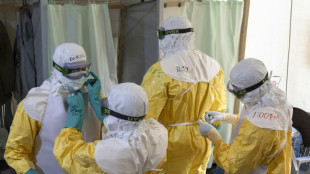
An experimental Moderna mRNA vaccine for mpox has demonstrated greater effectiveness than current shots in reducing disease symptoms and duration, according to an animal study published in the journal Cell on Wednesday.
It comes amid an outbreak of the disease in Africa -- partly driven by a new variant that emerged in the Democratic Republic of Congo -- which has been declared an international emergency.
Senior author and virologist Jay Hooper from the US Army Medical Research Institute for Infectious Diseases told AFP that researchers were interested in exploring mRNA technology to find a "sweet spot" -- an mpox vaccine that is both highly safe and highly effective.
Vaccines for mpox, previously known as monkeypox, were originally developed to combat smallpox, which has since been eradicated.
The currently licensed JYNNEOS vaccine uses a "live attenuated" virus, meaning the virus has been weakened so it cannot cause disease in humans.
That attenuation also limits its protective efficacy compared to the older ACAM2000 vaccine -- which was however potentially infectious.
In contrast, the mRNA vaccine includes genetic instructions that train the host's immune system to recognize four key viral antigens, which are crucial for the virus to attach to cells.
Moderna uses the same mRNA technology in its highly safe and effective coronavirus vaccine.
In the study, six macaques were vaccinated with the mRNA vaccine, and another six received an equivalent of the currently licensed vaccine.
Eight weeks after their initial dose, all 12 vaccinated macaques were exposed to a lethal strain of mpox. A third group of six unvaccinated macaques was also exposed to the virus.
Researchers monitored the health of the animals over a four-week period, taking blood samples to assess their immune responses.
As anticipated, all vaccinated animals survived, regardless of the vaccine type, while five out of the six unvaccinated animals died.
"But if we focus specifically on the outcomes with the mRNA vaccine, what we saw was quite surprising and exciting," co-senior author Galit Alter, a virologist and immunologist at Moderna, told AFP.
Animals that received the mRNA vaccine experienced less weight loss and developed significantly fewer lesions compared to those given the live attenuated vaccine.
On average, the control group developed up to 1,448 lesions, the group vaccinated with the older vaccine had a maximum of 607 lesions, and the mRNA-vaccinated group had only 54 lesions at most.
Moreover, the mRNA vaccine shortened the period during which the animals exhibited lesions by more than 10 days compared to the MVA vaccine. It also resulted in lower viral loads in both blood and throat swabs, suggesting it could be more effective in reducing transmission.
First author Alec Freyn of Moderna told AFP that serum from the mRNA-vaccinated macaques was also tested against other viruses in the Orthopox family, and it effectively neutralized vaccinia, cowpox, rabbitpox, camelpox, and ectromelia virus.
The vaccine candidate, named mRNA-1769, is now being tested in an early-stage human clinical trial in the UK to assess its safety and immune response.
E.Schubert--BTB