Gaza children 'extremely impacted' by war: UNICEF / Photo: © AFP

 Yamal on target as Spain hold off Czech Republic

 Latvian exit polls suggest pro-European choice
 Lula, Bolsonaro wrap up campaigns ahead of knife-edge election

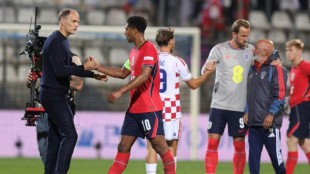 Tuchel hails 'complete' England after Croatia demolition

 Fury to invite Trump to lead ring walk before Joshua showdown

 Fashion industry in 'precarious moment', says Vivienne Westwood supremo
 Seventh heaven for England in Nations League rout of Croatia
 Storms, flooding cause chaos on Greek holiday island of Crete

 #IAmJaneDoe: online support campaign in US university rape case

 Brazil shine on Selecao's first visit to India
 Zverev sets up Djokovic quarter-final at China Open, Rybakina out
 Happier at home, Bordeaux hammer Lyon in Top 14

 Lula, Bolsonaro in final push for votes ahead of knife-edge election

 Boisterous fashion week barnstorms 'sleepy' Nigerian capital

 UAE investigators say flydubai co-pilot was planning 'terrorist act'

 Rahul smacks century in India v Windies ODI

 Daryz seeks to join exclusive club of dual Arc winners
 Russia warns diplomats to leave Kyiv over new strikes threat
 Olympic champ Zheng rebukes rowdy home crowd at China Open
 World No.1 Sinner pulls out of Shanghai Masters to delay return
 Red Bull's Verstappen grabs pole position for Bahrain GP
 India beat Pakistan in blockbuster as golfer Kim wins 'crazy' gold

 India beat arch-rivals Pakistan to win Asian Games cricket gold
 Ethiopia's Tigray rebels abandon regional capital as govt advances: journalist

 Tom Kim powers to Games gold and exemption from military service

Nearly a year of devastating war has left Gaza's 2.4 million people enduring a humanitarian tragedy, with children in the besieged territory the most vulnerable, a UNICEF official told AFP in an interview.
Jonathan Crickx, the UN agency's spokesman for the Palestinian territories, has returned this month from a week-long mission to Gaza, still heavily impacted even as Israel shifts its military focus to Lebanon.
He talked to AFP about the plight of Gaza's children, who have not had a single day of education since the Israel-Hamas war broke out on October 7.
"You see children who are not allowed to have the life of normal children, no education, no play, no joy," Crickx said.
"The faces of these children are... so sad."
Most children he saw in the war-battered Palestinian territory were helping their family as they no longer had classes to attend.
"So, you see a lot of children carrying these dirty yellow plastic jerrycans" with up to 25 litres of water, he said.
"I've seen children pushing these jerrycans with a broken wheelchair, trying to bring water, which is one of the major issues... in the Gaza Strip."
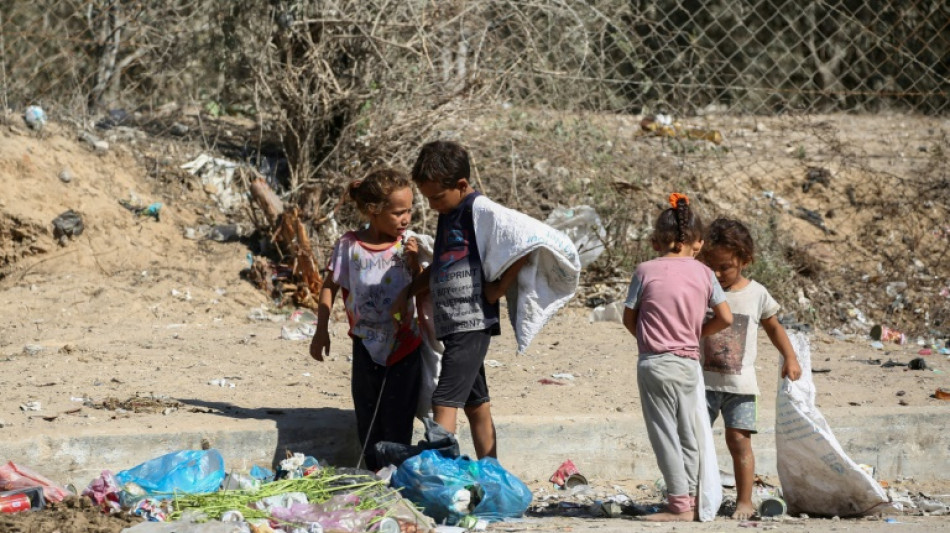
Crickx said it was heartbreaking to see children, some as young as five or six, trying to find food for their families.
They are "walking in huge piles of garbage and trying to get whatever they can," he said.
"These children are extremely impacted by the violence and the bombings and insecurity they have been through for a year."
- 'They want to go to school' -
Crickx vividly remembers his conversation with Ahmad, a 10-year-old Gazan boy who lived with his family in a displacement camp in southern Gaza.
The boy's uncle had died a horrific death, Crickx said.
Ahmad "was saying things that a 10-year-old should not tell you, how the body was in pieces, how the head was far away", he recalled.
"This is extremely intense and difficult to hear from a 10-year-old child."
Many children in Gaza have lost at least one of their parents, said Crickx.
Exact figures are unavailable, "but the frequency at which we meet with those children is very high," he said.
UNICEF estimates that there are 19,000 children who are unaccompanied or have been separated from their parents, he said.
On top of that, not a single school is functioning across Gaza, he said, and 85 percent of all school buildings have been destroyed by the fighting.
"You have the entire population of school-aged children who didn't attend a single hour of class in the past 12 months," Crickx said.
"What is really striking is how they want to go to school, how they want to play with their friends, how they want to see their teachers... education, learning give hope."
- 'Terrible recipe' for disease -
UN agencies and aid groups have warned of the spread of preventable disease and other health risks compounded by the war.
"With a very high level of density of people, extremely bad hygiene conditions, high temperatures, too little access to a bathroom, it's the perfect, terrible recipe for the emergence of diseases," Crickx said.
Many children are sick and need treatment, but most hospitals across Gaza are not functioning.
"This situation is really leading to children not getting the proper treatment that they need," Crickx said.
He said he had met four children in northern Gaza's Kamal Adwan hospital who were suffering from cancer or heart problems.
"These children actually need an immediate medical evacuation (or) they will not make it," he said.
A.Gasser--BTB