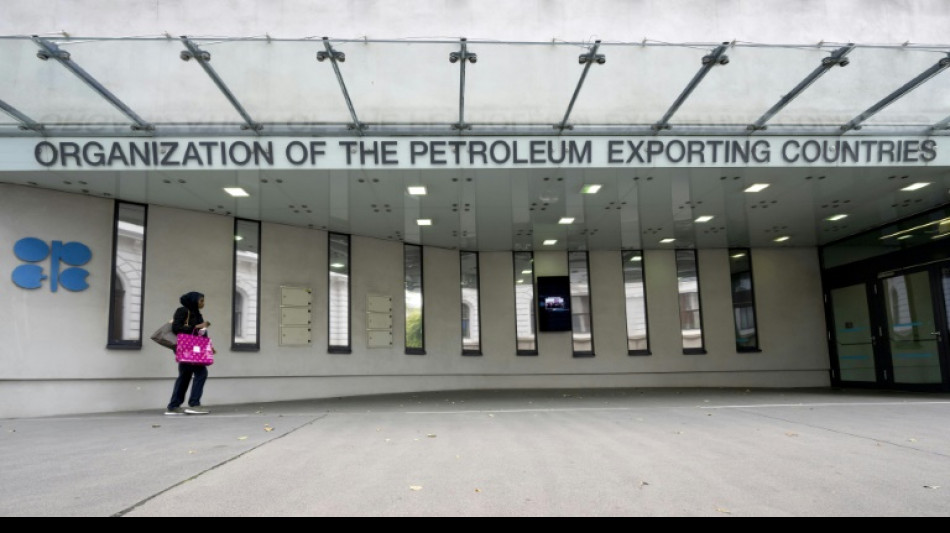
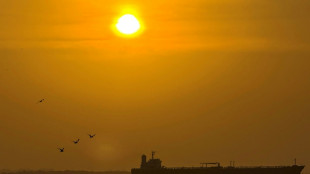
OPEC set to stick or cut more amid plan to cap Russian oil price / Photo: © AFP/File

 Manchester Airports Group Cyberattack: 8.7 Million Customer Records Exposed

 Nepal floods leave trail of destruction, aid challenge
 Experts outline sustainable ways to declutter Australian homes

 Bulk book purchases feed AI training through destructive scanning

 George and Amal Clooney attend Lake Como event after France evacuation

 Michelle Obama describes relief and adjustment after daughters leave home

 Very strong El Niño forecast to peak during southern African summer

 SAFA opens tender for dressing rooms, ablutions and grandstands

 TEEKS brings Māori-rooted soul and a new view of masculinity to South Africa

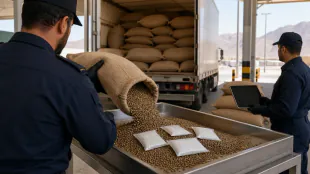 Saudi customs seize 1.95 million amphetamine pills in lentil shipment
 Trump says Russia will not attack NATO as CIA chief visits Moscow

 British Museum schedules new Bayeux Tapestry ticket release

 From forced labour to living heritage: Sao Tome's colonial plantations
 Motorola September 2026 Deals: Up to $700 Off Razr Ultra and Moto G
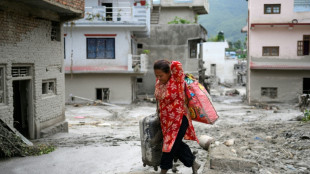
 In war-split Myanmar 'spirit consorts' commune across divide
 Leaders of Russia, China, Iran to attend summit in Kyrgyzstan
 Hovland and Gerard share lead at Tour Championship

 Maresca salutes 'unbelievable' Cherki after Man City star sinks Palace

 Marquinhos rescues last-gasp draw for PSG at Lille in Ligue 1

 ICE detains British far-right activist Milo Yiannopoulos in Louisiana

 Milo Yiannopoulos held by ICE after missing immigration hearing

 Six Flags closes X2 rollercoaster after reports of severe brain injuries

 Jury ends second day without verdict in Lindsay Clancy murder trial
 Artist says criticised Ronnie O'Sullivan mural is unfinished

 UAE grants Starlink 10-year satellite broadband licence

Major oil producers are expected to stick to their current output strategy or even slash production further when they meet on Sunday in the face of falling prices, a potential Russian oil price cap and an embargo on Russian crude shipments.
At their last ministerial session in October the 13-nation Organization of the Petroleum Exporting Countries headed by Riyadh and its 10 allies led by Moscow, collectively known as OPEC+, agreed to reduce output by two million barrels per day (bpd) from November.
The OPEC+ reduction amounted to the biggest cut since the height of the Covid pandemic in 2020.
Amid fears of economic slowdown, Sunday's the cartel's meeting via videoconference convenes ahead of the EU enforcing an embargo on Russian crude shipments from Monday.
G7 countries, the EU and Australia had also appeared close to agreeing a $60 dollar per barrel price cap on Russian oil Thursday.
The alliance should vote for a "rollover of the previous decision" to cut two million bpd, an Iranian source told AFP Thursday, arguing that the market was "very uncertain" in light of imminent European sanctions.
- China worries -
"Odds are that the group will reassert its commitment to its latest output cuts," says PVM Energy analyst Stephen Brennock, adding he would not rule out that they "may even potentially announce fresh cuts" to bolster prices.
Since the October meeting, oil prices have been plummeting to their level of early 2022, far from the peaks above $130 a barrel in March after the start of Russia's invasion in Ukraine.
Two global crude benchmarks were hovering around $85 a barrel on Thursday.
Covid-related restrictions in China have raised fears about energy demand from the world's largest importer of crude oil.
Beijing defused concerns, however, by signalling a possible easing of the strict zero-Covid policy, after nationwide protests against health restrictions broke out.
Soaring inflation in Europe and across the Atlantic have also fuelled fears of a recession.
- Russian 'leverage' -
Beyond the economic gloom, the big unknown in the oil equation currently is Russian oil, as Western nations seek to decouple themselves from Moscow's energy supplies as fast as possible.
The EU has decided to ban member states from buying Russian oil exported by sea from December 5, "putting at risk over two million barrels per day," according to estimates by ANZ analysts.
Investors are also scrutinising a European Commission-proposed $60 dollar per barrel price cap on Russian crude, which is designed to reinforce the effectiveness of the EU embargo.
The EU was already in agreement with Washington on the need to cap the price Western clients pay for Russia's oil, to prevent Moscow profiting from price rises triggered by its own war on Ukraine.
Last week, President Vladimir Putin had warned that any attempt by the West to cap the price of Russian oil would have "grave consequences" for world markets.
Russia "has several options to circumvent such a cap," said UniCredit economist Edoardo Campanella, adding that "OPEC+ might feel compelled to adopt a more aggressive stance" by cutting or threatening to cut production even further.
"Russia might also retaliate by leveraging its influence within OPEC+ to push for more production cuts down the road, thus exacerbating the global energy crisis," Campanella said.
G.Schulte--BTB