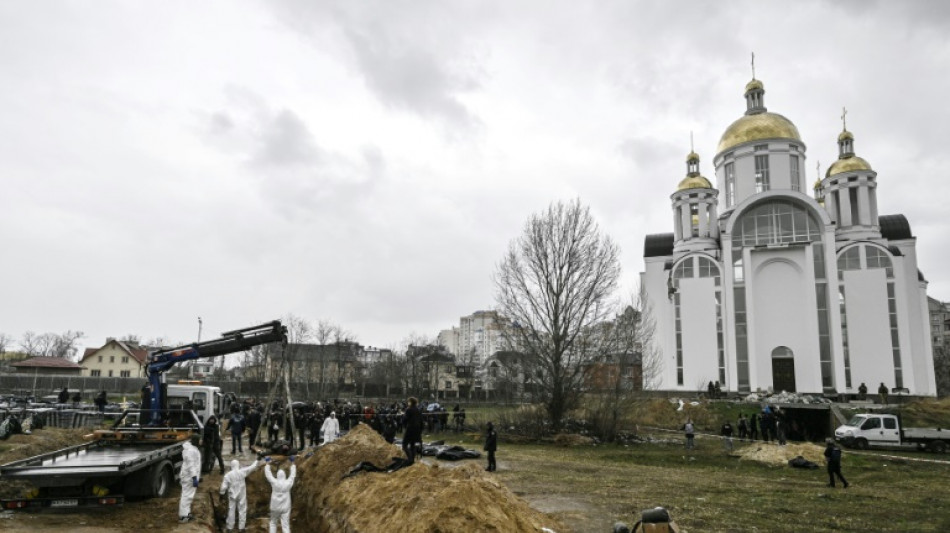
Tech battles to show its worth in Ukraine war crimes probes / Photo: © AFP/File

 Stocks retreat as bond yield fears persist, oil rises
 ARKBRIDGE’s David Mali Highlights AI-Driven Risk Management at the Finance Magnates London Summit

 Zuckerberg buys Gothic castle in Ireland: spokesman
 Belgium's fire of the century now 'under control'
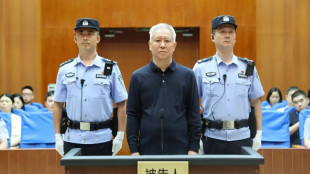 Evergrande's Xu Jiayin: from real-estate tycoon to life in prison

 Spurs eyeing move for Man City's Savinho and Marmoush - reports
 Springboks captain Kolisi to miss first All Blacks Test
 Japan to launch probe for Mars moons in October: space agency
 From beach to Bulls: relaxed Tsunoda savours rare F1 drive

 Prince Harry: key dates in life of returning UK royal

 North Korea launches missiles, Seoul says, after Trump floats Kim meet

 Oil jumps on Iran war tensions, offsetting bond yield fears
 Germany identifies far-right suspect in deadly 1970 antisemitic attack
 PrimeXBT Expands Swap-Free Trading to PXTrader 2.0
 Record number of locations in France top 40C over summer: AFP analysis
 Trump pledges 'economic warfare' on Iran, prompting Tehran derision
 'Girl with a Pearl Earring' in Japan, perhaps for the last time
 Russian strikes kill 13 in Kyiv, surrounding region
 'Simply lovely': Verstappen signs new Red Bull contract until 2030
 Australia coach Walters heading to St Helens after World Cup

 China jails founder, fines disgraced property giant Evergrande

 Russian strikes kill 12 in Kyiv, surrounding region
 US India ambassador's Kashmir remarks rile Pakistan; envoy summoned

 In Senegal's Saint-Louis, traces of slave-trading past fade away
 Russian strikes kill 9 in Kyiv, surrounding region
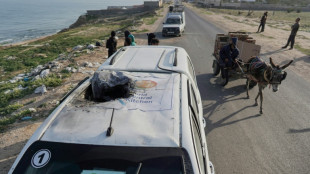
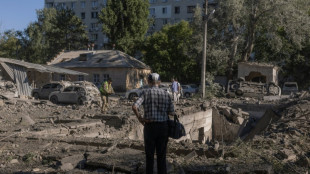
Russia's war in Ukraine is still being counted in days, but images of atrocities already number in the hundreds of thousands.
The conflict is the first to throw up such rich evidence in real time, but the sheer volume of material poses a huge challenge for those trying to use it as evidence of war crimes.
"The amount of material that we see, we really haven't seen before," said Hadi al Khatib, whose organisation Mnemonic has gathered around 400,000 pieces of material since February.
Wendy Betts, whose eyeWitness to Atrocities group has a bespoke app to allow NGOs to gather evidence, is equally deluged.
"The last time I looked, we had roughly as much in the last six weeks as we normally would get globally in six months," she told AFP.
International experts are part of a plan unveiled by Ukraine's President Volodymyr Zelensky for a "special mechanism" to probe thousands of allegations of war crimes.
Betts has already handed some footage to Ukrainian prosecutors and Khatib has had to partner with other groups to process his material.
But for all the benefits of technology, this kind of footage has so far been prominent in only a handful of court cases.
Ukraine could well be the coming-of-age for technology-led evidence gathering.
- Training AI -
Khatib cut his teeth on the Syria war, where his team is still sifting an archive of four million records -- he reckons only about five percent has been verified.
They are training artificial intelligence (AI) software to recognise items like Russian cluster bombs to allow that footage to be prioritised.
But it is slow progress and ultimately each record needs to be verified by a human.
"With technology, we are really not there yet, but we are trying," he told AFP.
Khatib initially set out to use the material for advocacy and as a memorial, which requires only that the footage is what it purports to be.
But using footage to build a legal case is different.
It must be proved that nothing could have happened to the footage all along the evidence chain.
The eyeWitness app was designed especially for this, storing all the metadata securely inside the app.
"We can't verify anything that's already been taken on social media," said Betts, "the footage has to be taken using the camera app".
Her main challenge is to build trust among the NGOs and activists who might use the app.
In Ukraine, eyeWitness has already been working with people in the eastern conflict areas for five years, so they have a head start.
And both Betts and Khatib stress how the tech-savvy nature of Ukraine is helping their efforts hugely.
- 'Two-edged sword' -
Activists and investigators have learnt a lot since the civil war in Syria where smartphones were used for the first time en masse to document atrocities.
"The concept of a citizen investigator or citizen engagement in the investigative process... that really emerged in Syria in 2011," said Bill Wiley, a Canadian who has been investigating war crimes for 25 years.
He has since worked on the so-called Islamic State's brutal campaign in Syria and Iraq, when social media was widely used by the militants.
His foundation, the Commission for International Justice and Accountability (CIJA), is still scouring thousands of smartphones and computer hard drives for usable information from the IS conflict.
"Modern technology and its ubiquitous use in conflict zones is, from a narrow criminal investigative perspective, very much a two-edged sword, and mostly cutting the wrong way," he said.
Both he and Khatib contrast the volume of material with the ability of software to provide accurate analysis.
Wiley suggested investigators needed to be picky in what footage they use, flagging the example of an attack on a theatre in Mariupol on March 16 where hundreds of civilians are thought to have been killed.
"You don't need a photograph of the aircraft circling the target before the bomb was dropped," he said.
Instead, he will be looking to safeguard any information that could link such attacks to whoever ordered them, whether that is phone call intercepts, email chains or old-fashioned paper trails.
But the investigators all agree that they are part of a team with similar goals.
"All of these pieces of information are going to be required to put this gigantic evidentiary puzzle together," said Betts.
And they all believe that ultimately there will be accountability.
"It may take some time, but we will see arrest warrants issued against various Russian leaders," said Wiley.
Y.Bouchard--BTB