In embattled Ukraine, spring flowers take on patriotic hues / Photo: © AFP

 Stocks retreat as bond yield fears persist, oil rises
 ARKBRIDGE’s David Mali Highlights AI-Driven Risk Management at the Finance Magnates London Summit

 Zuckerberg buys Gothic castle in Ireland: spokesman
 Belgium's fire of the century now 'under control'

 Evergrande's Xu Jiayin: from real-estate tycoon to life in prison
 Spurs eyeing move for Man City's Savinho and Marmoush - reports

 Springboks captain Kolisi to miss first All Blacks Test

 Japan to launch probe for Mars moons in October: space agency
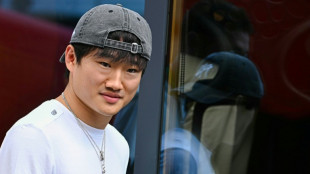 From beach to Bulls: relaxed Tsunoda savours rare F1 drive

 Prince Harry: key dates in life of returning UK royal

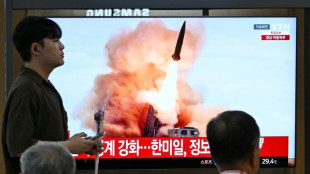 North Korea launches missiles, Seoul says, after Trump floats Kim meet

 Oil jumps on Iran war tensions, offsetting bond yield fears

 Germany identifies far-right suspect in deadly 1970 antisemitic attack
 PrimeXBT Expands Swap-Free Trading to PXTrader 2.0
 Record number of locations in France top 40C over summer: AFP analysis
 Trump pledges 'economic warfare' on Iran, prompting Tehran derision
 'Girl with a Pearl Earring' in Japan, perhaps for the last time

 Russian strikes kill 13 in Kyiv, surrounding region
 'Simply lovely': Verstappen signs new Red Bull contract until 2030

 Australia coach Walters heading to St Helens after World Cup
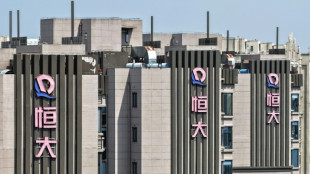
 China jails founder, fines disgraced property giant Evergrande
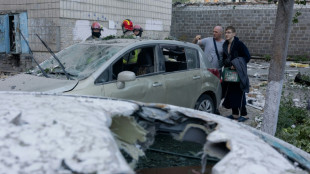 Russian strikes kill 12 in Kyiv, surrounding region
 US India ambassador's Kashmir remarks rile Pakistan; envoy summoned

 In Senegal's Saint-Louis, traces of slave-trading past fade away
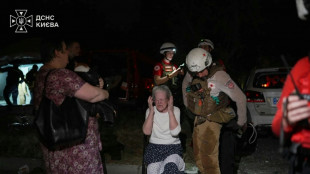 Russian strikes kill 9 in Kyiv, surrounding region
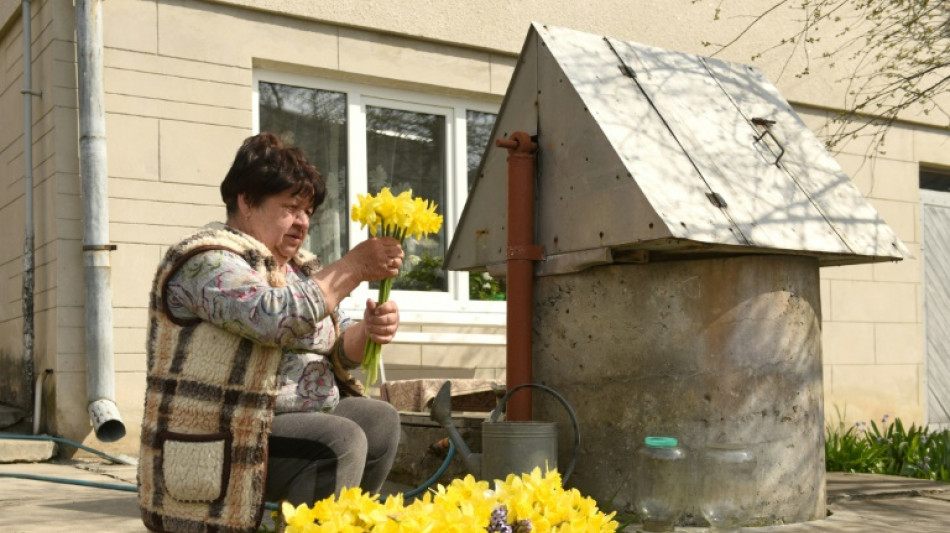
In her garden in western Ukraine, Ivanna Kuziv, a retired accountant in her late 60s, gathers an armful of yellow daffodils and bluebells to sell at the market.
It is purely coincidental that the flowers in her garden are the colours of the national flag this week, she says.
"But I like it. It's in honour of Ukraine."
Since Russia invaded her country in February, the population of the surrounding town of Vynnyky has dwindled.
Many mothers and children have fled abroad, leaving the men behind struggling to find work and waiting to be drafted.
"People are anxious," she says.
But spring does not wait, and the garden she inherited from her great-grandmother is in bloom.
Most days of the week, Kuziv snaps up some narcissus, drops them into a water-filled bucket, and heads into the city to sell them.
Ukrainian children are taught the national flag is two strips of colour, one representing the blue sky and the other a field of wheat.
In Lviv, those hues have become omnipresent -- in fluttering flags jammed into car doors, in patriotic dumplings and cakes served in restaurants, but also in bouquets of flowers.
In the city centre, two women in long coats bring bunches of large saffron and indigo daisies to a well-attended military funeral at the cathedral.
Among the dozens of men and women who walk in silence behind the hearse afterwards, one serviceman holds drooping tulips of both colours in his fist.
On the train station platform, a 22-year-old soldier waits impatiently with 101 yellow tulips bound in blue ribbon for the girlfriend he has not seen in two months to arrive from the embattled east.
- 'Some positive' -
Olga Fityo-Styslo sells two kinds of daffodils at the flower market -- one their natural colour, the other tinted after feeding off a mixture of water and navy-blue ink.
"We have a war going on, and the colour of the flag is blue and yellow," she says.
"But since there are no blue flowers in early spring, I decided to give nature a little help."
The 55-year-old, who has been selling flowers at the market since 1996, said she stopped working for a few days after war erupted.
When she returned in early March, she was surprised to have so many customers.
The city's population had swollen with families escaping with very little from war-battered eastern and southern Ukraine.
"There were many displaced people, and they wanted flowers," she says.
"In them, they find some positive."
- Bright petals -
Even when they are not the colours of the nation, bright petals are everywhere in the western city.
A medical officer on leave waits for her friend to take money out at a cash point, cradling a huge bouquet of fuchsia, roses and tulips. It is the friend's birthday, and they are going for a stroll.
At the foot of a monument to the Virgin Mary, an old woman prays in front of jars of pink tulips. The statue has been surrounded by scaffolding, but those trying to protect it from Russian bombardment seem to have run out of sandbags.
But the flower business is not as good as it used to be, says florist Myroslava Kumechko.
Beside buckets of daffodils, the 40-year-old says 70 percent of her business before the war came from christenings, anniversaries and weddings.
But that income has now vanished, and she cannot stand at the market for too long because she needs to get home to her three children studying online.
"It's not like it used to be," she says.
D.Schneider--BTB