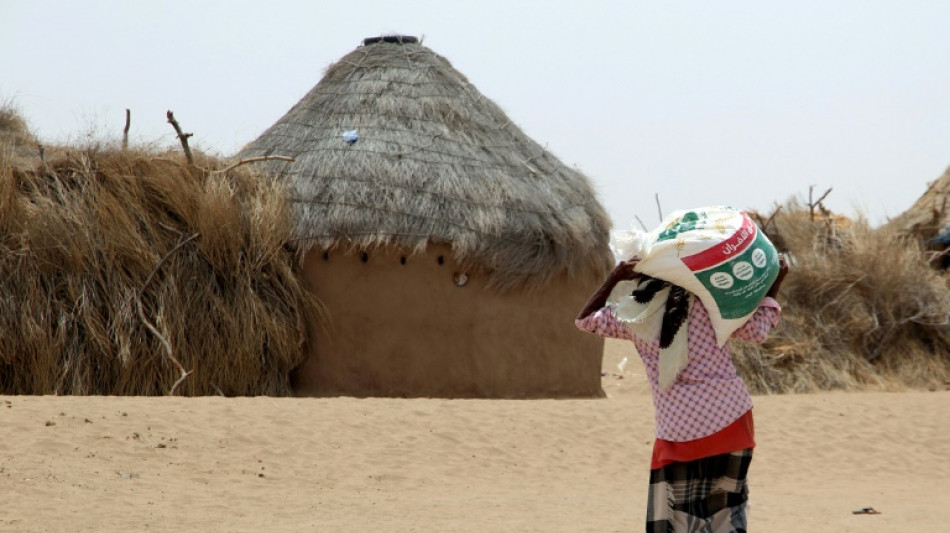
Yemen's new leaders say focused on peace path / Photo: © AFP

 Stocks retreat as bond yield fears persist, oil rises
 ARKBRIDGE’s David Mali Highlights AI-Driven Risk Management at the Finance Magnates London Summit

 Zuckerberg buys Gothic castle in Ireland: spokesman

 Belgium's fire of the century now 'under control'

 Evergrande's Xu Jiayin: from real-estate tycoon to life in prison

 Spurs eyeing move for Man City's Savinho and Marmoush - reports

 Springboks captain Kolisi to miss first All Blacks Test
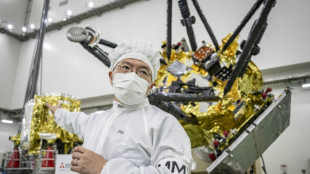 Japan to launch probe for Mars moons in October: space agency

 From beach to Bulls: relaxed Tsunoda savours rare F1 drive

 Prince Harry: key dates in life of returning UK royal

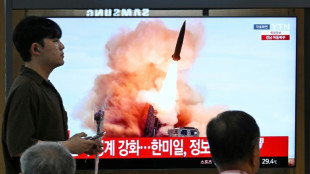
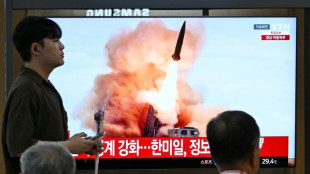 North Korea launches missiles, Seoul says, after Trump floats Kim meet

 Oil jumps on Iran war tensions, offsetting bond yield fears

 Germany identifies far-right suspect in deadly 1970 antisemitic attack

 PrimeXBT Expands Swap-Free Trading to PXTrader 2.0
 Record number of locations in France top 40C over summer: AFP analysis

 Trump pledges 'economic warfare' on Iran, prompting Tehran derision
 'Girl with a Pearl Earring' in Japan, perhaps for the last time
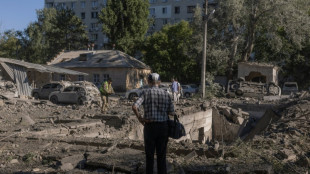
 Russian strikes kill 13 in Kyiv, surrounding region

 'Simply lovely': Verstappen signs new Red Bull contract until 2030

 Australia coach Walters heading to St Helens after World Cup

 China jails founder, fines disgraced property giant Evergrande

 Russian strikes kill 12 in Kyiv, surrounding region

 US India ambassador's Kashmir remarks rile Pakistan; envoy summoned

 In Senegal's Saint-Louis, traces of slave-trading past fade away

 Russian strikes kill 9 in Kyiv, surrounding region

Yemen's new leaders are "ready for war" should the latest push for peace with Huthi rebels fail, but a senior official told AFP they genuinely want the years-long conflict to end soon.
"Our first option is peace, but we are ready for war," Abdullah al-Alimi said late Saturday in his first interview since being named to an eight-member leadership council tasked with running the country after President Abedrabbo Mansour Hadi stepped down earlier this month.
"We believe the council is in a position, with the coalition support, to score a decisive military victory," Alimi told AFP in the Saudi capital.
Hadi's internationally recognised government had been locked in conflict for seven years against the Iran-backed Huthis, who control the capital Sanaa and most of the north despite a Saudi-led coalition's military intervention launched in 2015.
The war has killed hundreds of thousands directly or indirectly, and triggered what the United Nations calls the world's worst humanitarian crisis, with millions on the brink of famine.
Hadi's April 7 announcement handing power to the council came at the end of talks in the Saudi capital Riyadh that brought together anti-Huthi factions but were boycotted by the Huthis themselves.
The developments followed the start of a renewable two-month truce that has brought a rare respite from violence and spurred cautious hopes the war could finally end.
Hadi said the council would be tasked with "negotiating with the Huthis for a permanent ceasefire".
"We hope the dire situation in Yemen will make people have a desire to leave personal and partisan interests behind in pursuit of peace," said Alimi, formerly Hadi's chief of staff.
He said council leaders are due to meet in the coming days with UN special envoy to Yemen Hans Grundberg, who last week visited Sanaa for the first time during his mandate and held talks with Huthi leaders.
After meeting Grundberg, the council will travel to Yemen to be sworn in, though Alimi refused to specify exactly where.
The new council has not yet decided how long it will give the Huthis to join talks, Alimi said.
- Rebel resistance -
The Huthis refused to participate in the negotiations in Riyadh, which they consider enemy territory, but Alimi said future talks could take place in a more neutral location such as Oman.
So far, however, the Huthis have been dismissive, denouncing the new council as "a desperate attempt to rearrange the ranks of the mercenaries" fighting in Yemen.
Analysts note the Huthis have said peace will only come once foreign forces leave and some believe they are only really interested in talks with the Saudis.
"The Huthis don't see themselves in a conflict with Yemenis. The Huthis see themselves in a conflict with Saudi Arabia," said Fatima Abo Alasrar of the Middle East Institute in Washington.
If the push for peace goes nowhere, the newly-aligned anti-Huthi forces are positioned to pursue "a concerted multifront campaign" against the rebels, provided the council's diverse membership can hold together, said Peter Salisbury, senior Yemen analyst for the International Crisis Group.
"They (the leadership council) have the potential to more aggressively pursue peace and more aggressively pursue war, and the most likely outcome is they do a little bit of one and a little bit of the other," he said.
A.Gasser--BTB