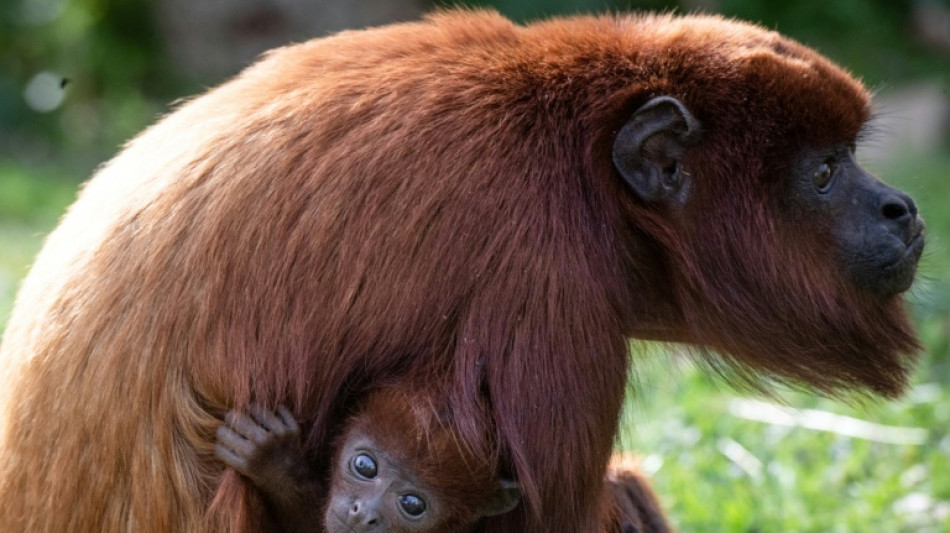
More protected areas won't save biodiversity, warn experts / Photo: ©

 Britain's EasyJet flies into US hands as takeover confirmed

 Real Madrid sign Ivory Coast winger Yan Diomande

 How online disinformation fuelled Ceuta migrant surge

 Inevitable AI Group Raises $6M From Aleph to Launch AI-Native SaaS Companies

 Suspected Ebola death on boat heading for DR Congo capital

 England selector North not 'hung up' on Stokes absence

 UK Anti-Doping confirm former world champ Parker's ban lifted

 French winemakers dread 'smoky taste' after wildfires

 Stocks diverge with earnings, tech in focus

 England recall batsman Lawrence for Pakistan series
 Siemens shares plunge on disappointing guidance raise

 New Australia coach Kiss gives Japan starts to Ross, Amatosero

 'Stretch our money': Romanians face highest EU inflation

 Iran says close to Hormuz plan with Oman, but reopening depends on US

 Messi scores twice to set Leagues Cup record in Miami victory

 Asian stocks mostly down with tech firms back under pressure
 Back to the future as world champion Springboks host All Blacks

 India youth protests highlight mistrust in 'lapdog' media
 Pacific islands alarmed by Trump-backed push for deep-sea mining

 Erratic rains dictate menu at three-star Michelin restaurant in Brazil

 Zverev, Auger-Aliassime and Medvedev exit Montreal Masters
 Loar Holdings Inc. Reports Q2 2026 Record Results and Upward Revision to 2026 Outlook

 Embattled Infantino sees minnows Malawi reach WAFCON quarter-finals

 Seeds Rybakina, Pegula and Gauff advance at WTA Toronto event

 Zverev, Auger-Aliassime exit star-short Montreal Masters
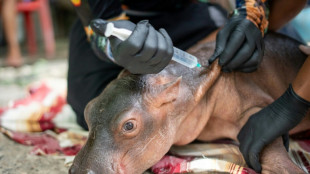
Expanding nature preserves will not be enough to stem a rising tide of extinctions, a panel of experts warned Wednesday, taking aim at a draft treaty tasked with rescuing Earth's animal and plant life.
Setting aside at least 30 percent of both land and oceans as protected zones is the cornerstone target of the so-called global biodiversity framework to be finalised in May at UN negotiations in Kunming, China.
But a report by more than 50 top experts said the draft plan still falls far short of what is needed.
"We're in the middle of a biodiversity crisis, with a million species at risk of extinction," lead author Paul Leadley, a professor at Paris-Saclay University, told AFP.
"There's good evidence that we will fail again to meet ambitious international biodiversity objectives if there's too much focus on protected areas at the expense of other urgent actions."
The plan, under negotiation by nearly 200 nations, sets a score of targets for 2030 -- and aims by 2050 to reverse biodiversity loss and be "living in harmony with nature."
The world failed almost entirely to reach a similar set of 10-year objectives set a decade ago at UN talks in Aichi, Japan.
"We keep trying to treat a critically ill patient with plasters -- that has to stop," said Leadley.
Echoing a similar warning issued by the UN's science advisory panel for climate change, Leadley and his colleagues said reversing the damage done to nature will require "transformative change" in society, starting with the way we produce and consume food.
- Multiple drivers -
Policymakers must also realise that all the drivers of extinction -- habitat loss and fragmentation, over-hunting for food and profit, pollution, the spread of invasive species -- must be tackled at once.
"Biodiversity loss is caused by multiple direct drivers in nearly all cases, meaning that actions on only one or a few will be insufficient to halt continued loss," the report said.
Climate change is also rapidly emerging as a major threat to many animal and plant species on land and in the oceans, outpacing their ability to adapt.
Limiting global warming to 1.5 degrees Celsius above preindustrial levels -- "essential" for protecting nature -- is not adequately reflected in the draft targets, the authors say.
Earth's surface has already warmed 1.1C, enough to unleash a crescendo of climate-enhanced storms, heatwaves, droughts and flooding.
And it works both ways, the report warns: "Protecting and restoring biodiversity are key to achieving the climate mitigation and adaptation goals of the Paris Agreement."
- Nature-based solutions -
As with climate, there's no time to lose.
"The sooner we act the better," said co-author Maria Cecilia Londono Murcia, a researcher at Humboldt Institute in Colombia.
"Time lags between action and positive outcomes for biodiversity can take decades."
The report also takes the draft treaty to task for not spelling out how goals will be achieved and enforced.
Targets are all well and good, it suggests, "but it is how these targets are implemented ... that will determine success."
Other targets set for 2030 include:
- reducing by 50 percent the rate at which alien species are spreading across the globe;
- reducing nutrients such as fertiliser leaching into the environment by at least half, and pesticides by at least two-thirds;
- eliminating the discharge of plastic waste;
- using nature-based solutions to cut greenhouse gas emissions by at least 10 billion tons of CO2 or its equivalent;
- reducing subsidies that harm biodiversity by at least $500 billion (440 billion euros) per year.
"For every euro we spend globally to help biodiversity, we spend at least five on things that destroy it," said co-author Aleksandar Rankovic, a researcher at the Paris Institute of Political Studies.
Nations will gather in Geneva in March for technical meetings ahead of the crunch talks in April and May.
J.Horn--BTB