
-
 Germany questions footballing identity after fresh World Cup failure
-
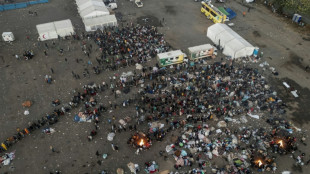
Thousands march to demand illegal migrants leave South Africa

-
 MEXC Lists Ondo's Tokenized Strategy Preferred Stock on Spot Market
-
Serena set for remarkable Wimbledon return

-
 Stocks climb, yen stays near 40-year low against dollar
-
Outgoing UK PM Starmer announces 'record' defence spending

-
 Swim star Marchand limps out of French nationals as Europeans loom
-
Paralluelo joins Barca women's departures

-
 UN says transport infrastructure must adapt to climate
-
Police hunt for Monaco bomb suspect after Ukrainian-born businessman wounded

-
 Sommer, Acerbi, Darmian, De Vrij leave Inter Milan
-
Sommer, Acerbi, Darmian leave Inter Milan

-
 Germany's labour market dilemma: rising unemployment despite vacancies
-
'Waiting like torture': Turks despair as Schengen visa delays mount

-
 Skating allows Russian, Belarussians to return as neutrals
-
Venezuela rescuers in final push to find survivors as families mourn

-
 Russian double Olympic figure skating champion Dmitriev dies aged 58
-
Over 1 million migrants apply for Spain's mass regularisation: PM

-
 S. Africa deploys police as anti-migrant protests loom
-
Thousands from Philippine sect protest pro-Duterte senator's graft case

-
 Monaco parcel bomb blast wounds Ukrainian oligarch
-
South Africa repatriations top 25,000 ahead of anti-immigrant ultimatum
-
 Sweden face France's attacking firepower at the World Cup
-
Taiwan raids tech firms in China AI chip smuggling probe

-
 Online same-sex romance series embrace AI 'freedom'
-
Morocco 'unstoppable' says coach after Netherlands thriller

-
 New Oxford academic centre symbolises UK's big-donor era
-
Russia's small businesses pay the price of spiralling Ukraine war

-
 Trump says Iran meeting set in Qatar, despite uncertainty
-
Paraguay shock Germany as Brazil, Morocco advance at World Cup

-
 Morocco down Netherlands to reach World Cup last 16
-
NASA robot mission aiming to rescue space telescope

-
 Asian stocks unable to track Wall St higher, yen holds at 40-year low
-
Mouse-that-roared Paraguay savors World Cup win over Germany

-
 'We came from nothing': DR Congo dreams of England World Cup upset
-
Taiwan's ageing seaweed harvesters hope younger women wade in

-
 Peruvian political heir Fujimori wins presidency
-
Key Venezuela port opens with US aid, as burials begin

-
 What to expect as EU small parcel levy kicks in
-
Ambitious Japan search for answers after World Cup exit

-
 Nagelsmann says won't 'run away' after Germany World Cup exit
-
How NATO will try to keep Trump happy at Ankara summit

-
 Paraguay coach salutes 'extraordinary' World Cup win over Germany
-
Ultra-wealthy Chinese exile in New York sentenced to 30 years for fraud

-
 Japan fans stunned as Brazil end their World Cup dream
-
Years on, families bury 68 Indigenous victims of Guatemala civil war

-
 'Powerhouse' Haaland leads by example at World Cup: Norway coach Solbakken
-
'Deliberate' Monaco explosion wounds Ukrainian oligarch

-
 Sadness and joy as breakaway Catholic group nears schism
-
Paraguay shock Germany, Brazil advance at World Cup

NYSE - LSE
Demographic Collapse Crisis
The phenomenon of demographic collapse, marked by a steep decline in population due to low birth rates and aging societies, is poised to become the gravest crisis humanity has ever encountered. While past generations feared the strain of overpopulation, today’s reality—a shrinking, graying populace—presents an unprecedented threat. This article examines why demographic collapse could eclipse all prior crises, delving into its economic, social, and global ramifications.
Economic Impacts
A plummeting birth rate, now below the replacement level of 2.1 children per woman in many nations, signals trouble for economies worldwide. With fewer young people entering the workforce, labor shortages loom large. Countries like Japan and Italy, where fertility rates hover around 1.4, are already witnessing population declines. This shrinking workforce stifles productivity and economic growth, as fewer workers generate less output and innovation. Simultaneously, an aging population swells the ranks of retirees, straining pension and healthcare systems. Governments face dwindling tax revenues, unable to sustain services like education or infrastructure, potentially sparking fiscal crises that force cuts to benefits or hikes in taxes—both risking public unrest.
Social Consequences
Beyond economics, demographic collapse reshapes societies. A dearth of youth threatens cultural vitality, as traditions and innovations depend on younger generations. Automation, often proposed as a fix for labor shortages, may instead displace workers in routine jobs, widening inequality. Those unable to adapt to a tech-driven world could be left behind, deepening social divides. Moreover, a shrinking population may erode community spirit, fostering isolation and a diminished sense of future purpose—a psychological burden that compounds the crisis.
Global Implications
On the world stage, demographic collapse could redraw power dynamics. Major economies like China, projected to see its population halve by century’s end, and Japan, already shrinking, may lose their geopolitical heft. Conversely, regions with youthful populations, such as sub-Saharan Africa, could rise in influence. Yet this shift brings challenges: Africa’s growing numbers demand vast investments in education and jobs to avoid unrest or migration pressures. As declining populations weaken global trade giants, the resulting instability could disrupt international markets and alliances, amplifying the crisis’s reach.
Final Conclusion
Demographic collapse stands as a silent, creeping catastrophe, its gradual onset masking its devastating potential. Its economic toll—labor shortages and strained systems—intertwines with social decay and global upheaval, threatening the foundations of modern life. Unlike wars or pandemics, this crisis offers no swift resolution, demanding urgent, forward-thinking action. Policies to boost birth rates, enhance immigration, and adapt to aging societies are essential to avert the worst. Without such measures, demographic collapse may well prove humanity’s most enduring and ruinous trial.

Strike fears rise over Iran

U.S. Jobs stall, gdp slows

AI sparks Wall Street panic

Argentina reshapes oil

Cuba Strangled by US Pressure

Power at the Heart of Iran

Japan’s right‑turn triumph

Iran lifts Dollar, sinks Euro

Israel presses Tehran

Iran and the holy War risk

Why Nepal is burning



