-
 Goat vs gecko: A tiny Caribbean island faces wildlife showdown
-
Japan PM asks IEA chief to prepare additional 'coordinated release' of oil

-
 Hungary's hard-pressed LGBTQ people say Orban exit is only half battle
-
Belarus leader visits North Korea for first time

-
 'No heavier burden': the decades-long search for Kosovo war missing
-
Exotic pet trade thrives in China despite welfare concerns

-
 Iran fires missile salvo after Trump signals progress in talks
-
BTS concert drew 18.4 million viewers, says Netflix

-
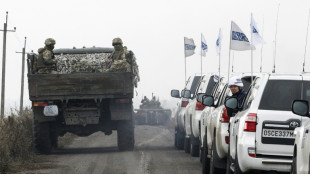 OSCE's 'chaotic' Ukraine evacuation put staff at risk: leaked report
-
Top WTO official sounds fertiliser warning over Middle East war

-
 France and Brazil weigh up World Cup prospects in glamour friendly
-
Italy hoping to end World Cup pain as play-offs loom

-
 Dirty diapers born again in Japan recycling breakthrough
-
Verstappen's Japan GP win streak under threat as Mercedes dominate

-
 Crude tumbles, stocks rally on hopes for Iran war de-escalation
-
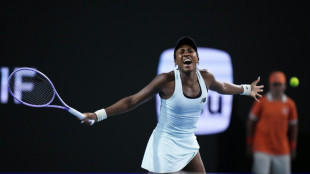
Gauff outlasts Bencic to reach Miami semi-finals
-
 'Hero' Australian dog who saved 100 koalas retires
-
Underdogs chase World Cup berths in Mexico playoff tournament

-
 Pope heads to tiny Catholic Monaco
-
Meet the four astronauts set to voyage around the Moon

-
 Artemis 2 Moon mission: a primer
-
It's go time: historic Moon mission set for lift-off

-
 Denmark's PM Mette Frederiksen, tenacious and tough on migration
-
OpenAI kills Sora video app in pivot toward business tools

-
 Danish PM's left-wing bloc wins election, but no majority
-
Brazil court grants house arrest for jailed Bolsonaro

-
 Sinner downs Michelsen to reach Miami Open quarter-finals
-
Advantage Arsenal in women's Champions League quarter-final against Chelsea

-
 Garner dreams of World Cup glory in bid to replicate England under-21 success
-
New Mexico jury finds Meta liable for endangering children

-
 Huge crowd in Buenos Aires marks 50 years since Argentina's coup
-
Oil, stock trading spiked before Trump's Iran remarks

-
 Colombia military plane crash death toll rises to 69
-
Trump adds Columbus statue, walkway in latest White House makeover

-
 Toronto unveils upgraded World Cup venue after fan scorn
-
Beerensteyn goal gives Wolfsburg edge over Lyon in women's Champions League

-
 Gang crackdown carried out without 'abuses,' Guatemalan defense chief says
-
Afghanistan releases detained US citizen

-
 Danish PM's left bloc leads election, but no majority
-
'Illustrious' Salah to leave Liverpool at the end of the season

-
 Trump says Iran gave US 'gift' linked to Strait of Hormuz
-
US officials downplay controller 'distraction' in New York crash

-
 Salah to leave Liverpool at the end of the season
-
Trump has destroyed Venezuela's socialist ideology: opposition leader

-
 France urges Israel 'to refrain' from seizing south Lebanon zone
-
UN rights council to hold urgent debate on Iran's Gulf strikes

-
 Russia rains drones on Ukraine, killing eight, hitting UNESCO site
-
Lukaku to miss Belgium World Cup warm-up trip to US

-
 Data canary shows economy already suffering from Middle East war
-
ConocoPhillips chief seeks extra US protection of Mideast assets

China’s profitless push
Can we keep up? Chinese companies are sacrificing margins—sometimes incurring outright losses—to win global market share in strategic industries from electric vehicles and batteries to solar and consumer tech. The tactic is turbocharging exports, pressuring Western competitors and forcing policymakers in Europe and the United States to erect new defenses while they scramble to lower costs at home.
Electric vehicles: a race to the bottom on price. In late spring 2025, China’s largest carmakers unleashed another round of steep price cuts, with entry-level models reduced to mass-market price points. Regulators in Beijing have since urged manufacturers to rein in the bruising price war, citing risks to industry health and employment. Yet the incentives keep coming as dozens of brands fight for share in the world’s most competitive EV market. The financial fallout is visible: leading pure-play EV makers continue to post substantial quarterly losses, while ambitious new entrants have acknowledged that their car divisions remain in the red even as sales surge.
Green tech: overcapacity meets collapsing margins. China’s build-out in solar has morphed from a growth engine into a profitability trap. Module and polysilicon prices have fallen so far that key manufacturers forecast sizeable half-year losses, and producers are now discussing a coordinated effort to shutter older capacity. Industry reports describe spot prices for feedstocks dipping below production costs, a hallmark of cut-throat competition that spills over into export markets and undercuts rivals globally.
Trade blowback intensifies. The U.S. has moved to quadruple tariffs on Chinese-made EVs and lift duties on batteries, chips and solar cells. The European Union has imposed definitive countervailing duties on Chinese battery-electric cars and opened additional probes across green-tech supply chains. Brussels and Beijing have even explored minimum export prices to reduce undercutting—an extraordinary step that underscores how acute the pricing pressure has become.
Deflation at the factory gate. China’s factory-gate prices remain in negative territory year on year, reflecting slack domestic demand and excess capacity. That weakness transmits abroad via cheaper exports, squeezing margins for manufacturers elsewhere and complicating central banks’ inflation-fighting calculus. Beijing has rolled out an “anti-involution” campaign to curb ruinous discounting and steer investment toward “high-quality growth,” but implementation is uneven and local governments still depend on industrial output to stabilize employment.
Scale, speed—and logistics. Chinese champions are not only cutting prices; they are redesigning logistics to keep them low. One leading EV maker has built its own fleet of car carriers and is localizing production via overseas factories to sidestep tariffs and port bottlenecks. Such vertical integration magnifies the advantage from sprawling domestic supply chains in batteries, motors and power electronics.
What this means for Western competitors. The immediate effect is a margin squeeze across autos, solar and adjacent sectors. The strategic response taking shape in Europe and the U.S. is three-pronged: (1) trade defense to buy time; (2) industrial policy to catalyze domestic gigafactories and clean-tech manufacturing; and (3) consolidation to rebuild pricing power. Companies that cannot match China’s cost curve will need to differentiate—through software, design, brand and service—or partner to gain scale. Even in China, the current “profitless prosperity” looks unsustainable: consolidation is inevitable, and state guidance now favors capacity rationalization over raw volume.
The bottom line. China’s price-first strategy is remaking global competition. Whether others can keep up will hinge on how quickly they can de-risk supply chains, compress costs and innovate without hollowing out profitability. For now, the contest is being fought as much on balance sheets as it is on assembly lines.

Cuba Strangled by US Pressure
Trump's attack on the Dollar

Greenland Deal – and now?
Trump's hesitation in Iran

Cuba’s bleak oil crisis

Venezuela’s economic roadmap

Iran unrest and US threats
Iran's collapse fuels Revolt

Brexit's broken promises

France's debt spiral Crisis

Trump preps Allies for Ven Op