Overshooting 1.5C risks 'irreversible' climate impact: study / Photo: © AFP

 8.3 mn refugees at risk due to 'severe' funding cuts: UN
 Stocks drop and oil rises as Hormuz hopes fade

 OpenAI cancels release of newest model due to safety concerns

 AI bosses head to White House as safety pressure builds

 Batista sacked as Costa Rica coach after six months
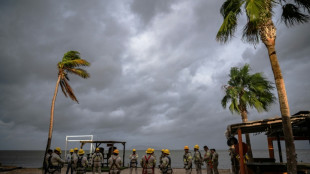 Flooding, power cuts and evacuations as Hurricane Polo slams Mexico

 Dodgers eye three-peat, Red Sox face Yankees as MLB playoffs begin
 Certification of Boeing 737 MAX delayed by software bug

 Celine Dion wows Paris Fashion Week with surprise gig

 AMD buys firm founded by AI 'godmother' Fei-Fei Li

 Italy rebound in Turkey as France win late in Belgium

 Pope says concerns about AI 'should be taken seriously'

 Hurricanes to hoist title banner as NHL season begins

 Justice Alito steps aside from major US climate case

 Willis happy with England exile after retains Top 14 player award
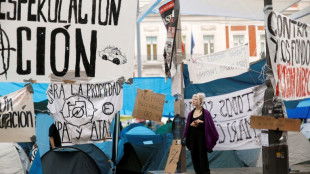
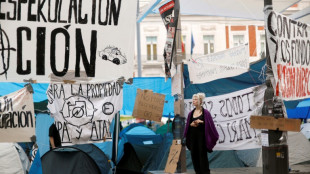 Spain housing protests keep heat on government as PM seeks new law

 Wissa spoils Zimbabwe homecoming as DR Congo win AFCON qualifier

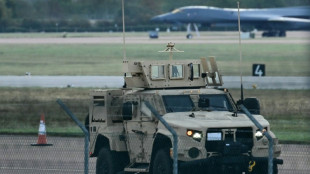 UK police release on bail five men held over airbase incident

 Ex-All Black Plummer 'sure' New Zealand will find Super Rugby solution

 Shein sees 1% revenue growth in first half of 2026
 Netherlands regrets Israel retaliation in settlements row

 Moscow seizes Russian assets of German food retailer Metro

 Bulgarian spirits inflamed by new rakia rules

 Documentary turns camera on architect Peter Zumthor

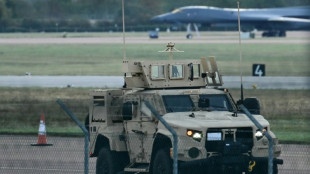 UK police say releasing on bail five men held over airbase incident

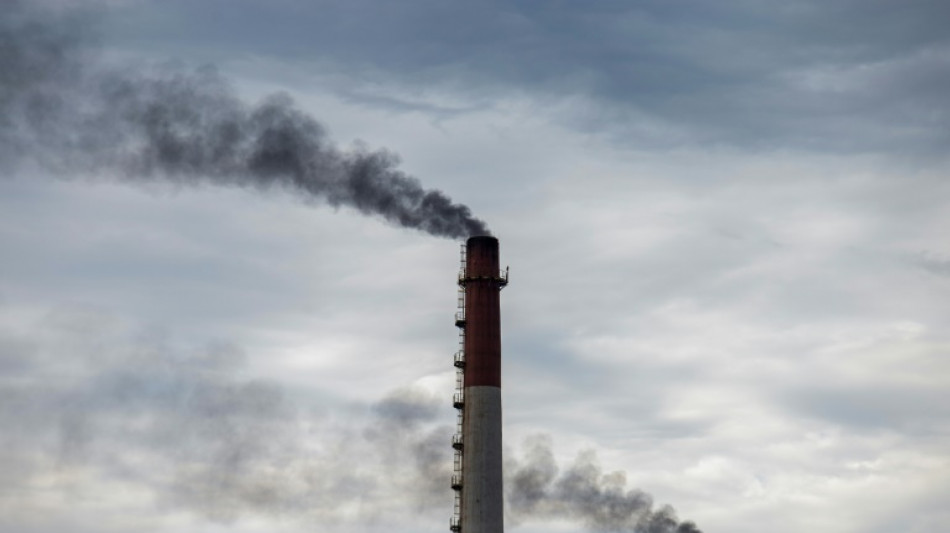
Any breach of what climate scientists agree is the safer limit on global warming would result in "irreversible consequences" for the planet, said a major academic study published on Wednesday.
Even temporarily exceeding 1.5 degrees Celsius before bringing temperatures back down -- a scenario known as an "overshoot" -- could cause sea level rises and other disastrous repercussions that might last millenia.
This "does away with the notion that overshoot delivers a similar climate outcome" to a future where more was done earlier to curb global warming, said Carl-Friedrich Schleussner, who led the study co-authored by 30 scientists.
The findings, three years in the making, are urgent, as the goal of capping global temperature rises at 1.5C above pre-industrial levels is slipping out of reach.
Emissions of heat-trapping greenhouse gases must nearly halve by 2030 if the world is to reach 1.5C -- the more ambitious target enshrined in the 2015 Paris climate accord.
Currently however, they are still rising.
Some kind of overshoot of 1.5C is increasingly being seen as inevitable by scientists and policymakers.
This new study, published in the peer-reviewed journal Nature, cautions against "overconfidence" in such a scenario when the dangers are not fully appreciated.
An overshoot could trigger impacts that last hundreds if not thousands of years, or cross "tipping points" that prompt large and unrepairable changes in earth's climate system, the scientists warn.
It could mean the thawing of permafrost and peatlands, carbon-rich landscapes that would release huge volumes of planet-heating greenhouse gases if lost.
And sea levels could rise an additional 40 centimetres (16 inches) if 1.5C is exceeded for a century, the authors said, an existential difference for vulnerable low-level island nations.
"For most climate indicators, there are irreversible consequences due to the temporary exceedance of, for example, the 1.5 degree limit," said Schleussner from the Austria-based International Institute of Applied Systems Analysis.
"Even if you brought temperatures back down again, the world that we are looking at is not the same as if you didn't overshoot."
- Act now -
Taken together, the world's existing pledges for climate action would result in nearly 3C of warming by 2100, according to the UN.
To reach 1.5C, emissions must be at net zero by 2050, which means balancing the amount of carbon dioxide produced against the amount humanity can remove from the atmosphere via technology.
This process, known as carbon removal, would need to be massively scaled up to pull global temperatures back down in the event of an overshoot, something that is far from guaranteed.
"We cannot be confident that temperature decline after overshoot is achievable within the timescales expected today," the authors wrote.
Schleussner said their findings reinforced "the urgency of governments acting to reduce emissions now and not later down the line, to keep peak warming as low as possible".
"If you want to limit the climate risks in an effective manner, the race to net zero needs to be seen for what it is," he said.
K.Thomson--BTB