Climate change worsened deadly Africa floods, scientists say / Photo: © AFP

 Dodgers eye three-peat, Red Sox face Yankees as MLB playoffs begin
 Certification of Boeing 737 MAX delayed by software bug

 Celine Dion wows Paris Fashion Week with surprise gig

 AMD buys firm founded by AI 'godmother' Fei-Fei Li

 Italy rebound in Turkey as France win late in Belgium

 Pope says concerns about AI 'should be taken seriously'

 Hurricanes to hoist title banner as NHL season begins

 Justice Alito steps aside from major US climate case

 Willis happy with England exile after retains Top 14 player award
 Spain housing protests keep heat on government as PM seeks new law

 Wissa spoils Zimbabwe homecoming as DR Congo win AFCON qualifier

 UK police release on bail five men held over airbase incident

 Ex-All Black Plummer 'sure' New Zealand will find Super Rugby solution

 Shein sees 1% revenue growth in first half of 2026
 Netherlands regrets Israel retaliation in settlements row

 Moscow seizes Russian assets of German food retailer Metro

 Bulgarian spirits inflamed by new rakia rules

 Documentary turns camera on architect Peter Zumthor

 UK police say releasing on bail five men held over airbase incident

 Trump admin finalizes reversal of US fuel economy standards
 US says no China arms sale plans after envoy cites Trump offer

 Dozens kidnapped in two weekend attacks in northern Nigeria

 Next stop the world: Pathirage wins Asian Games javelin gold

 Aster Launches Perpetual Grid Trading 2.0 with Up to 140,000 $ASTER Liquidity Mining Campaign
 Seoul says North Korean mines 'highly suspected' as cause of DMZ blast

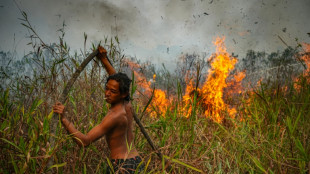
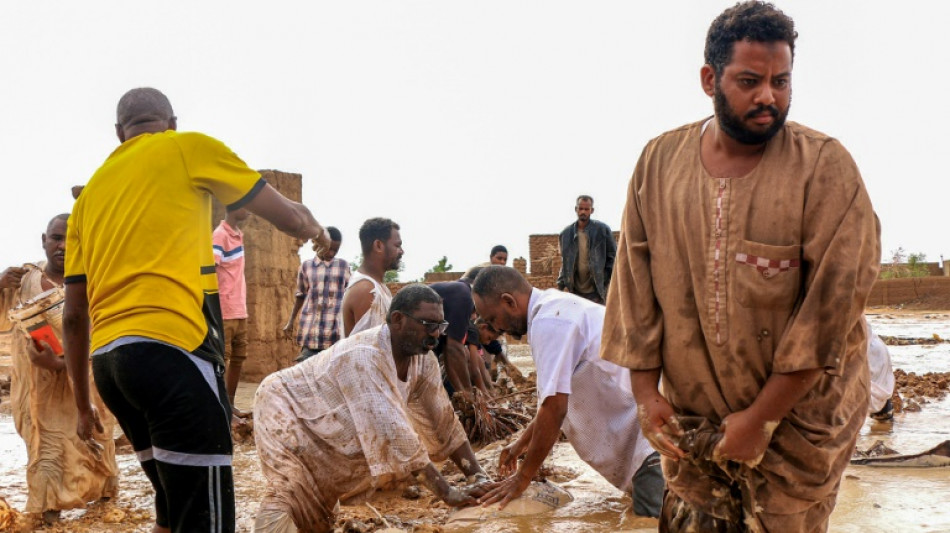
Human-caused climate change worsened floods that have killed hundreds of people and displaced millions in Cameroon, Chad, Niger, Nigeria and Sudan this year, according to a study published on Wednesday.
The intense rainy season has unleashed a humanitarian crisis across large areas of the Sahel region bordering the Sahara desert.
A new analysis by the World Weather Attribution (WWA) network of scientists found warming driven by the use of fossil fuels had exacerbated the flooding in Sudan.
The researchers also said climate change would have made this year's torrential rains around five to 20 percent more intense across the Niger and Lake Chad basins, citing a previous WWA study of similar floods in 2022.
"This is only going to keep getting worse if we keep burning fossil fuels," said Clair Barnes from the Centre for Environmental Policy at Imperial College London.
Speaking at a briefing ahead of the study's publication, she said such downpours "could happen every year" if global temperatures increase to two degrees Celsius (35.6 Fahrenheit) above pre-industrial levels.
"It's pretty serious," she said.
- Downpours and storms -
Global warming is not just about rising temperatures -- the extra heat trapped in the atmosphere and seas has knock-on effects and can result in more intense downpours and storms.
The researchers said there was a clear link between the extreme rainfall and a warming planet.
In the study, they focused on war-torn Sudan, where millions of displaced people have been uprooted by conflict and driven into flood-prone areas.
The scientists used modelling to compare weather patterns in our world and one without human-induced warming, and found that month-long spells of intense rainfall in parts of Sudan had become heavier and more likely due to climate change.
At the current 1.3 degrees Celsius of warming, they said similar periods of rainfall are expected to occur on average about once every three years, and have become about 10 percent heavier due to climate change.
- 'Incredibly concerning' -
"These results are incredibly concerning," said Izidine Pinto, one of the study's authors and a researcher at the Royal Netherlands Meteorological Institute.
He warned that "with every fraction of a degree of warming, the risk of extreme floods will keep increasing", and called for the UN's COP29 climate summit to "accelerate the transition away from fossil fuels" when it meets in Azerbaijan next month.
Joyce Kimutai, a researcher at Imperial's Centre for Environmental Policy, said the floods underscored the need for a loss and damage fund for nations devastated by climate change.
A key meeting ahead of COP29 earlier this month ended with countries making little progress over how to finance a deal for poorer nations.
"Africa has contributed a tiny amount of carbon emissions globally, but is being hit the hardest by extreme weather," Kimutai said.
The role of climate change in the floods was compounded by other human-made problems, the researchers said, and they called for better maintenance of dams and investment in early warning systems.
O.Bulka--BTB