Stark warning on emissions as leaders split on climate goals at COP29 / Photo: © AFP

 Dodgers eye three-peat, Red Sox face Yankees as MLB playoffs begin
 Certification of Boeing 737 MAX delayed by software bug

 Celine Dion wows Paris Fashion Week with surprise gig
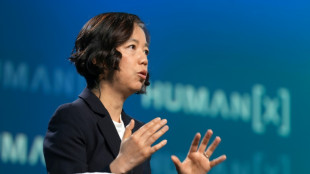 AMD buys firm founded by AI 'godmother' Fei-Fei Li
 Italy rebound in Turkey as France win late in Belgium

 Pope says concerns about AI 'should be taken seriously'
 Hurricanes to hoist title banner as NHL season begins
 Justice Alito steps aside from major US climate case

 Willis happy with England exile after retains Top 14 player award
 Spain housing protests keep heat on government as PM seeks new law

 Wissa spoils Zimbabwe homecoming as DR Congo win AFCON qualifier

 UK police release on bail five men held over airbase incident

 Ex-All Black Plummer 'sure' New Zealand will find Super Rugby solution

 Shein sees 1% revenue growth in first half of 2026
 Netherlands regrets Israel retaliation in settlements row
 Moscow seizes Russian assets of German food retailer Metro
 Bulgarian spirits inflamed by new rakia rules

 Documentary turns camera on architect Peter Zumthor
 UK police say releasing on bail five men held over airbase incident
 Trump admin finalizes reversal of US fuel economy standards
 US says no China arms sale plans after envoy cites Trump offer
 Dozens kidnapped in two weekend attacks in northern Nigeria
 Next stop the world: Pathirage wins Asian Games javelin gold

 Aster Launches Perpetual Grid Trading 2.0 with Up to 140,000 $ASTER Liquidity Mining Campaign
 Seoul says North Korean mines 'highly suspected' as cause of DMZ blast

Global leaders offered competing views on how to tackle climate change at UN-led talks Wednesday as a new report warned the world must reach carbon neutrality much sooner than planned.
Planet-warming carbon dioxide emissions from oil, gas and coal rose to a new record high this year, according to preliminary research from an international network of scientists at the Global Carbon Project.
The report came as leaders gathered in Azerbaijan for COP29 climate talks aimed at reaching a deal on boosting funding to help poorer nations adapt to climate shocks and transition to cleaner energy.
The research found that to keep the Paris agreement's ambitious goal of limiting warming to 1.5 degrees Celsius in sight, the world would now need to reach net-zero CO2 emissions by the late 2030s -- instead of 2050.
The warning also follows concerns about the future of the fight against climate change following the election of Donald Trump.
Trump, who has vowed to again pull the United States out of the Paris agreement, named his head of the Environmental Protection Agency Tuesday with a mandate to slash pollution regulations.
Some leaders in Baku defended fossil fuels during two days of speeches while others from countries plagued by climate disasters warned that they were running out of time.
- 'Slower' path -
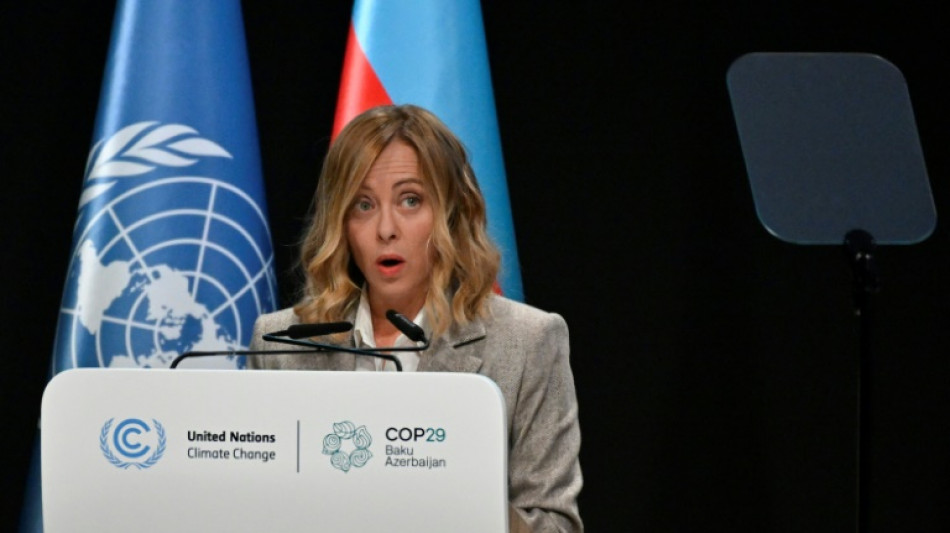
Italian Prime Minister Giorgia Meloni called for a "realistic global outlook" on Wednesday, saying that world population growth will boost energy consumption demand.
"It is equally a priority that decarbonisation takes into consideration our production and social system's sustainability," she said.
"We must protect nature, with man at its core. An approach that is too ideological and not pragmatic on this matter risks taking us off the road to success," the far-right leader said.
"Currently there is no single alternative to fossil fuel supply."
Greek Prime Minister Kyriakos Mitsotakis called for a "smart" Green Deal, the European Union's ambitious climate plan which aims to make the bloc carbon-neutral by 2050.
"We cannot drive ourselves into industrial oblivion," the conservative leader said.
"We need to ask hard questions about a path that goes very fast, at the expense of our competitiveness, and a path that goes somewhat slower, but allows our industry to adapt and to thrive," he said.
Their views contrasted with leaders from countries beset by climate catastrophes and rising sea levels.
"Tuvalu sincerely hopes that this COP's concluding decisions will deliver a clear signal that the world is promptly phasing out fossil fuel," said the Pacific island's Prime Minister Feleti Penitala Teo.
"For Tuvalu and similarly placed countries, there is simply no time to waste," he said.
- Money fight -
As leaders spoke, negotiators released a fresh draft of a deal with a raft of options to raise funding for poorer countries, while leaving unresolved sticking points that have long delayed an agreement.
Most developing countries favour an annual commitment from wealthy countries of at least $1.3 trillion, according to the latest draft of the long-sought climate finance pact.
This figure is more than 10 times the $100 billion annually that a small pool of developed countries -- among them the US, the EU and Japan -- currently pay.
Some donors are reluctant to promise large new amounts of public money from their budgets at a time when they face economic and political pressure at home.
The prime minister of the hurricane-vulnerable Bahamas, Philip Davis, said small island nations have spent 18 times more on debt repayment than they have received in climate finance.
"The world has found the ability to finance wars, the ability to mobilise against pandemics," Davis said.
"Yet when it comes to addressing the most profound crisis of our time, the very survival of nations, where is that same ability?"
L.Dubois--BTB