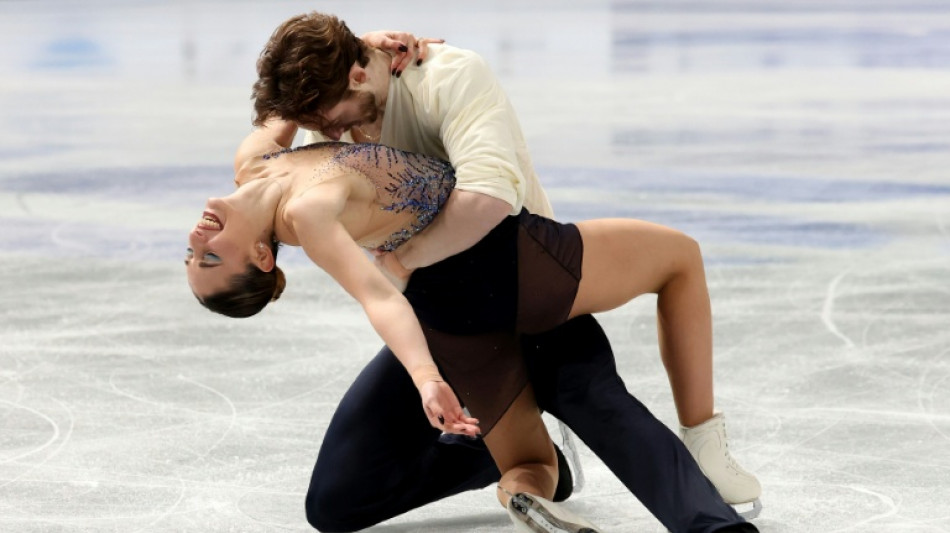
'True emotion': Olympic skaters create magic step by step / Photo: © AFP

 'I'll adapt': First pregnant candidate navigates French presidential race
 Hong Kong convicts Tiananmen vigil activists of inciting subversion

 The Hong Kong Tiananmen vigil activists convicted in national security trial
 Eel-powered Japan whizz-kid, 11, chases Asian Games history

 Asian markets extend rally as traders assess US Treasuries pledge

 Barcelona enter new era as Flick targets La Liga hat-trick
 Pogacar favourite for Vuelta with Grand Tour treble in sight
 Bangladesh coach Simmons wary of Australia backlash in second Test
 Hong Kong Tiananmen activists to receive national security verdict
 Who are the candidates vying to lead the UN?
 Swiatek into Cincinnati semis after Rybakina injury
 University suspends academic behind Jason Arday plagiarism charges
 Key European leaders demand Israel halt West Bank settlement project

 McIlroy bounces back to share BMW Championship lead

 Cobolli fueled by candy in sweet defeat of Paul

 Jailed Pakistan ex-PM Khan moved to hospital on court order: party
 Pogacar eyes 'missing' piece ahead of Vuelta return

 US, Canada 'very close' to trade deal, Ottawa says, as details emerge
 Ronaldinho returns in search of 'beautiful' 300th goal

 US pushes allies, China to back Trump's economic war on Iran

 Former NBA MVP Harden reportedly set to return to Cavaliers
 Brook makes Pakistan pay for drop as England dominate first Test
 MemeCore Arrives on Nasdaq Through $1 Billion Landmark Treasury Transaction

 First US deportees land in Liberia
 US, Canada resume talks to finalize trade deal as details emerge
Olympic figure skaters will perform for a matter of mere minutes at February's Milan-Cortina Games but the process of creating and honing their routines takes months of consideration and effort.
The concept, moves and music of a programme can make or break skaters' dreams of Olympic glory, and what is right for one can be a disaster for another.
"You have to choose what suits your strengths best, because that will inevitably score well with the judges," Canadian pairs skater Deanna Stellato-Dudek told AFP at last week's Grand Prix Final in Nagoya.
"That's what we've always done -- what feels best for us and then hoping that comes across to everybody."
Skaters typically work with a choreographer and coach to devise their short programme and free skate routines, which they will perform at every competition for a season.
Top choreographers like France's Benoit Richaud are in demand and can work with several skaters at the same time.
Richaud, a former skater himself who says his work is a calling from God, says "90 percent" of his skaters' routines comes from his ideas.
"I study them and the way they skate," said the 37-year-old, an instantly recognisable figure at competitions with his cool demeanour, bald head and round glasses.
"It's totally based on my feeling and personal emotion. I just know when I see a skater what kind of style, what kind of direction I should give them."
- Heavy rotation -
Richaud says his skaters and their coaches have the final say on a routine but he likes to "stay in control".
Other skaters prefer a more collaborative approach and bring their own ideas to the table.
"We have to be on the ice, we have to listen to the music a thousand times a day, so we need to like it," said Italian pairs skater Niccolo Macii.
"We need to have our idea on the ice. We need to feel what we do because we have to do it all the time."
A rule change brought in after the 2014 Winter Olympics allowed figure skaters to use music with lyrics for the first time, opening up new possibilities.
An eclectic mix could be heard at the Grand Prix Final, from pop hits by the Rolling Stones to movie soundtracks and classical numbers.
Picking the right music can make a difference in the judges' scores but purists like Richaud refuse to take that into consideration.
"My way of working is never to please anyone, it's only to do what I feel," he said.
"I am against working in a direction of thinking about 'I need the judge to like it' or 'I need people to like it'.
"I think it's not the way we create art, and it's not how we create true emotion."
- Constant evolution -
Others, like Italy's Macii, take a more pragmatic approach.
"We need to work with the mind of the judges," said the 30-year-old, who finished second in Nagoya with his partner Sara Conti.
"We need to find a way to express ourselves and to make the people like us -- it's a mix of being us on the ice and acting."
Macii is amused that people watching figure skating at the Olympics might think he and Conti are performing their routine in competition for the first time.
In reality it has been battle-tested since the start of the season, but even before it gets to that stage it is constantly evolving.
"Most of the time you start choreographing in April, May, and then you're not ready to compete until September, October," said Maxime Deschamps, Stellata-Dudek's partner.
"And even when you're there in September, it's not fully ready.
"As you train it, it evolves so something that was working the previous week might not work the next week."
I.Meyer--BTB