
-
 Inside the Venezuelan prison meant to 'drive you insane'
-
Trump to tout deals, defend Iran war in UN speech

-
 UK king braces as memoir by Diana's brother goes on sale
-
Sri Lanka to issue verdict in landmark Easter attack trial

-
 No green light to lift EU sanctions on Russian oligarchs, talks to resume
-
Macron says talks with Trump on Red Sea, Ukraine 'constructive'

-
 UK agrees support for Saudi in struggle with Houthis: reports
-
Green policies just good politics, says UK minister

-
 EU foreign policy chief calls for continued sanctions on Russia
-
Bardot auction in Paris fetches nearly one million euros

-
 Flights scrapped, evacuations urged as Typhoon Dujuan wallops Japan
-
No timeline on Daniels injury return, says Commanders coach

-
 Fonseca to take break from tennis
-
British Columbia sues OpenAI in US court over Canada school shooting

-
 A Cuban zoo, and its animals, in epic battle for survival
-
French star Batum retires after 18-year NBA career

-
 Infantino proposes consulting federations to reform FIFA
-
Zidane leads first France training session

-
 El Nino weather pattern enters record territory: scientist
-
Man shot by ICE agent in Texas detained with bullet inside him: lawyer

-
 OpenAI calls for US to lead global effort on AI standards
-
California declares state of emergency ahead of El Nino
-
 South African ostriches plucked alive for luxury fashion: report
-
South Africa arrests three more suspects, after nine women murdered
-
 US networks halt Trump coverage in revolt over White House ban
-
Carse needs time away from England, says captain Brook

-
 Paramount settles with US states to clear Warner Bros. mega-merger
-
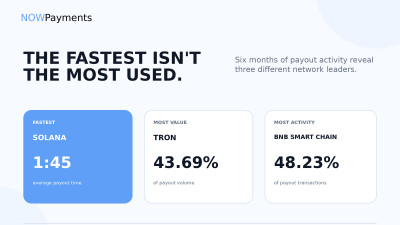
NOWPayments Releases Cross-Chain Payout Data Revealing Key Performance Benchmarks Across TRON, BNB Chain, and Solana
-
 Climate crisis a job for world leaders, not just activists: UK FM
-
British Museum bans photos of Bayeux Tapestry as crowds linger

-
 US networks halt Trump coverage over White House ban
-
COP31 host says AI climate footprint to be a summit priority
-
 French singer accuses Miley Cyrus of plagiarism
-
Berlin's far-left vote winners reject anti-semitism charges
-
 EU fines Google 403 mn euros for location data breach
-
Mancini eager for 'new adventure' on Italy return
-
 'Best is yet to come,' says De la Fuente after Spain extension
-
Mbappe says having Zidane as France coach 'like a film'

-
 Why diesel prices are rising more than crude oil
-
Palmer, Rice out of England Nations League squad

-
 COP31 host says AI's climate footprint to be a summit priority
-
German auto workers stage mass protests in bid to save jobs
-
 Renewables hit record in 2025, but world must move faster: report
-
Embattled Merz vows to keep ruling for 'democratic future' of Germany
-
 US media outlets to sue Trump administration after White House ban
-
Merz vows to keep ruling coalition together for 'democratic future' of Germany
-
 Global stocks rally on lower oil prices, US-China hopes
-
Spain coach De la Fuente gets new deal after World Cup success

-
 EU proposes energy rating for data centres
-
Pressure grows on Germany's Merz after election defeats

EU India deal gains unveiled
On 26 January 2026 negotiators from Brussels and New Delhi announced that they had finally concluded a free‑trade agreement (FTA) after nearly two decades of on‑off negotiations. European Commission President Ursula von der Leyen described it as the “mother of all deals”. The pact – which still requires legal revision and ratification in both the European Parliament and the Indian parliament – is broad in scope. It will eventually eliminate or reduce tariffs on over 90 % of EU exports to India, save European companies around €4 billion per year in duties and double EU exports to India by 2032. In return, the EU will cut tariffs to zero on about 90 % of Indian goods at launch and extend duty‑free access to 93 % within seven years. The agreement complements a newly signed Security and Defence Partnership that extends cooperation into areas such as maritime security, cyber‑defence and counterterrorism, signalling that the relationship now goes well beyond commerce.
Europe’s economic gains
Market access to a massive growth engine
India’s economy – valued at roughly $4.2 trillion and forecast to grow faster than any other major economy – is the EU’s tenth‑largest export market. EU goods face a weighted‑average tariff of about 9.3 % when entering India. Under the FTA, India will eliminate or reduce tariffs on 96.6 % of EU exports by value. Tariffs on roughly 30 % of goods will fall to zero immediately, while remaining duties will be phased out over five, seven or ten years. High barriers on automobiles and industrial goods are set to tumble: duties on cars will fall from 110 % to 10 % over five years under a quota for 250 000 vehicles; tariffs of up to 44 % on machinery, 22 % on chemicals and 11 % on pharmaceuticals will be scrapped. For European vintners and distillers, India’s prohibitive 150 % wine tariff will drop to 20–30 % and duties on spirits will fall to 40 %.
The EU’s exporters stand to benefit disproportionately in sectors where India currently imposes the steepest barriers. According to an Allianz Research estimate, an ambitious FTA could boost EU exports by USD 19.2 billion per year (about +0.3 % of total EU exports) and raise EU GDP by +0.1 percentage points annually. Germany, France and Italy – with strong industrial and machinery exports – would gain the most. The EU also expects improved access in financial and maritime services, stronger intellectual‑property protection and simplified customs procedures, making it easier for European firms to invest in and operate within the Indian market.
Securing supply chains and reducing dependency on China
Beyond the immediate tariff windfall, the FTA is part of a broader strategy to diversify supply chains and reduce reliance on China. A Reuters analysis notes that for Europe the deal provides a route to “support supply‑chain diversification and reduce reliance on China” while tapping India’s fast‑growing market. EU trade with the United States and China dwarfs its trade with India – €873 billion and €736 billion in goods respectively in 2024 – but both relationships have become more uncertain. The return of U.S. tariff threats and growing geopolitical friction with Beijing have pushed Brussels to accelerate deals with Mercosur, Mexico, Indonesia and now India.
India’s demographic scale offers long‑term opportunities. The agreement opens a market of 1.4 billion consumers to European companies with lower tariffs and better regulatory cooperation. Crucially, it provides a foothold in sectors where China currently dominates global supply chains. The pact’s digital‑trade provisions set rules on data flows, privacy and standards, allowing European technology firms to collaborate with India’s vast digital workforce. It also contains labour, environment and women’s empowerment commitments, aligning trade flows with the EU’s sustainability agenda.
Strategic and defence dividends
The simultaneous Security and Defence Partnership gives the trade accord a geopolitical dimension. Signed on 27 January 2026, the pact builds a comprehensive framework for cooperation in maritime security, counterterrorism, cyber‑defence and emerging technologies. EU foreign policy chief Kaja Kallas said the partnership marks a new phase in relations and reflects how “the EU and India see the world changing in similar ways”. By aligning security interests, Europe hopes to embed India in a rules‑based order and create an Indo‑Pacific partner that can balance China’s influence, thus increasing the geopolitical payoff from deeper economic integration. The partnership also includes cooperation on space security, resilience of critical infrastructure and counter‑terrorism training, underlining that the EU’s gains are not merely commercial but strategic.
The truth behind the deal: limits and conditions
Ratification risks and delayed benefits
While political leaders celebrated, the FTA’s benefits will not be immediate. The legal text still needs to be reviewed, translated and approved by all 27 EU governments, the European Parliament and India’s parliament, a process that could take a year or more. Analysts caution that the ratification could face setbacks similar to the EU–Mercosur agreement, which has been challenged in the EU’s top court. Even after entry into force, many tariff cuts are phased in over up to ten years and low‑price cars as well as sensitive farm products are excluded entirely. Therefore, the claimed doubling of EU exports by 2032 will depend on smooth implementation and sustained political will on both sides.
Modest gains relative to global trade
Although labelled the “mother of all deals”, some analysts argue that the economic impact for Europe may be modest. EU–India goods trade was about €120 billion in 2024, a fraction of the EU’s trade with the United States or China. Even if EU exports to India double, they would remain small relative to the bloc’s global trade. Allianz estimates that Europe’s auto industry would gain less than USD 50 million in additional car exports because current car exports to India are only USD 300–400 million. The EU’s major export interests lie in machinery, chemicals and pharmaceuticals, while automotive gains attract headlines but deliver little material uplift.
Stringent conditions and mutual compromises
The FTA is less ambitious than some other EU deals. It leaves out government procurement, energy and raw materials and investment protection agreements, which are still being negotiated separately. Agriculture and dairy are largely excluded; India will maintain protections for rice, sugar, dairy and poultry. EU demands for far‑reaching environmental, labour and intellectual‑property standards have been controversial. India succeeded in limiting tariff elimination to around 97 % of EU exports and secured quotas for sensitive goods such as cars, steel and shrimps. Delhi also obtained a commitment that any flexibilities the EU grants other countries under its Carbon Border Adjustment Mechanism will also apply to India, mitigating some of the impact of Europe’s new carbon levy.
Non‑tariff barriers and the carbon border tax
The greatest obstacles to EU gains may lie outside the tariff schedules. Indian exporters complain of stringent EU technical standards, certification costs and regulatory delays, while the EU is concerned about data security and market access in services. India’s trade community fears that Europe’s Carbon Border Adjustment Mechanism could erode tariff gains by imposing duties on carbon‑intensive exports. A technical group and a €500 million EU fund have been created to help Indian firms verify carbon footprints and reduce emissions. For the EU, success will depend on the enforcement of environmental and labour provisions and on ensuring that India implements reforms to ease doing business.
Conclusion: beyond trade
The EU‑India trade pact represents the most comprehensive trade agreement either party has ever signed. For Europe it offers access to a vast and rapidly growing economy, savings in duties, diversification away from China and the United States, and a new strategic partner in the Indo‑Pacific. Tariffs on machinery, chemicals, pharmaceuticals and premium wines will fall sharply, and European firms will gain improved access to Indian services sectors. The accompanying security partnership underscores the geopolitical stakes: Europe aims to anchor India in a rules‑based order and counterbalance competitors in Asia. However, the deal is conditional, phased and subject to political hurdles. The economic gains are significant but remain limited relative to Europe’s overall trade. To realise its full potential, both sides must navigate ratification, implement reforms, and balance economic ambition with domestic sensitivities. Only then will the truth behind the deal – whether it truly delivers for Europe – become clear.
Zelensky's trap for Putin
Euro Challenges Dollar's Reign
US tariff dispute: No winner

Jewish Success: Myths & Facts
India's island choke point
After Europe’s capitulation
Operation Venezuela: Scenario
Brazil tests Milei’s gamble
Germany under Weidel
Argentina reshapes oil
Cuba Strangled by US Pressure



